07.08.2025
This day last year we were joined by Sebastian Hensel for a magical recital at Sruthán Chorrbhaile; the round area stream - a liminal hinterland where Murlin River meets the Glen Bay in Kilaned. Though his instrument of specialisation is viola, Sebastian is also a stunning violinist. After a series of musings at the court cairn the previous day, we’d decided to drive down to the estuary where Sebastian would improvise; responding to prompts in the surroundings for a live broadcast episode of K7 dans la 4L.
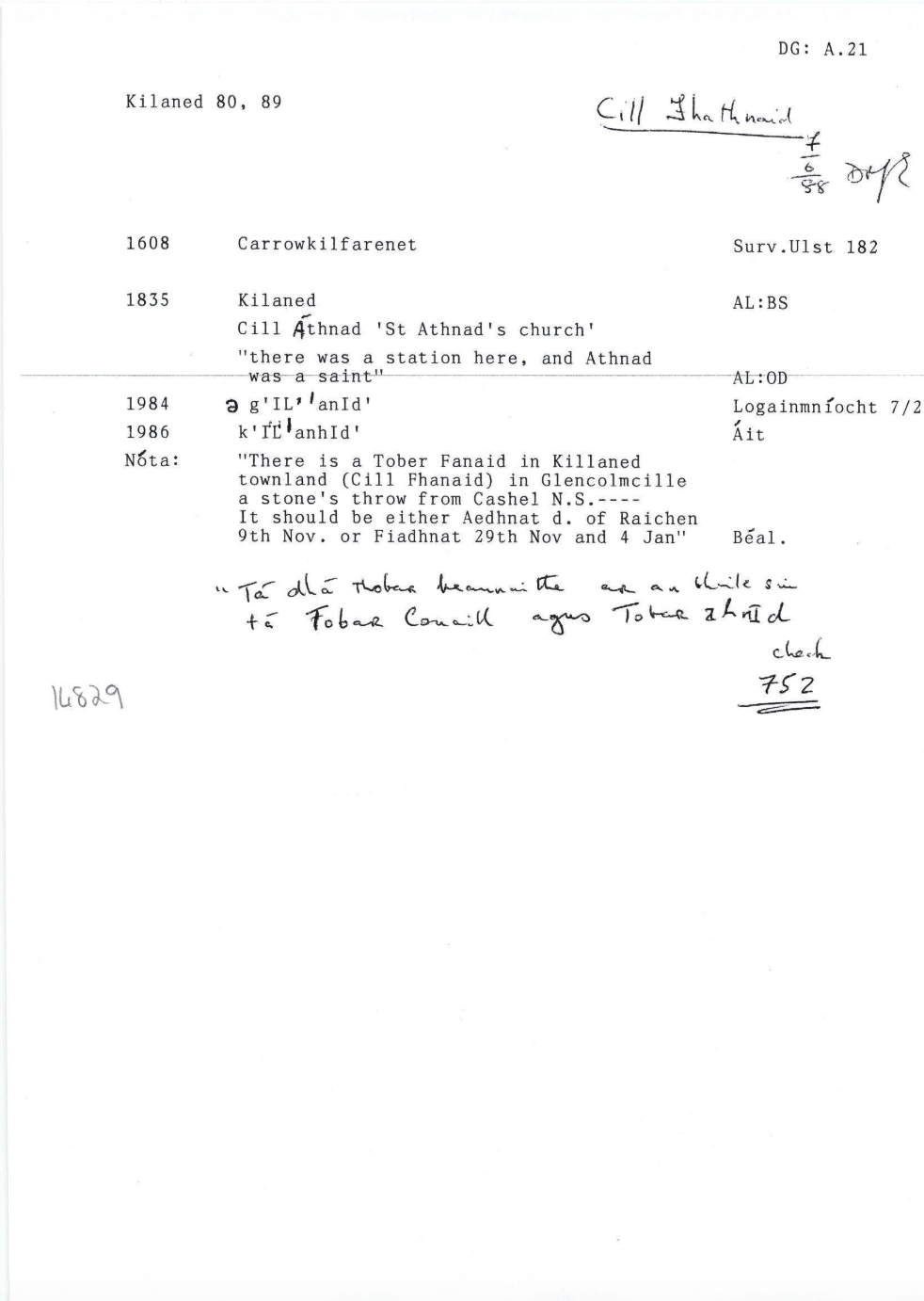
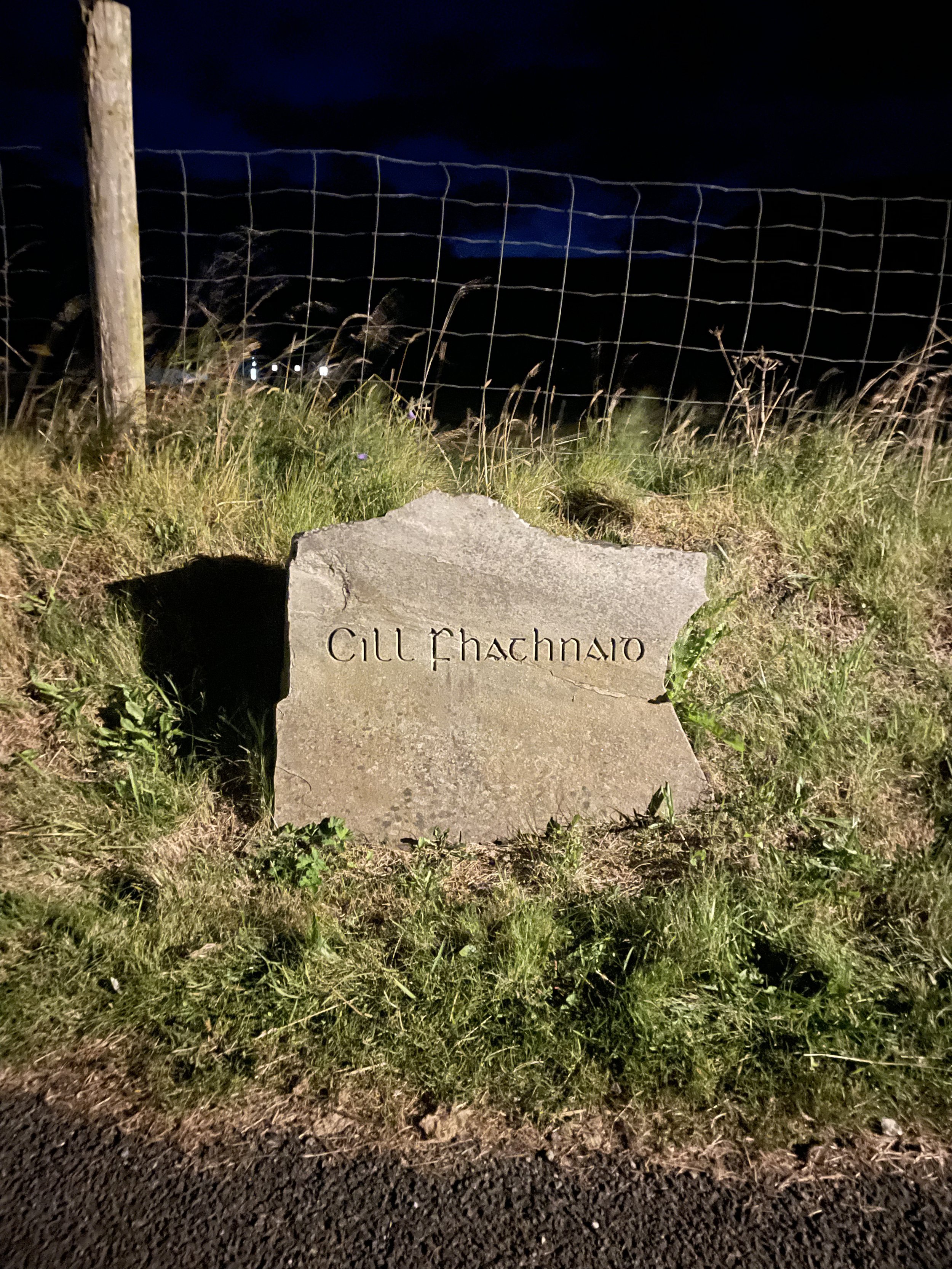
Kilaned, Cill Áthnaid in Glencolmcille is named after Saint Athnad's Church, of which there’s still remnants; a roughly-built stone cell that you can find just above a grouping of cottages built into the side of the hill as part of a holiday development scheme in the late 1960s.
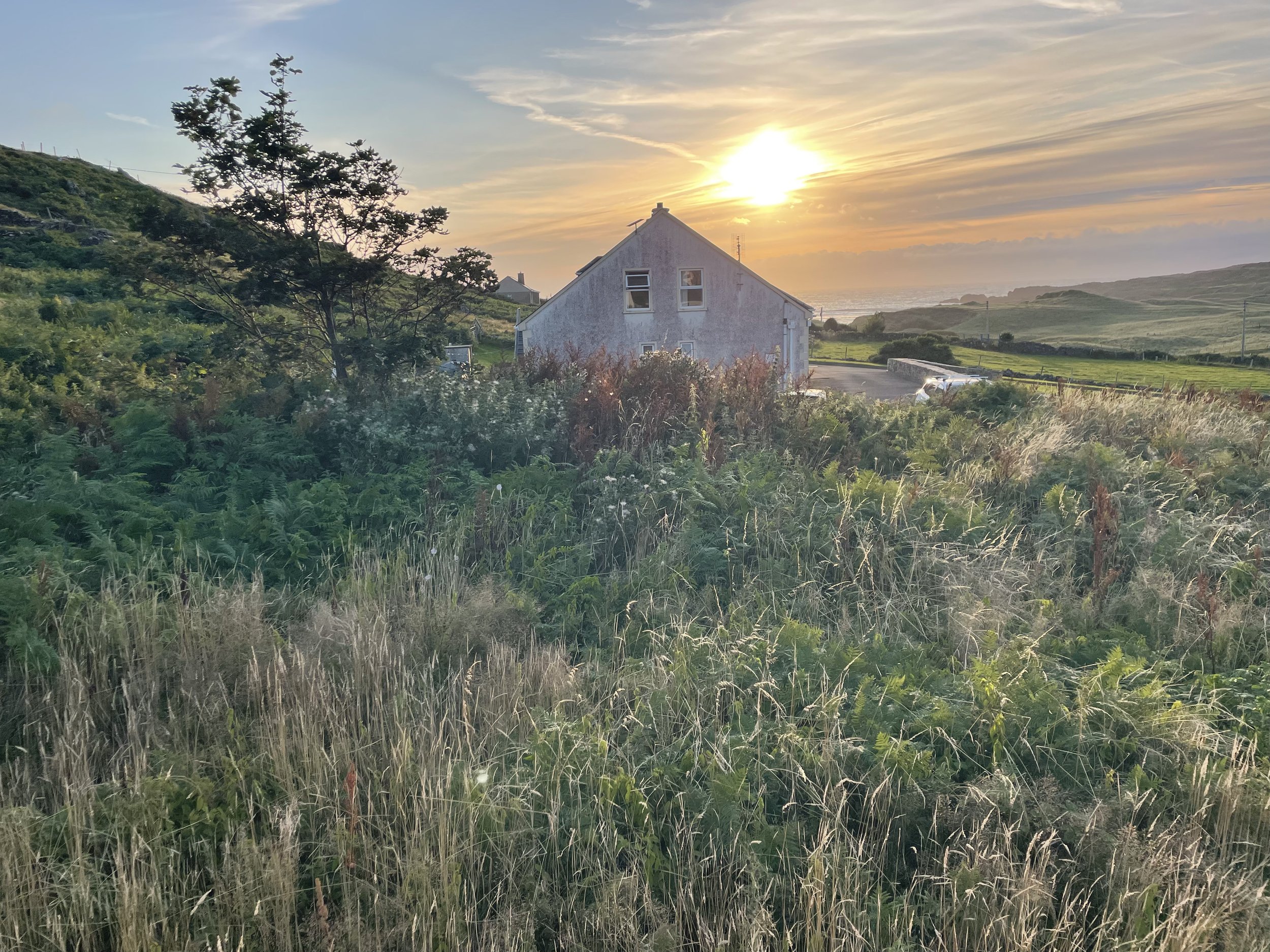
Some would tell you that the stones gathered from the area to build the holiday homes are from structures that would have been in place during the time of St Athnad and apparently another structure related to the saint stood somewhere on the townland, but it is now, by all accounts; level with the ground.
If you climb Glen Head on a bright enough day, and stand at the Napoleonic tower looking across the Glen, you’ll see how lush and verdant the horse shoe shaped shelf of Kilaned is – easy to see why, by comparison with the gale-swept, craggy, scrubby, heather adorned mountains around the valley – this tiny townland promises respite.
A melody associated with the townland, the Kilaned Waltz, is a placid tune composed by fiddle player John Mhósaí McGinley during the 19th Century. Though he was never recorded, the tune has been passed on and people still play it in the area. He composed a number of tunes in response to the natural surroundings, descriptive pieces about the sea, waterfalls, the wind. It’s often said that the field above the holiday development scheme belonged to John Mhósaí McGinley at one point and when the holiday homes were built, stones were taken from the old ruin of what was once his home. There’s a story to go with that, I’ll return to it another time.
Down the hill, towards the monk’s cell, there’s a section of flat ground where there was once a barley plot; Garraí na hEorna and beside it, a flagstone for winnowing, Leac an Cháite. Under the wind influence, the chaff was blown across the stone while the seeds were left in the grooves. Before the horse power threshing engine came into use in the area, people relied on wind for threshing.
Poitín was made here too.
A gentle place, with a holy well (from a time before holiness as we know it existed), that’s overgrown and hidden now between an alder sapling and the pebbledashed gable end of a celtic tiger build. From here, a conjuring breeze sorts wheat from chaff and composes melodies.
Relaxed and poised, with fiddle in hand, we might fleetingly glimpse the moment where melodies and instruments intertwine on this very fine threshold between worlds….
Sebastian Hensel as described in his profile on IRCAM (Institut de recherche et coordination acoustique/musique), Centre Pompidou,
Born in 1990, Sebastian Hensel grew up in a musical family that would lead him right away into playing and composing music himself. Master degrees in music theory, music and French language and viola would set him on his way to becoming a professional viola player with the radio symphony orchestra of Leipzig (Sinfonieorchester des Mitteldeutschen Rundfunks Leipzig).
After publications in musicology focussing on the art of instrumentation of Lili Boulanger (‘Concerning the orchestration style of Lili Boulanger at the example of D’un soir triste and D’un matin de printemps’) and the Prix de Rome en musique (‘The cantata compositions in the Prix de Rome competition. A model between reproduction and transformation’) he is now preparing his PhD thesis on the teaching of instrumentation and orchestration at the Paris Conservatoire between 1900 and 1977.