06.08.2025
This day last year three of us took a walk from Cill Fhathnaid, up past An Dumhaigh over towards Gleann Mhálanna to see the Cloghanmore court cairn, Cloghanmore; the big heap of stones dates back to around 3000 BC. Subjected to restoration efforts in 1887, parts of this chamber tomb were ‘cleaned’ and reconstructed. Some decisions around its restoration were inexact or erroneous, and while grave goods had been found, these artifacts didn’t merit preservation at the time. Fragments of pottery were discovered, perhaps used to carry food or other supplies, sustaining the deceased on their journey into an afterlife.
It's said that there are drawings on some of the stones, votive art, but I’ve never been able to make them out. Maybe it takes a special type of light or time of year; when the sun - just about to dip under the horizon at Malainn Mór, sends one last long ray to contrast the faint relief.
The walk from Cill Fhathnaid to Cloghanmore is 5.7km by road but only about 2km if you take the mountain path by foot. Thanks to a wonderful book called Gleann Cholm Cille, an áit agus a naomh; Glencolmcille, its places and its saint we have an in depth inventory of place names and their associated stories.
Edited by Seosamh Watson in 1984 and published by Oideas Gael, the book documents the names of every rock, river, path, cliff, cairn, hill, peak and valley and we can see how descriptive, poetic and rich in heritage these few square Kilometers are. If I was to give you directions to the court cairn from the mountain footpath, it would go something like this,
Towards the great brow where the pigs ravine cuts through the hill of the sand martin, bringing the little river past summer hill and the yellow peak near Eoin’s promontory, you can stand at what is believed to be nearest point in the parish to America. From here, you can see the rock of the fox. The rock takes its name from the following story, a fox reportedly heard a sheep bleating on Rathlin O'Birne island and attempted to swim over. Becoming tired during the swim it rested on this rock, and in order to satisfy its hunger the fox lifted a limpet with its tongue. The limpet, however, closed over down on the fox’s tongue trapping it so that the animal died when the tide flowed in and covered the rock.
When you turn your back to the sea and face inland, you’ll see a path at the bottom of a curved glen before you get to the red swamp. You may or may not see the golden castle, a man once found an opening and, on entering, discovered steps which led him to a large hoard of gold. He departed to summon help but on returning found that a boulder fall had covered the entrance which he was unable any more to discern.
You turn left and you will pass through, the striped/grey moor, where little Eoin's rock is. You can take either the lower or upper path to the stone of the purse (a purse containing gold was once buried here). From there, you climb up the lumpy hill, abounding in lumps, knolls and tummocks where you’ catch site of the outline of brown hill just past Jennet's hill.
If you descend to the left, you might find yourself at the slate quarry, or to the right; the crag of the badgers or potentially, the little oxen enclosure. Before you get to Jennet's hump at the foot of Jennet's hill where the big oxen enclosure is, there’s a hollow in a cliff there, from within which there is no view at all.
On the opposite side, theres the cliff shelves; sheep's cliff shelf and just before that, the garden of the pits where a hollow/recess descends into the valley of the brae. Magnetic North of the valley, is Loch Adhbha, Lough Auva. This name, like Loch Inseach is said locally to derive from a holy woman who lived in Slieve League.
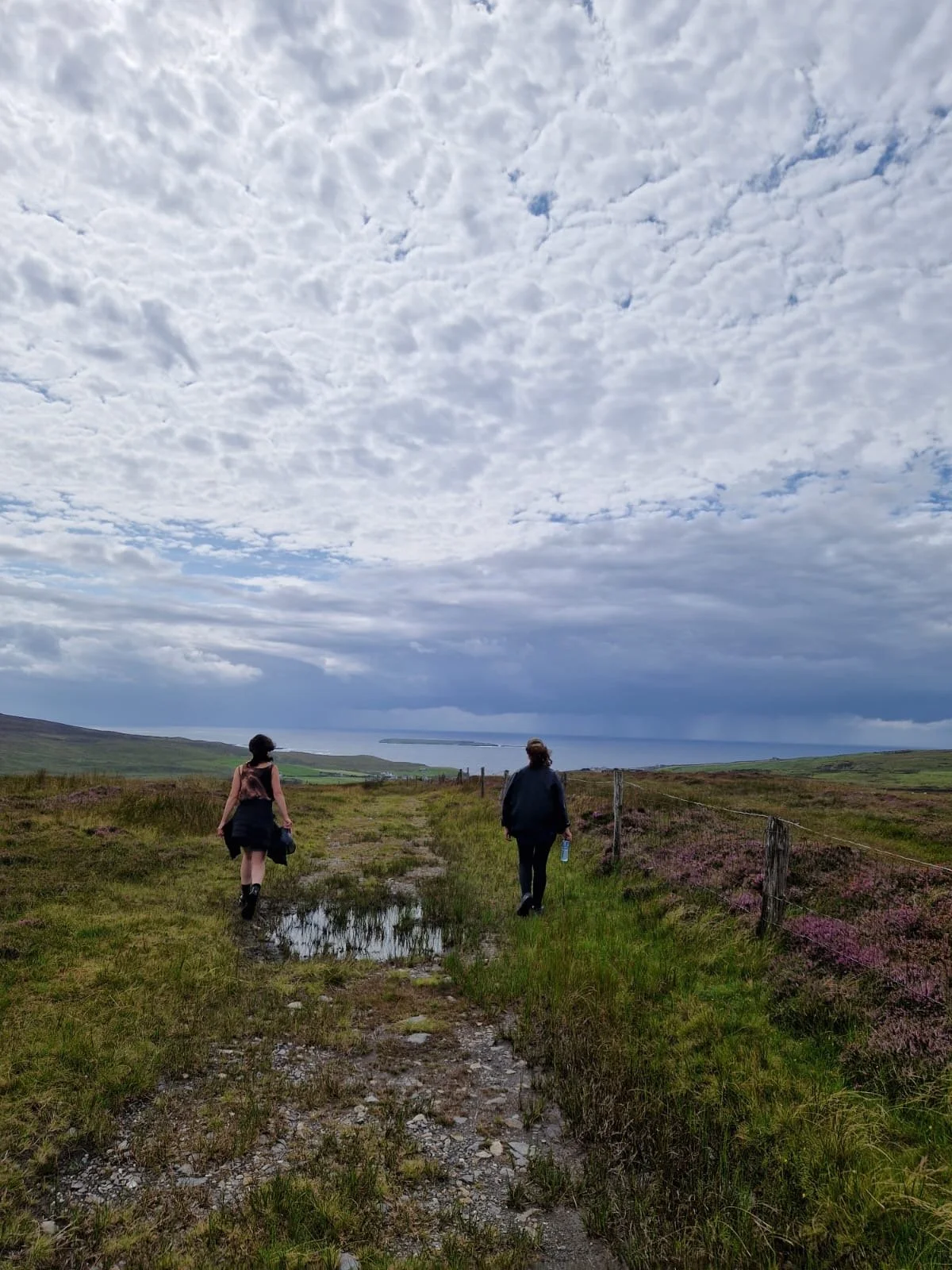
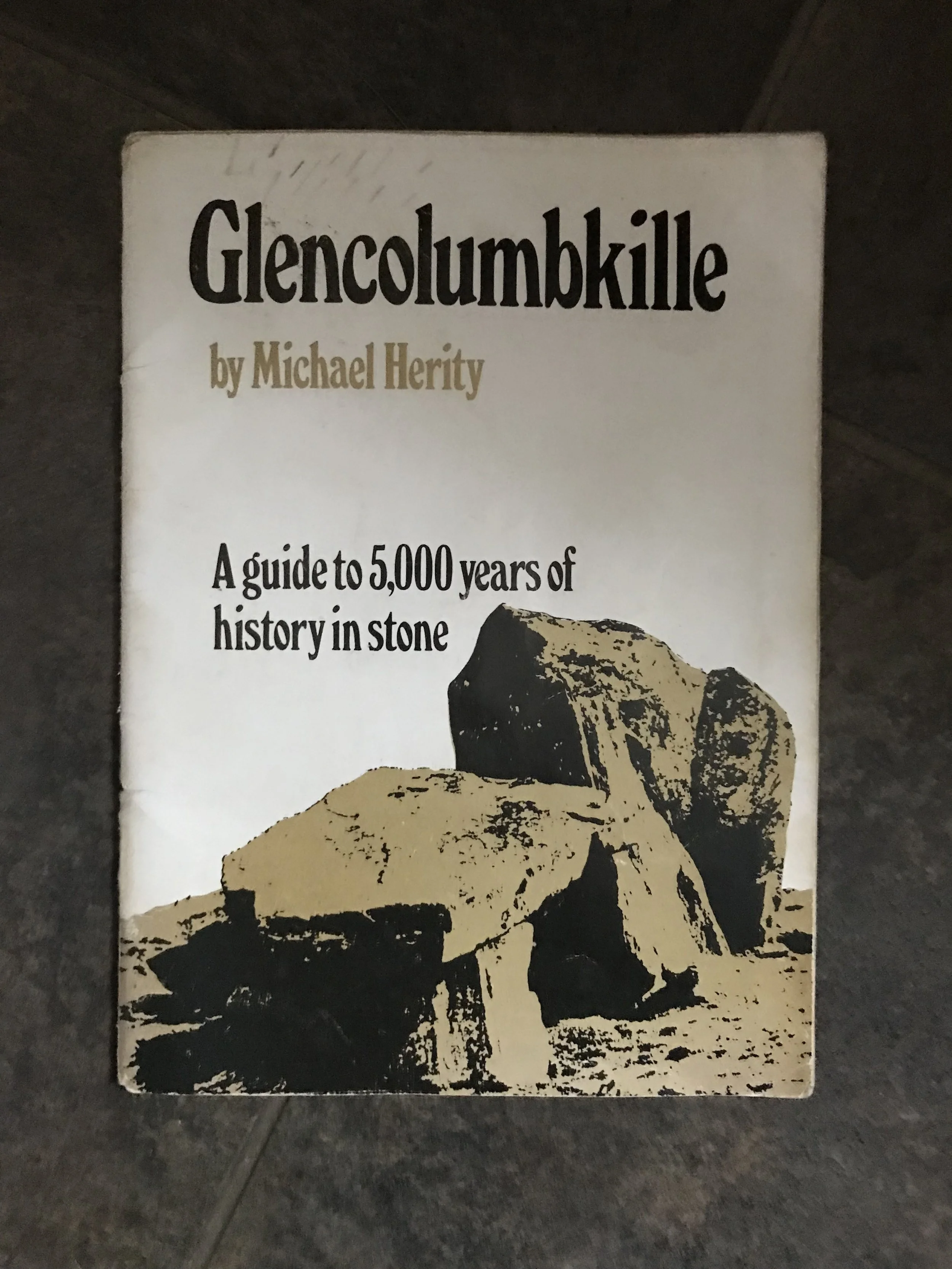
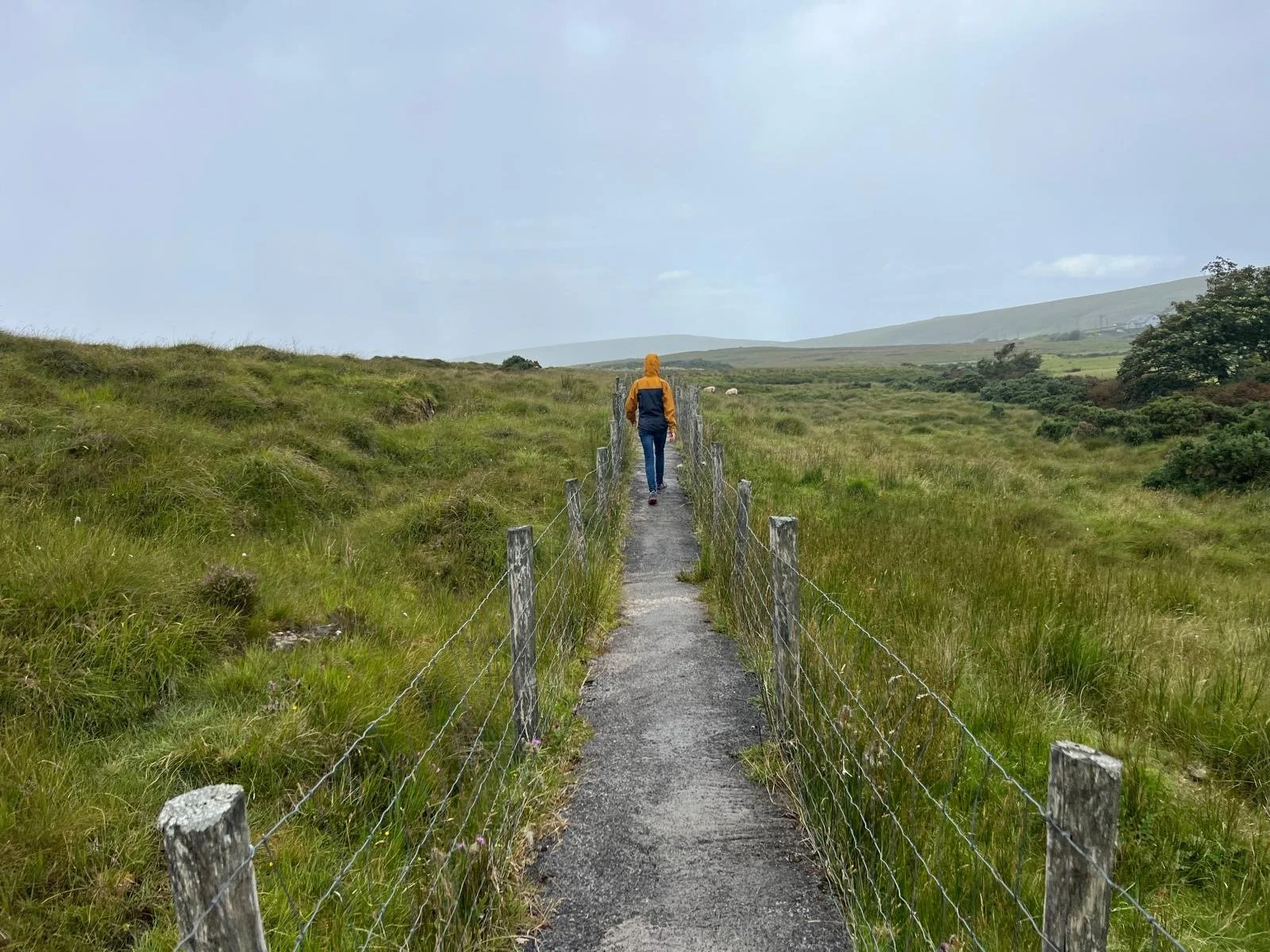
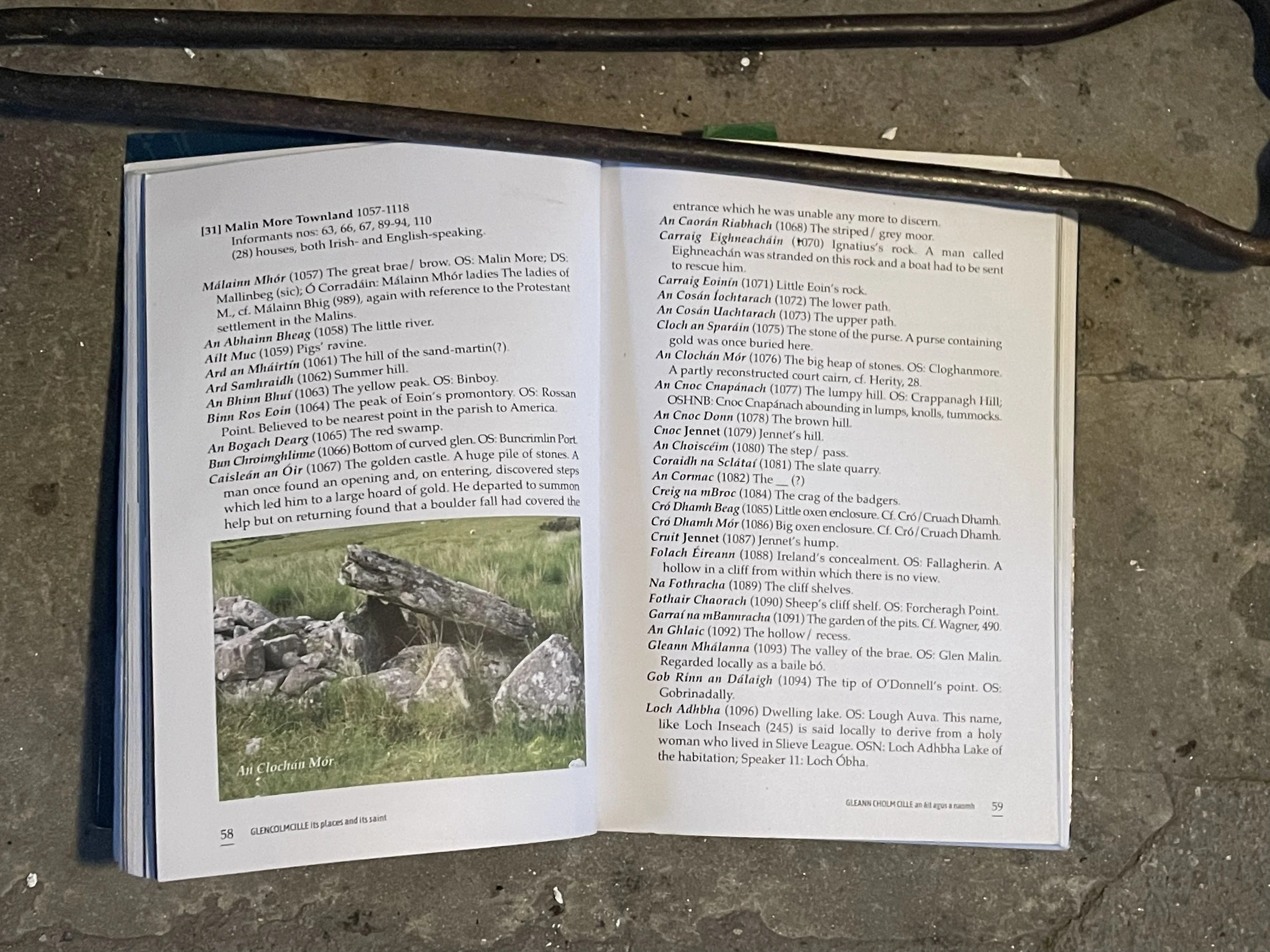
Photo credits: Sebastian Hensel and tour de force