26.07.2025
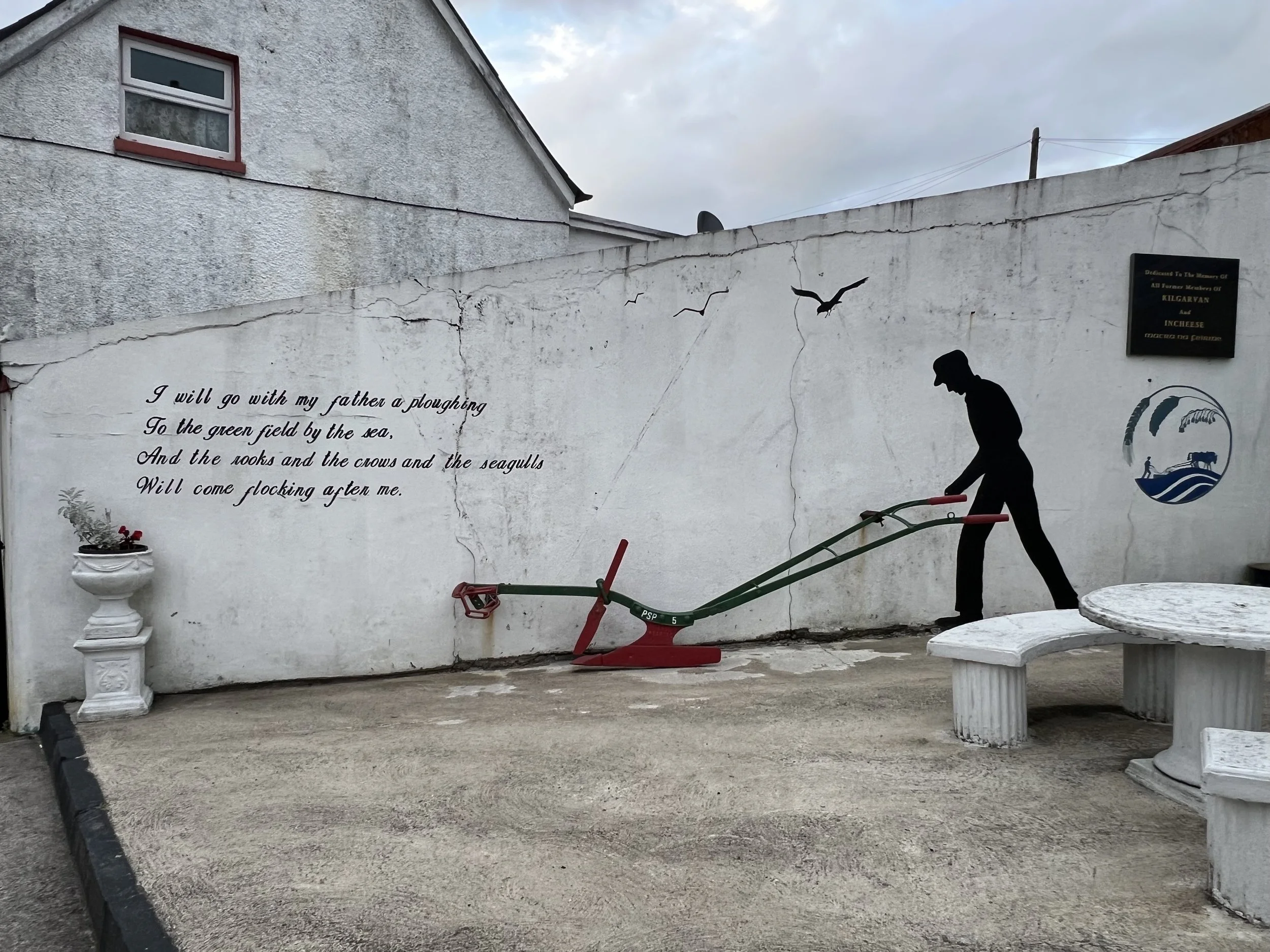
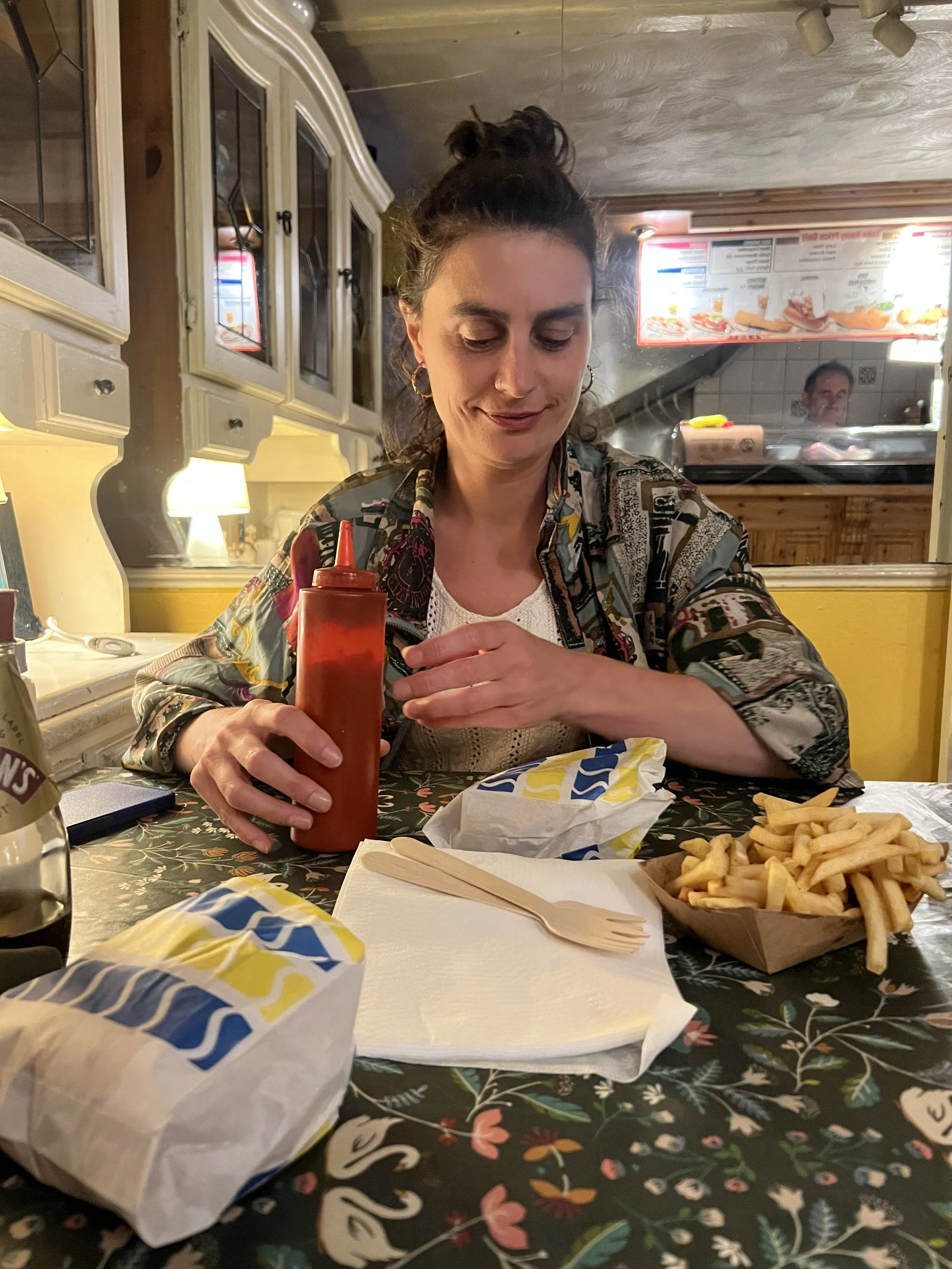
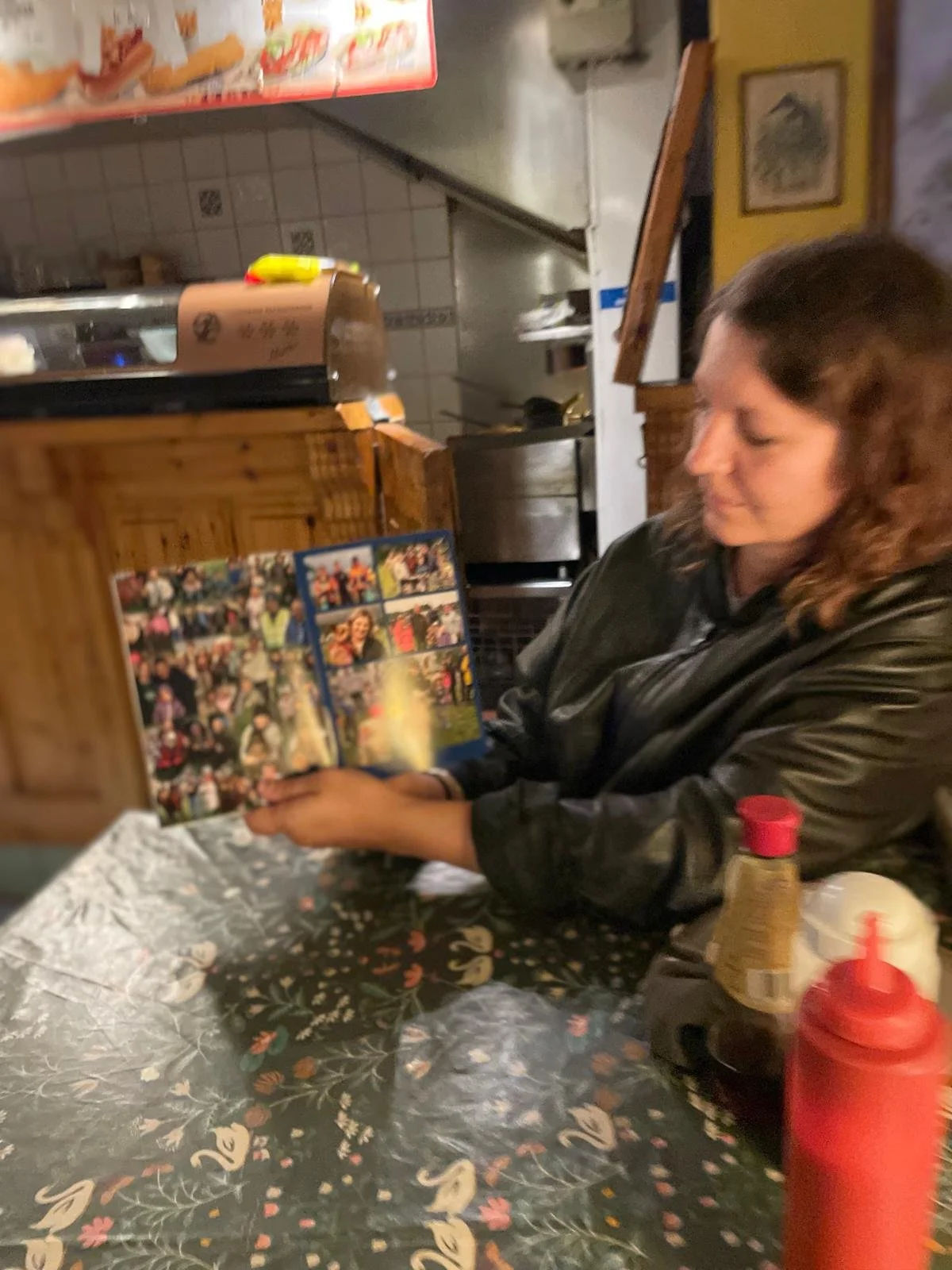
After crossing the Priests Pass we arrived in the village of Kilgarvan on the banks of the Roughty River where we were able to rest a short while, wash and dry clothes, listen to polkas in the local pub, witness the elation of someone winning Gaelic football all Ireland final tickets, and eat one of the best burgers of our lives at The Village Grill. We had a nice chat with the proprietor who has been cooking for the village for over fifty years, and a fella came in wearing a Donegal Rally t-shirt and joined in. Everyone in Kilgarvan is either massively into Gaelic football; Kerry are a leading team that frequently make it to the finals; or motor heritage; being home to the Kingarvan Motor Museum and the well-known rally stage, the Healy pass. The pass is an ancient track known in Irish as Bealach Scairt, meaning the way of the sheltered caves. It was cut and dug in 1847 by starving people in the area to earn a wage, as part of an infrastructural public relief project during the famine.
Travelling in Ireland in 1835, French magistrate, Gustave de Beaumont and his companion, philosopher Alexis de Tocqueville documented extreme rural poverty - the damaging role of absentee English landlords, the deep social divisions tied to the Protestant Ascendancy. They researched rural Ireland’s socioeconomic conditions and the impact of British rule. In his journal, de Beaumont noted, The Irish Catholic finds only one profession within his reach – and when he has not the capital necessary to become a farmer he digs the ground as a labourer.
Initially the Famine road was called the Kerry Pass and at some point it was changed to Healy pass, named after the troublesome and ‘scurrilous’ politician, Tim Healy; who openly clashed with Charles Stewart Parnell in a hilarious feud that prompted nine-year-old Dublin schoolboy James Joyce to write a poem called Et Tu, Healy? These are the only lines that remain from that poem, which was printed on broadsheet in 1891, circulated with family friends and sent to the Vatican…
His quaint-perched aerie on the crags of Time
Where the rude din of this century
Can trouble him no more.
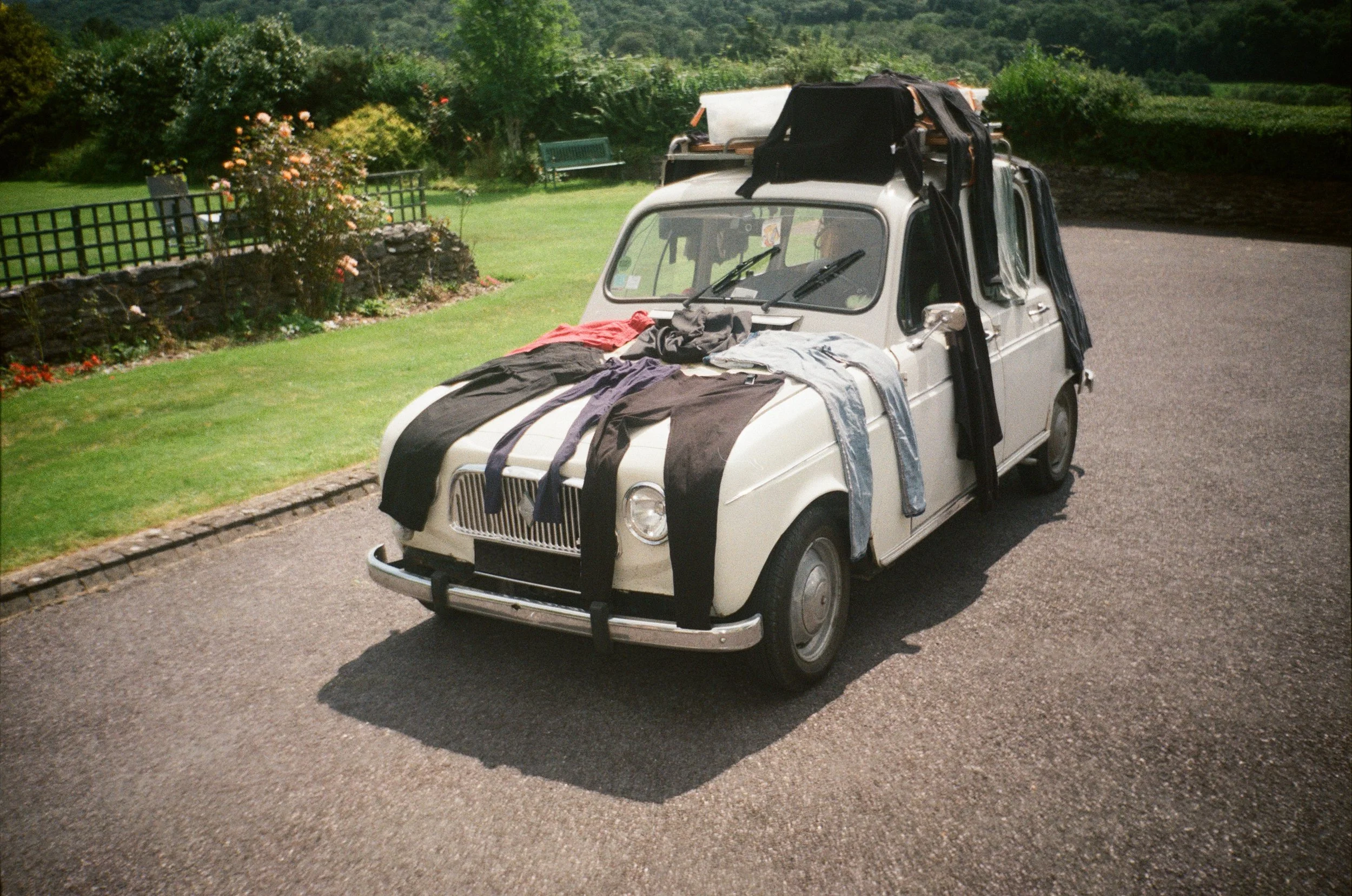
On this day last year we sat in the sun drinking coffee and drying our clothes with the heat emanating from the 4L. The tour had stalled here in Kilgarvan after we happened across the Motor Museum just as it was about to close. For this reason, we decided to see if it was possible to fit in a visit in the morning before heading towards Inch to meet visual artist Laura Fitzgerald.
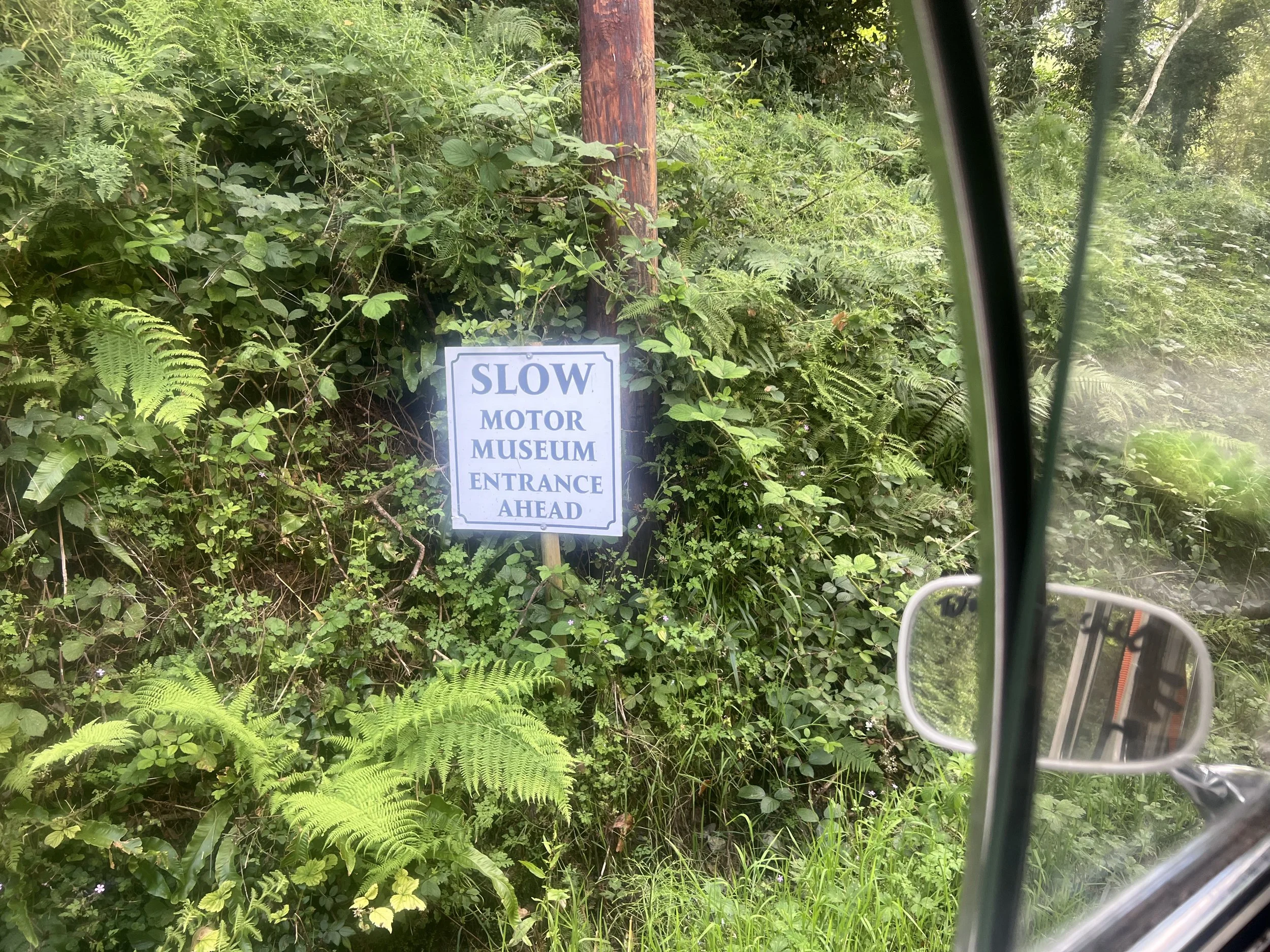
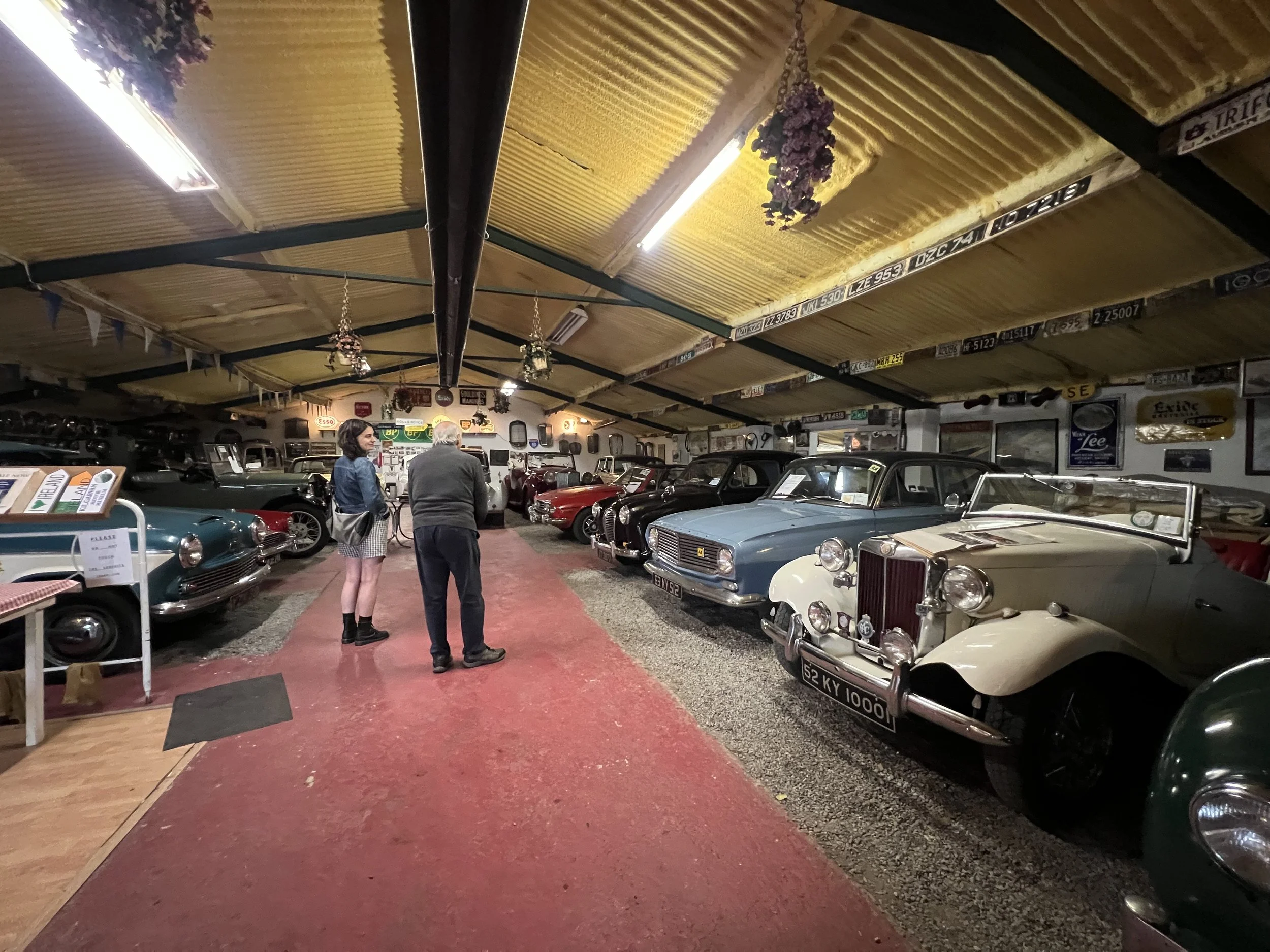
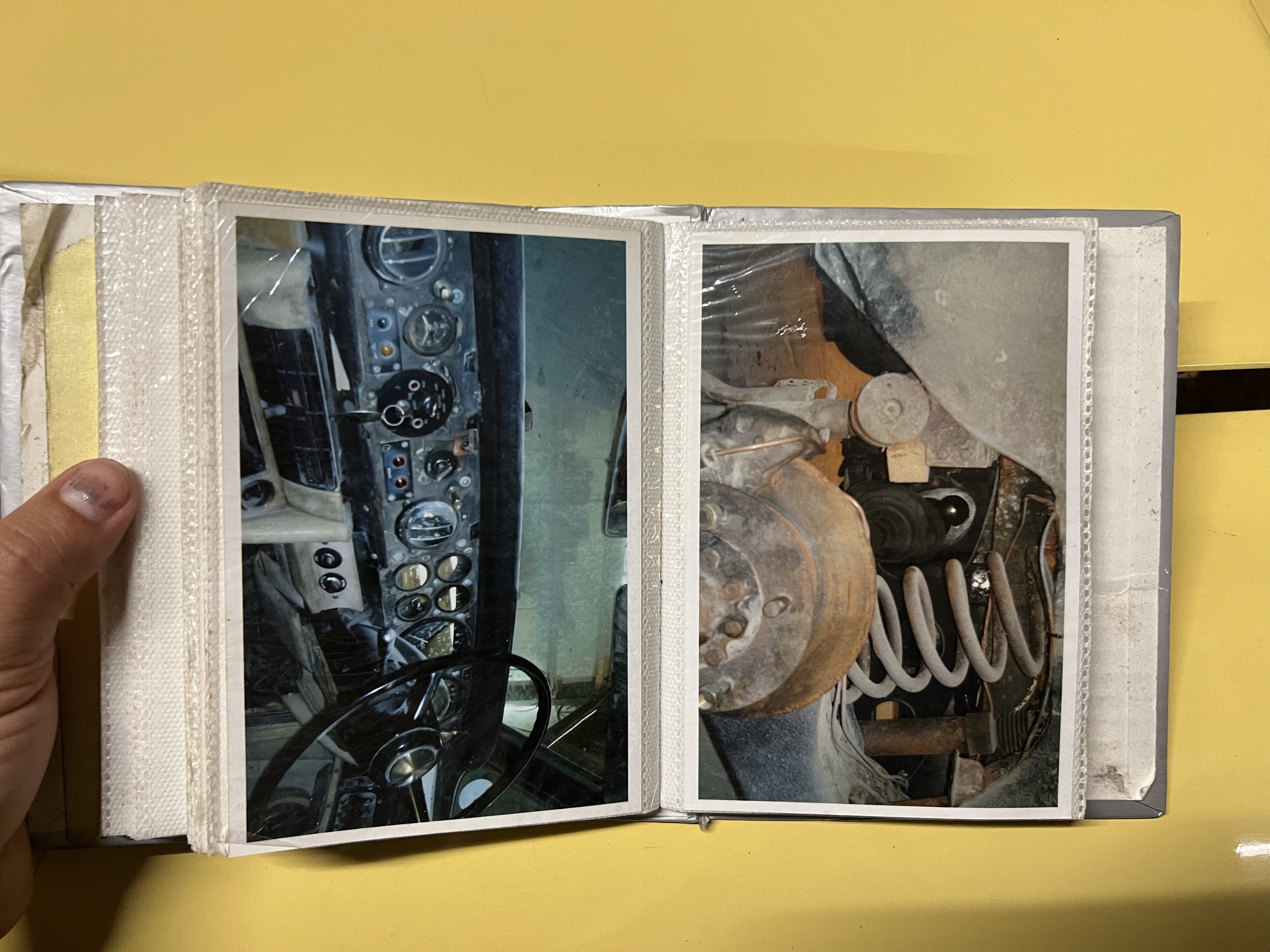
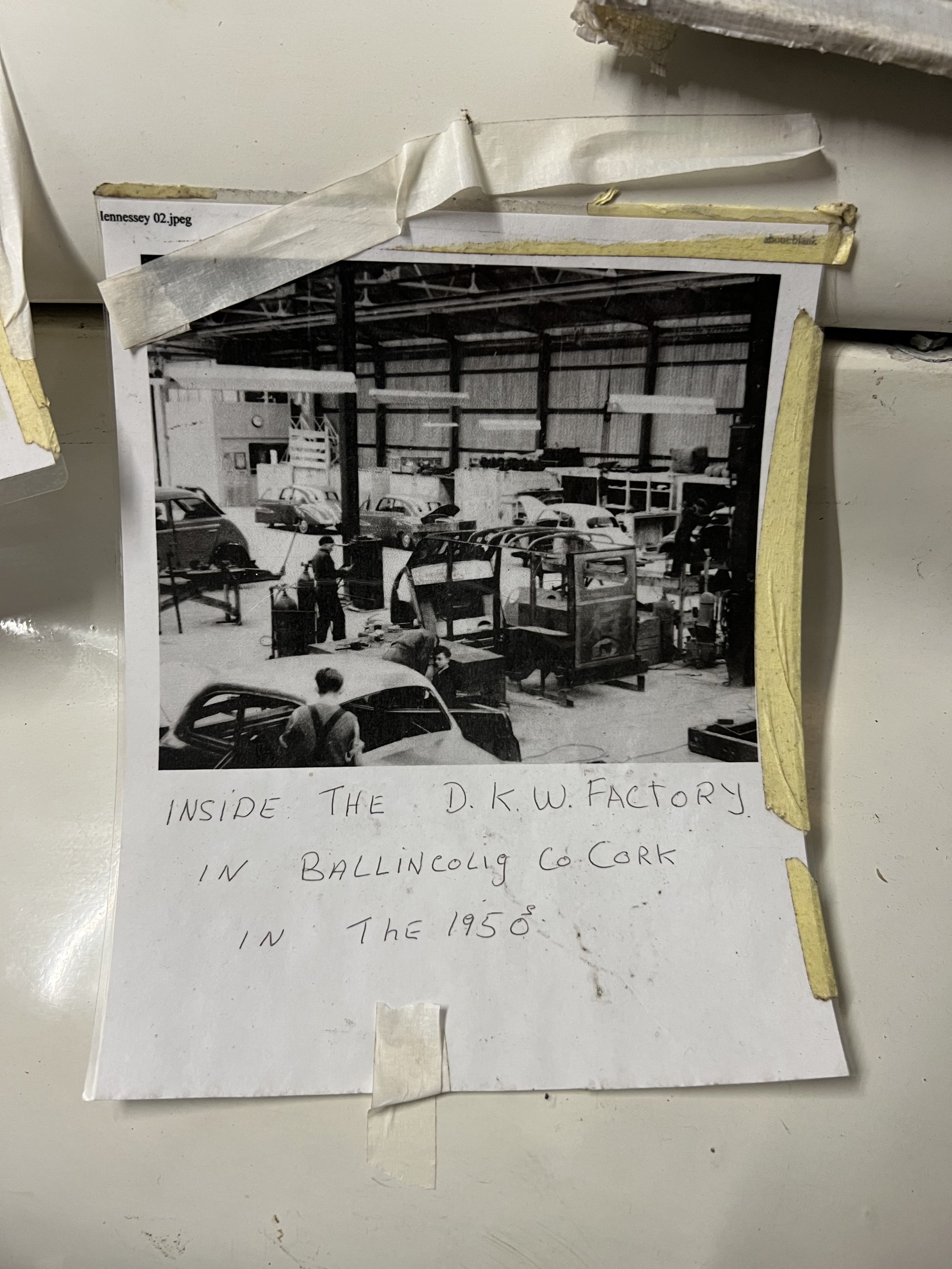
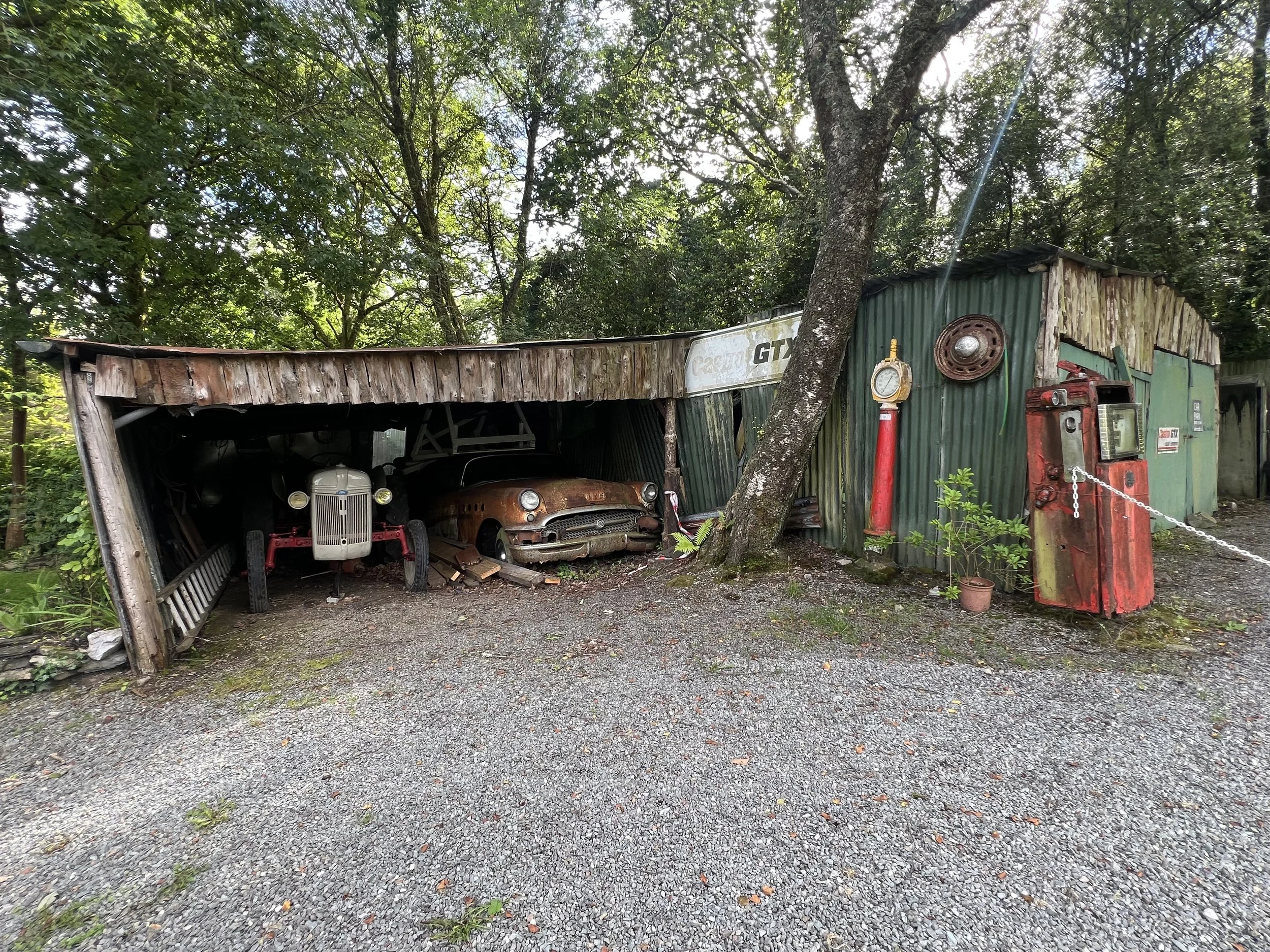
Driving along the Shandrum road, a small sign in the thicket points in the direction of a barn. On following the sign, approaching the clearing, you can see there are several barns with vehicles at varying stages of rust and ruin, awaiting their resurrection. Inside the barns, there’s a collection of cars, that represent a comprehensive cross section of Irish motor heritage. John and Joan Mitchell have built this collection over decades. The two of them repairing, building, sourcing parts, studying, researching, problem solving to preserve old models or bring them back from the brink. John started the museum in 1986 with his first exhibit, a 1946 Armstrong Siddeley Lancaster. For years John had the car in the back of his garage in the village where he worked as a mechanic, opening his business in 1968. And as he gradually repaired the Armstrong Siddeley Lancaster, people frequenting the garage shared stories of other forgotten cars in far flung barns. It became John and Joan’s life’s work to collect these cars, restoring them to their former glory. Exhibiting the objects, curating the collection, welcoming visitors through guided in-person tours and self-published memoirs, John, Joan and their two sons are an example of one family preserving an entire story, a material history through carefully collected and meticulously repaired objects sourced in barns and exhibited in a museum built from the ground up.
That evening, we finally made it to Inch, where Laura Fitzgerald and her father Micheál warmly welcomed us and so kindly agreed to guide us around the area on a tour in the Renault 4, with a storytelling itinerary according to the local landscape. We parked up at the local pub in Inch and met beside some humorous, tongue in cheek murals by Laura – the classic smiling stout and a country road stop sign, subtle interventions in the visual lexicon of village life.
Laura is a visual artist based in Inch, Co. Kerry. Her work is colourful, playful, and distinctly humorous. Often handwritten comments and narratives accompany her drawings and paintings, sometimes referencing personal experiences and sometimes pointing to much broader issues. Laura’s work can be simultaneously dark but interspersed with lightness and wit. Moving between the local and the global, she references climate change and agricultural shifts in the context of residual colonialism in rural Ireland, the complicated relationships between land ownership and land occupation that have arisen circumstantially.
We joined Laura and her father for an interview where the two shared a co-authored story. The sensitivities of boundaries between places, how co-existence in rural areas is rapidly changing due to tourist interest or EU levies, compounded by inherited dynamics, neighbouring or familial tensions and feuds over land ownership, divisions, boundaries... Laura’s stories look at the embedded complexities of rural life that spill into the local environment catalyzing further intergenerational strife.
Land Eats You, a fiction by Laura Fitzgerald will feature here tomorrow evening…
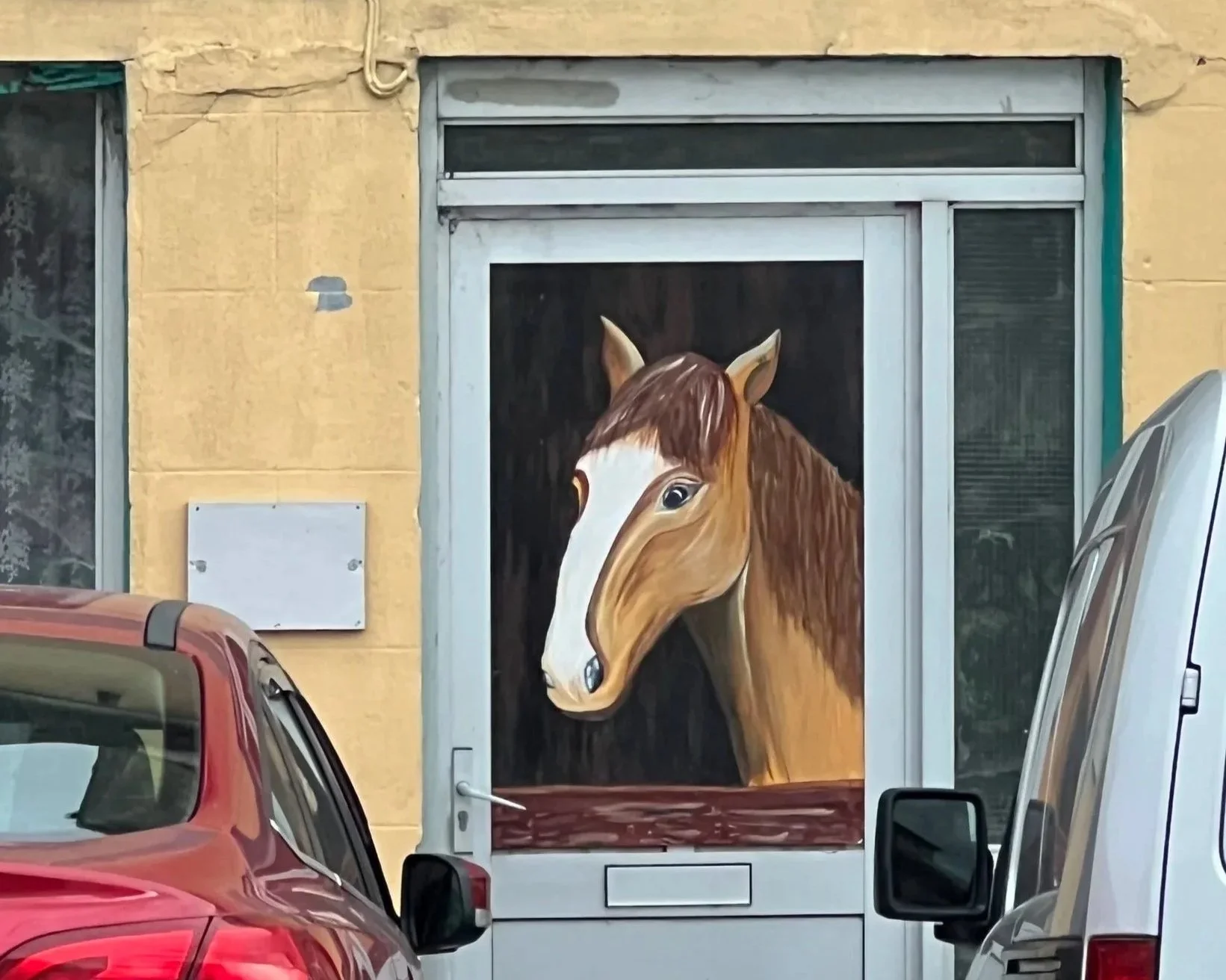
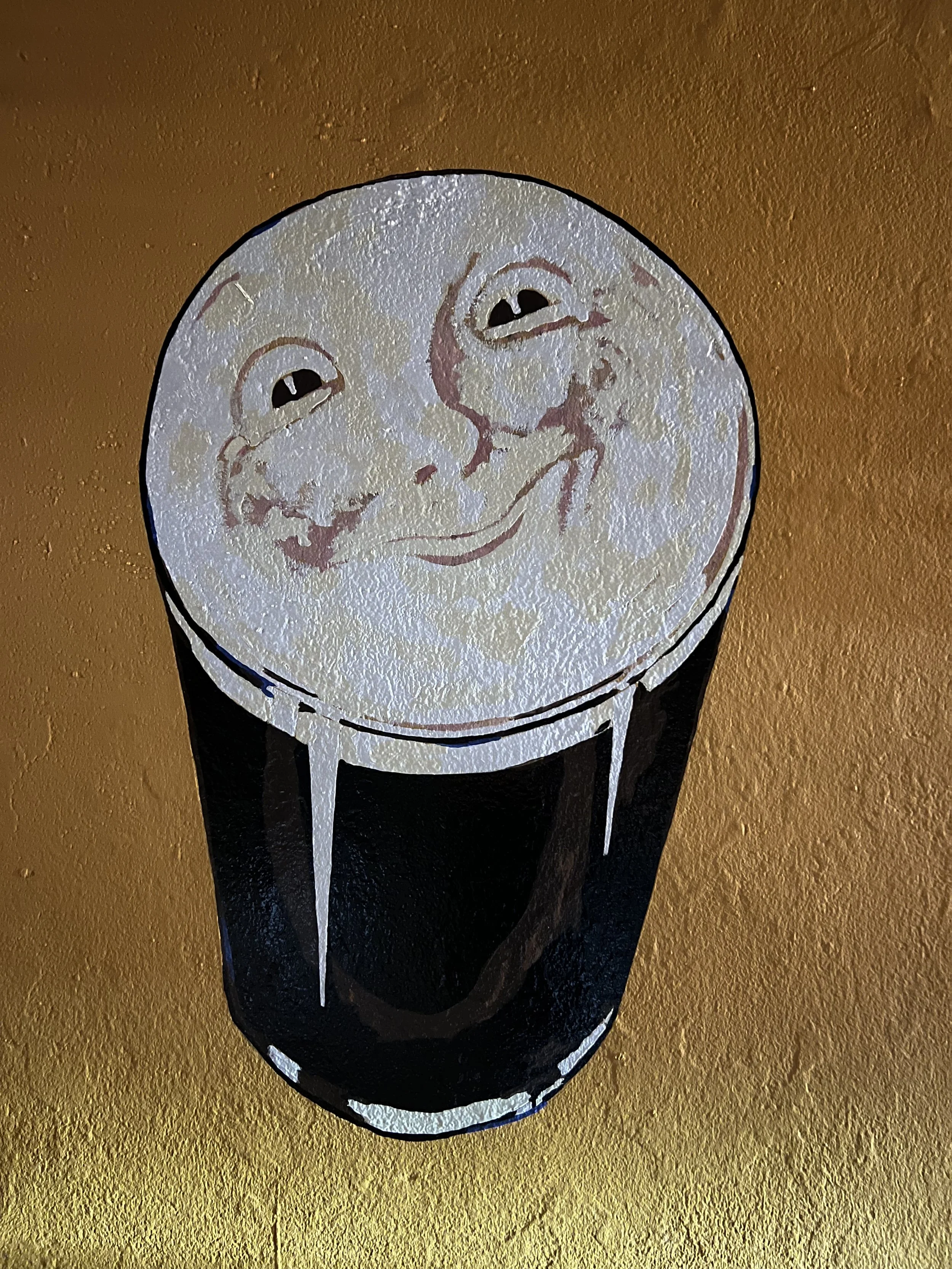
Hand painted artwork by visual artist Laura Fitzgerald at Inch Foley’s Bar
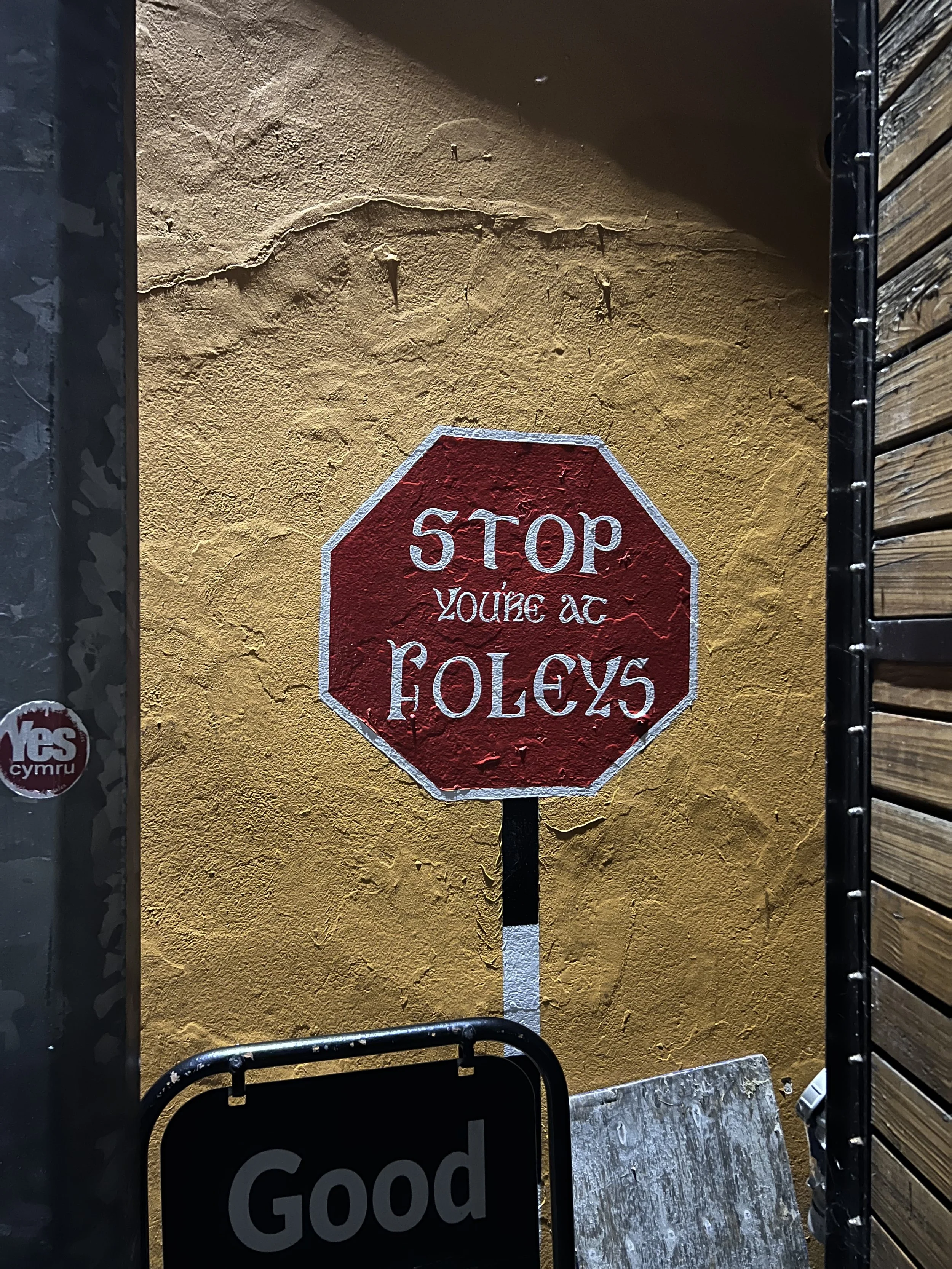
Hand painted artwork by visual artist Laura Fitzgerald at Inch Foley’s Bar