25.07.2025
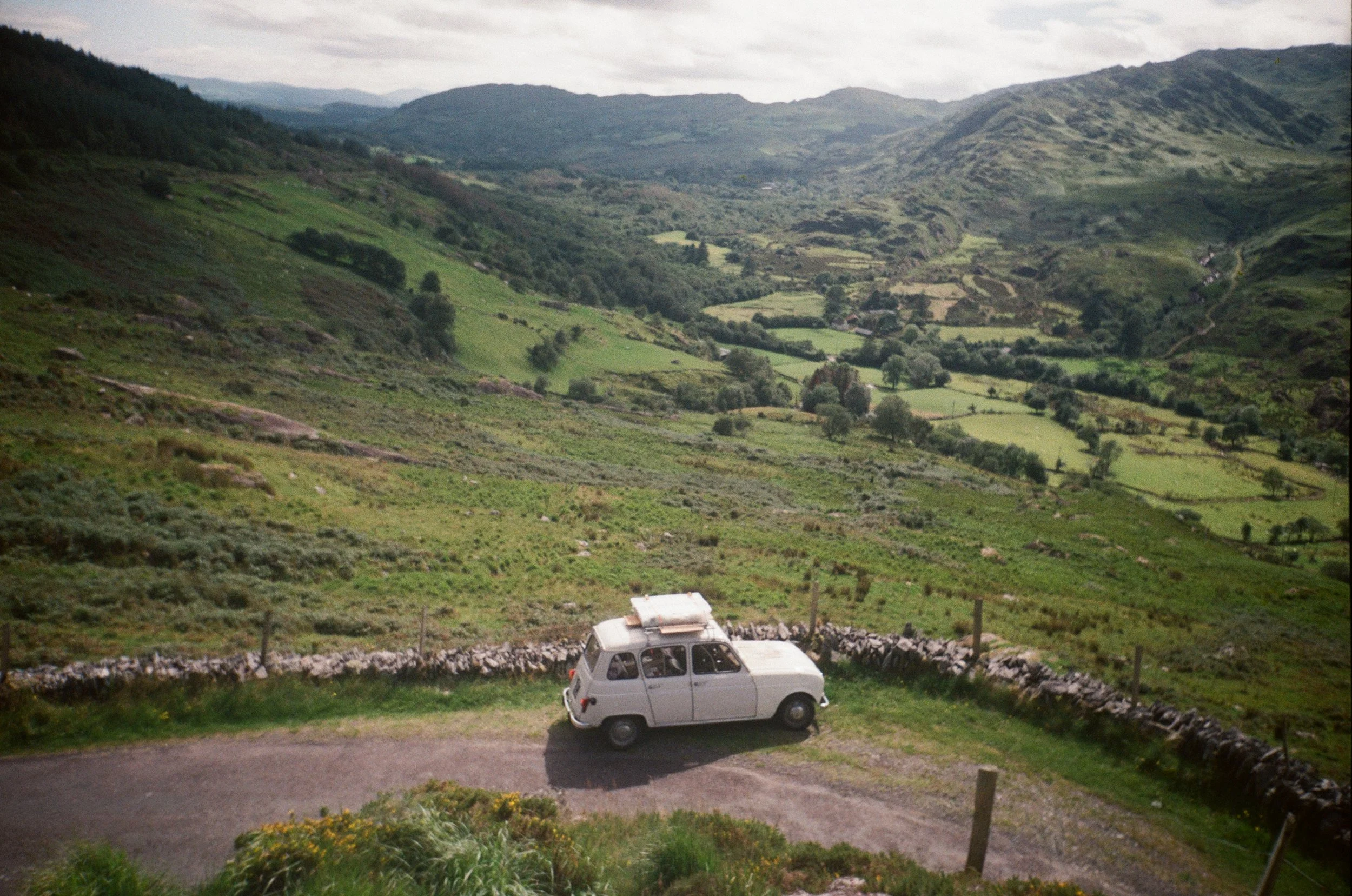
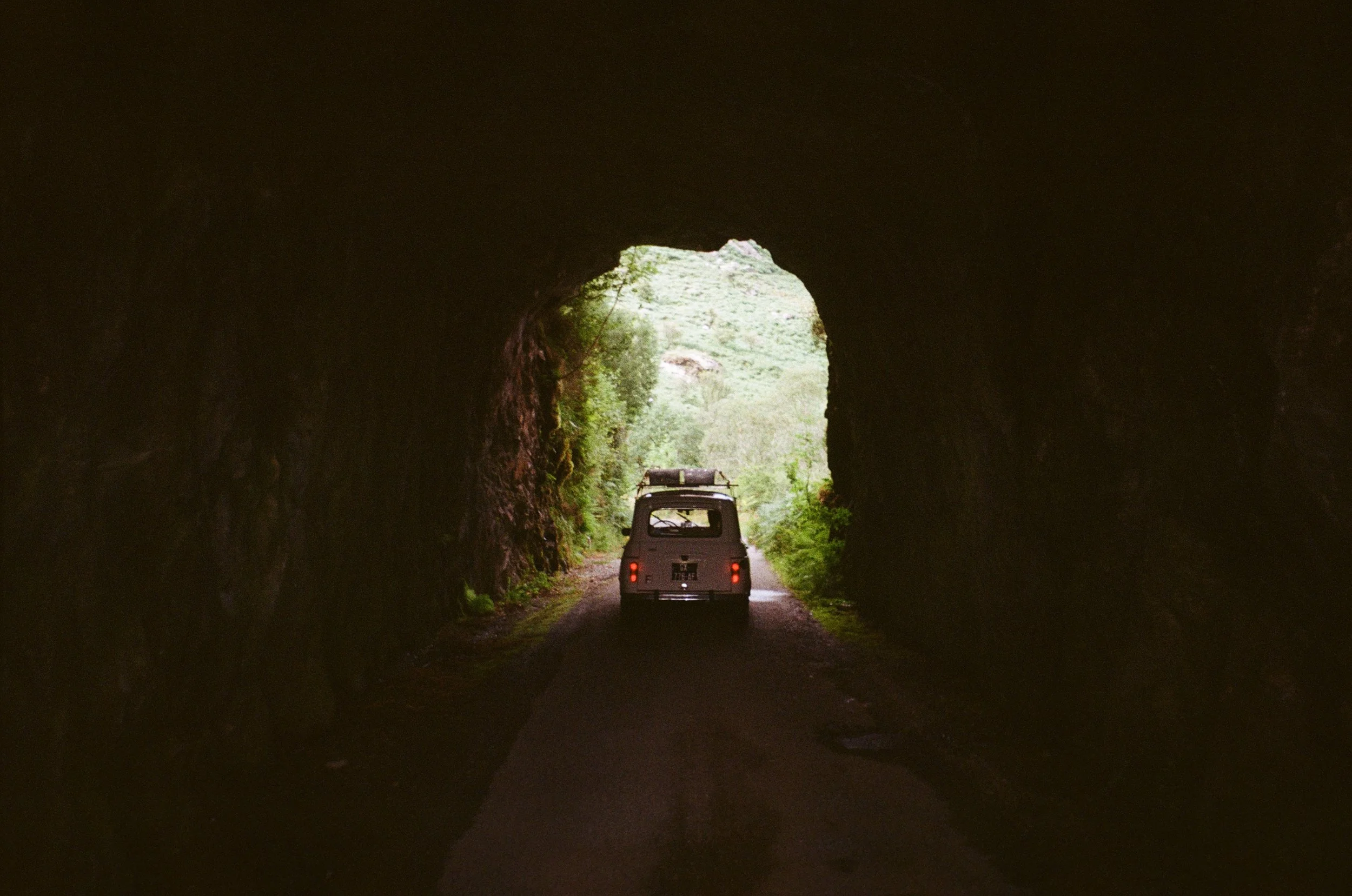
This time last year, we were travelling from Cork to Kerry on the highest road in munster on the advice of two ecologists we’d met in Ballydehob.
A conversation had sparked up outside Levis Corner House the previous night - about dwindling rural populations, obsolete farming practices, land use, outmoded equipment and extinct crops in upland, rural Ireland. We were due to leave Cork the following morning, so we asked…if by any chance at all, Will and Howard would be up for an interview in the Renault 4 that very night.
Something that seemed important on the tour, was to allow for diversions and tangents to take us off course from time to time – we wanted to accommodate detours from the main path so we could understand how the scale of development from premodernity to industrialisation had played out according to the landscape, and what effect this might have had on the circulation of culture.
Sometimes there are these moments in research, writing, art making where things click. For myself and Liliane who value process, fluidity and flux, it was wonderful to meet two academics with shared philosophies but in a completely different field. It was an opportunity to glean insight into how environmental changes are shaping land use, landscape and culture as a whole. And how fast this is all happening. Will and Howard, experts on wildfires and peat bogs respectively….
Will Hayes in his own words,
Currently I am a Postdoctoral Research Associate in Fire Governance in the Department of Geography at Royal Holloway, University of London. My work focuses on how land-use change, agricultural policy and governance shape wildfire risk, biodiversity and rural livelihoods, particularly in Ireland and Guyana. A few years back I completed a PhD in Biodiversity Management at University of Kent, where I examined the impacts of environmental change on biodiversity and rural communities.
I come from a farming background and originally trained in conservation ecology, later working in bird conservation and community engagement across Ireland and South America. Although I love working on the mountains or in the forest, I’ve always been equally interested in people, especially how communities live within, manage and shape landscapes over time. My work now focuses on socio-ecological systems and sustainable land management, with the aim of supporting landscapes that work for both biodiversity and the people who depend on them
Howard Cross biography from The Co-Centre for Climate + Biodiversity + Water is an international research centre website….
Howard Cross is a Co-Centre for Climate + Biodiversity + Water PhD researcher in the Trinity Geospatial and Environmental Modelling (T-GEM) group at Trinity College Dublin, supervised by Dr. John Connolly. His research looks at how restoring blanket bogs affects their ability to store carbon, and how changes in vegetation and land use play a role in that process. Before starting his PhD, Howard built up broad experience working across government agencies and multinational companies, carrying out both laboratory and ecological fieldwork. As an environmental consultant, he has contributed to a range of major infrastructure projects across Ireland, supporting assessments of how developments might affect wildlife, habitats, and protected sites. Howard’s background spans environmental science, project management, and farm payment schemes linked to environmental outcomes. This gives him a practical, joined-up approach to balancing the needs of rural communities with the wider demands of the modern world.
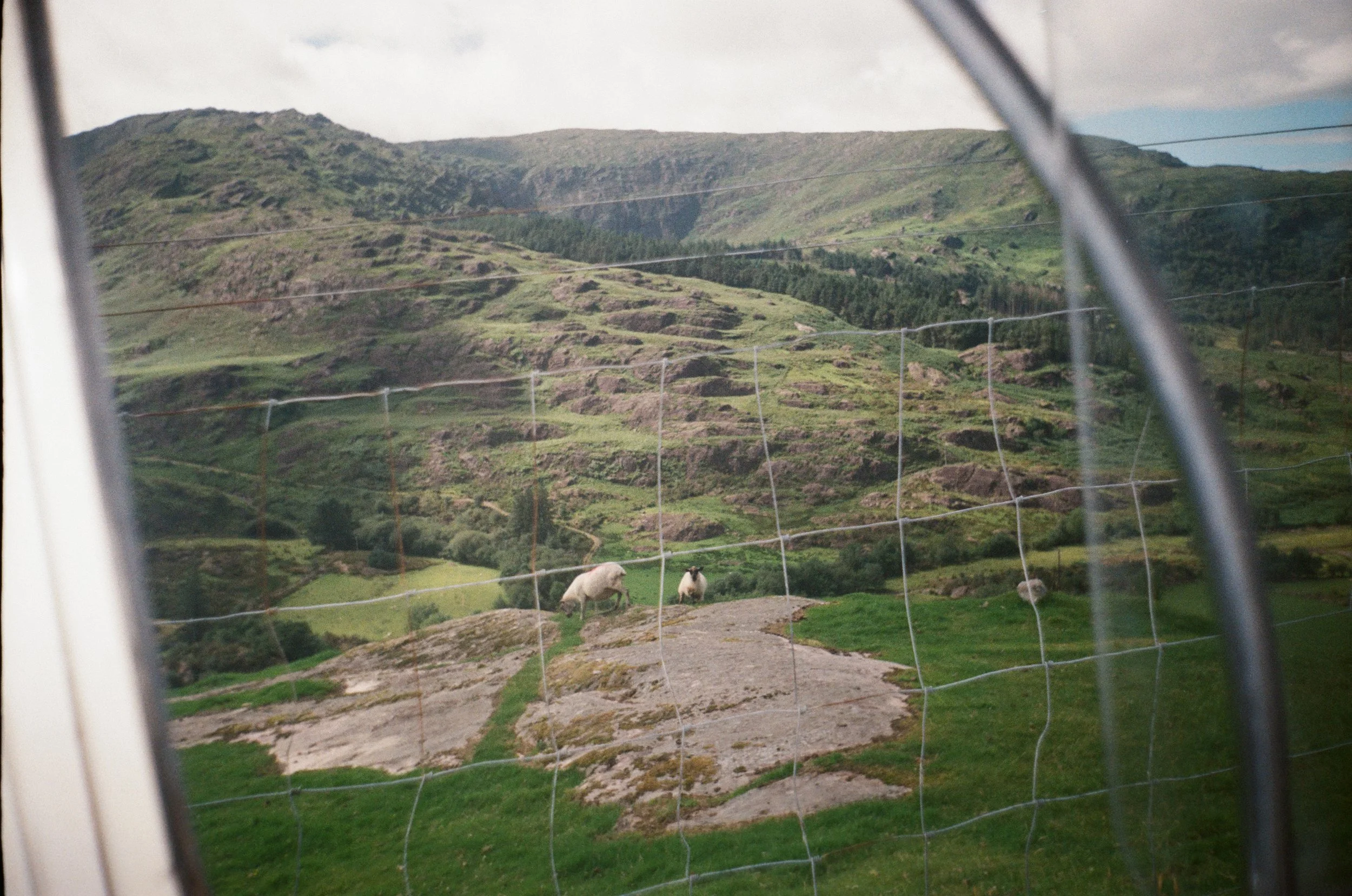
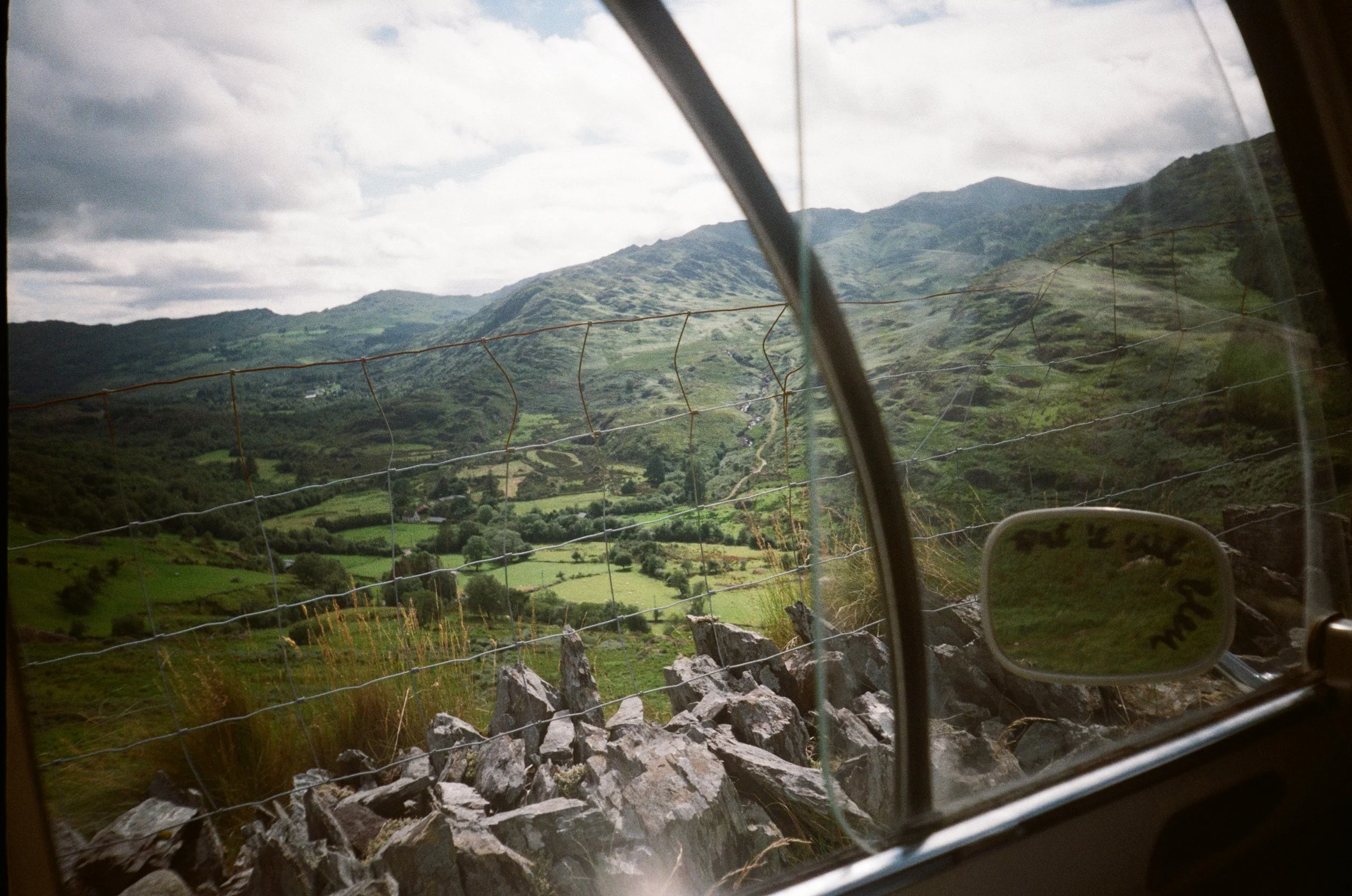
Throughout the tour, the maximum speed we’d reach would be no more than 60km or 70km/hr and we wanted to stay away from motorways, choosing quiet, forgotten roads and taking our time. With this in mind, the two ecologists recommended a route for us as we planned our onward journey towards Inch. They suggested that we take a route known as the Priests Pass from Cork, to Kerry, the highest pass road in Munster.These were the kind of roads we wanted to take during tour de force; roads less travelled, back roads, old rights of way, forgotten paths. Journeying in this way, connected us with storytellers and musicians of a bygone era, and with old place names remembering local landmarks and their associated uses and histories; millstones, wells and mountain passes. Along the route recommended to us by Howard and Will, we played music selected from a stack of specially commissioned mixtapes made for us by Vera and Taf in Ballydehob. We will revisit these beautiful soundscapes (with handmade covers from some very special guest artists) later when tour de force arrives on Rathlin Island.
One of the main ideas behind tour de force was to look at points of convergence between traditional and contemporary forms of creative expression in rural parts of Ireland. Something we came back to again and again; what it means to etch a living artform onto a permanent archive. During the tour we collaborated with, and commissioned artists, writers and musicians working across varying forms of cultural expression from traditional music and dance to contemporary visual art. This was a way for us to consider the history of creative expression on the island of Ireland; to look at why some traditions are documented in archives, and not others; or how they have circulated for generations through networks of old roads that follow the shape of the land. To think about the origin of a melody; how it became separated from the landscape that inspired it and the person who composed it, to belong to everyone forever.
Because Ireland is a country that has been colonised, it has a divergent canon of creativity compared to the rest of Europe. The institutions that stand to represent cultural circulation in Ireland were established by governing bodies, who were colonisers. We might think about how few contemporaneous paintings depict the Famine; An Gorta Mór 1845 to 1852, one of, if not the most significant events in the history of Ireland. We can thank musicians of the past, Travellers mainly, for their artistry in preserving objects of intangible heritage - in retaining the shape and integrity of ideas, thoughts, philosophies that moved freely and were only recently recorded and corralled into archives. Countless songs, melodies, techniques have been safeguarded by people with a kind of memory we won’t encounter again and shaped along roads and towns now bypassed.
In an oral culture that relies on social and generational dissemination, the rupture caused by the Famine obliterated the culture with a monumental effect on shaping the collective consciousness of rural Ireland. In huge numbers, the custodians of skill, creativity and innovation; the people themselves were killed and the knowledge died with them. We can’t know how many techniques, recipes, tunes, songs, ways of life, dwindled and became extinct during this time. But we can understand that oil painting was not the expression of these people and so is a merely illustrative, or removed representation of the canon of rural Irish creativity; a flimsy document of a monumentally devastating event. The idea of the Otherworld in tour de force considers Irish mythology as a place of music, poetry and dance. It’s the realm of the deities and the dead, a heavenly land beyond the sea, through a cave, down a well, on a plateau or under the earth, a parallel world that exists alongside our own through familiar and ancient features in the landscape.
We sat in the car, the four of us, Liliane, Will, Howard and myself, for an interview facing into Schull Harbour at night. Our collaborative tour de force adventure crossed paths with Howard and Will’s ecologist adventure and the encounter resulted in a very unexpected and fascinating conversation. You can watch the interview here…..