18.07.2025
Even now there are places where a thought might grow —
Peruvian mines, worked out and abandoned
To a slow clock of condensation,
An echo trapped for ever, and a flutter
Of wildflowers in the lift-shaft,
Indian compounds where the wind dances
And a door bangs with diminished confidence,
Lime crevices behind rippling rain barrels,
Dog corners for bone burials;
And in a disused shed in Co. Wexford…
- From A Disused Shed in Co. Wexford By Derek Mahon
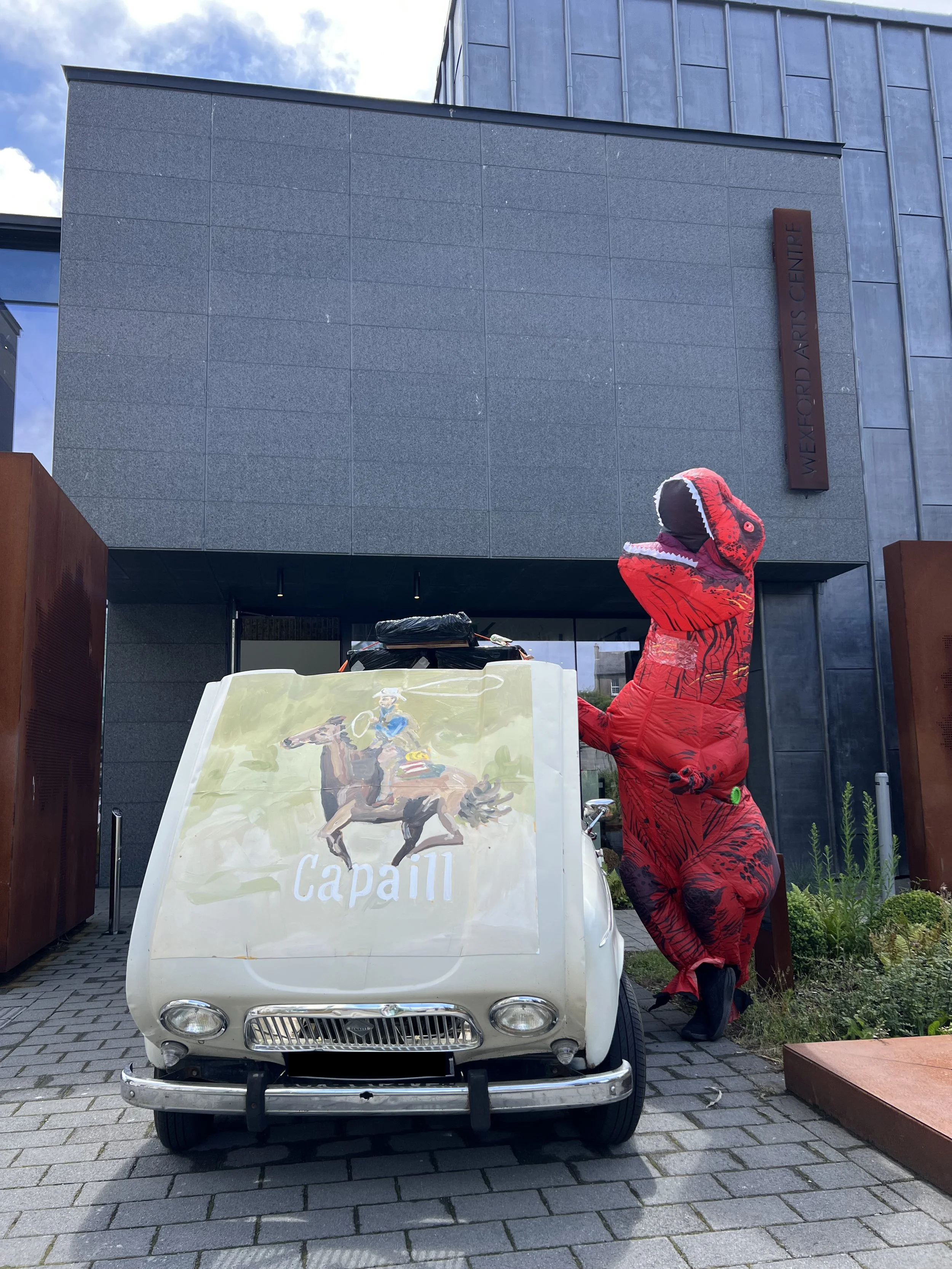
With the iconic car parked outside Wexford Arts Centre, this pitstop was a moment for Liliane and myself to talk about the origins of this joint adventure which started in summer ‘24 when Liliane fixed her late father’s Renault 4 with the help of mechanics; friends in her hometown of Haute-Savoie. Once the car was roadworthy, rodée, we began our journey, live streaming from the Renault 4, while driving across France and up through Ireland for Beep Beep, a major installation by Puthod curated by Temple Bar Gallery and Studios off-site at the Graving Docks, Dublin Port.
One of the defining factors of Beep Beep as an artwork, is its function as a transient museum and broadcasting unit, a touchstone for exchange. The car is an artwork that transports, shares and gathers other artworks. It’s on the move, circulating stories and in circulation itself - generating stories. On the roads less travelled, of intangible and material creative expression, the car is a portal into other worlds. It is this temporal and spatial fluidity that activates its meaning as an artwork. This is how, in essence Beep Beep became tour de force.
But back to the story, during our monumental journey from France to Ireland two years ago in summer 2024; just as the car reached Cherbourg - a crucial component that rotates the serpentine belt for cooling the engine snapped 200 meters from the ferry. As a queue formed to board the ferry; mechanics; aficionados, experts stopped to lend advice and practical help. We got the car onto the ferry and were assured that someone in Wexford would absolutely know how to fix a Renault 4. On the other side, at a Daybreak petrol station in Rosslare we immediately met Big Mick Hennessy; a mechanic, who drove an articulated lorry, bringing humanitarian aid from Wexford to former Yugoslavia in the 1990s. He was well known by truckers on that route; not only was he was an accomplished mechanic, not only did he carry spare truck parts for himself…BUT he also carried spare parts for others.
Big Mick Hennessy, having had one look under the bonnet, diagnosed the issue and called an old friend from the trucker days, local Renault 4 expert Michael Rice who miraculously fixed the part the following day (a Sunday) and got the car back on the road. Michael was also able to identify and fix a slight warp in the door that was letting in rain. Side note: Michael modified in his own Renault 4 in the 70s, installing six large speakers to create surly one of best mobile sound systems in Ireland at the time.
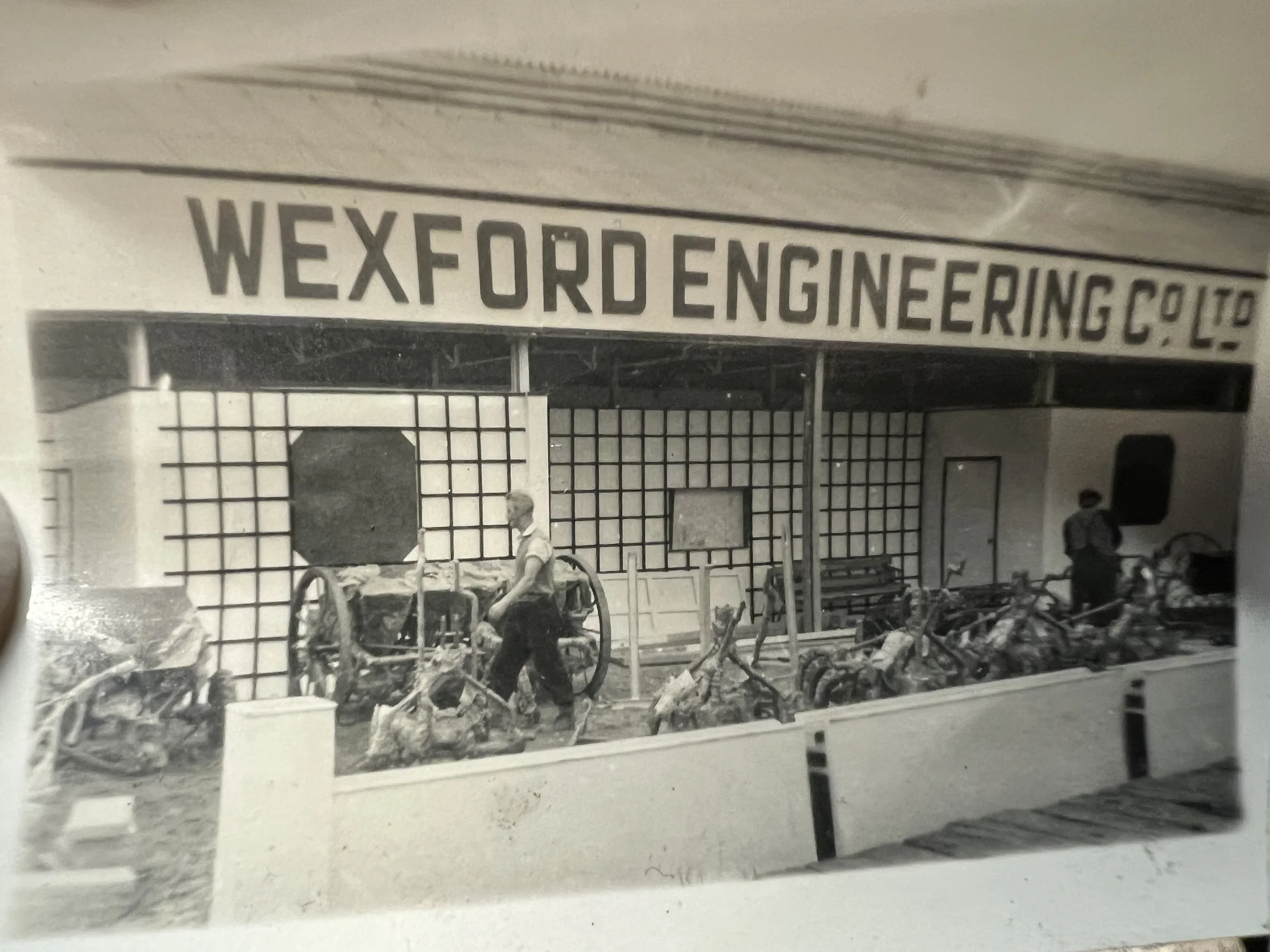
We were relieved to have met the right experts for the job, though Michael humbly suggested we were likely to have met another Renault 4 expert down the road anyway. Every second person in Wexford had worked at the factory at some point it seemed. Hundreds of local people formed the labour force that assembled imported Completely Knocked Down (CKD*) Renault 4s. CKD refers to an industrial loophole during a period of high import taxes in the 1970s, where the Renault 4 was made in Billancourt in France, broken down and shipped in parts to Wexford in huge crates where they were reassembled from the kits. This meant that the car could be sold much cheaper in Ireland, indeed it was many people’s first car – the first everyman car, for rural working classes. As such, the 4L is a vehicle for nostalgia and memory for this group. The car that brought people to their first dance, first job, first holiday. The car that folklorist and collector Tom Munnelly travelled around Ireland in during the 1970s documenting the songs, stories, melodies of Ireland.
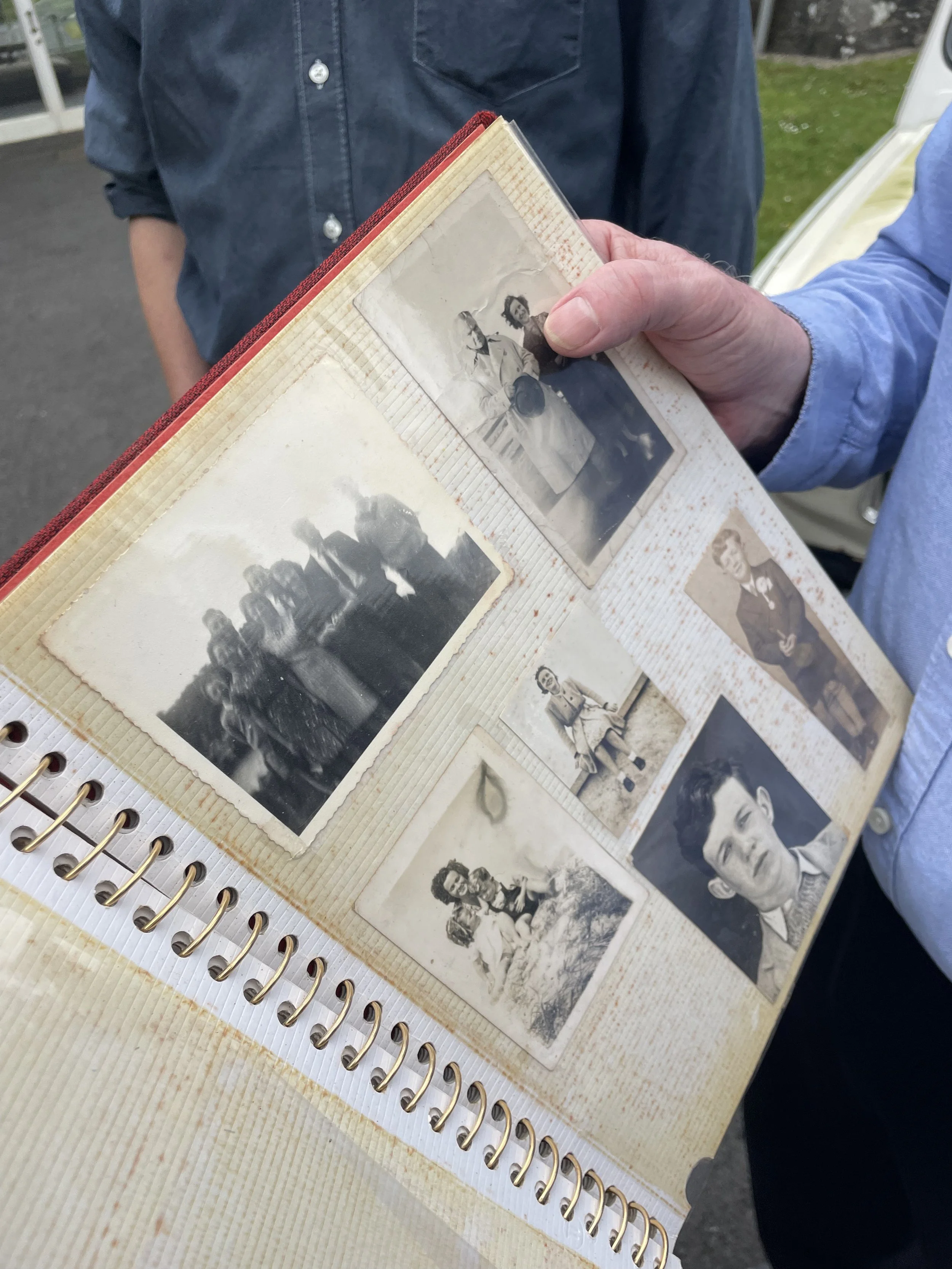
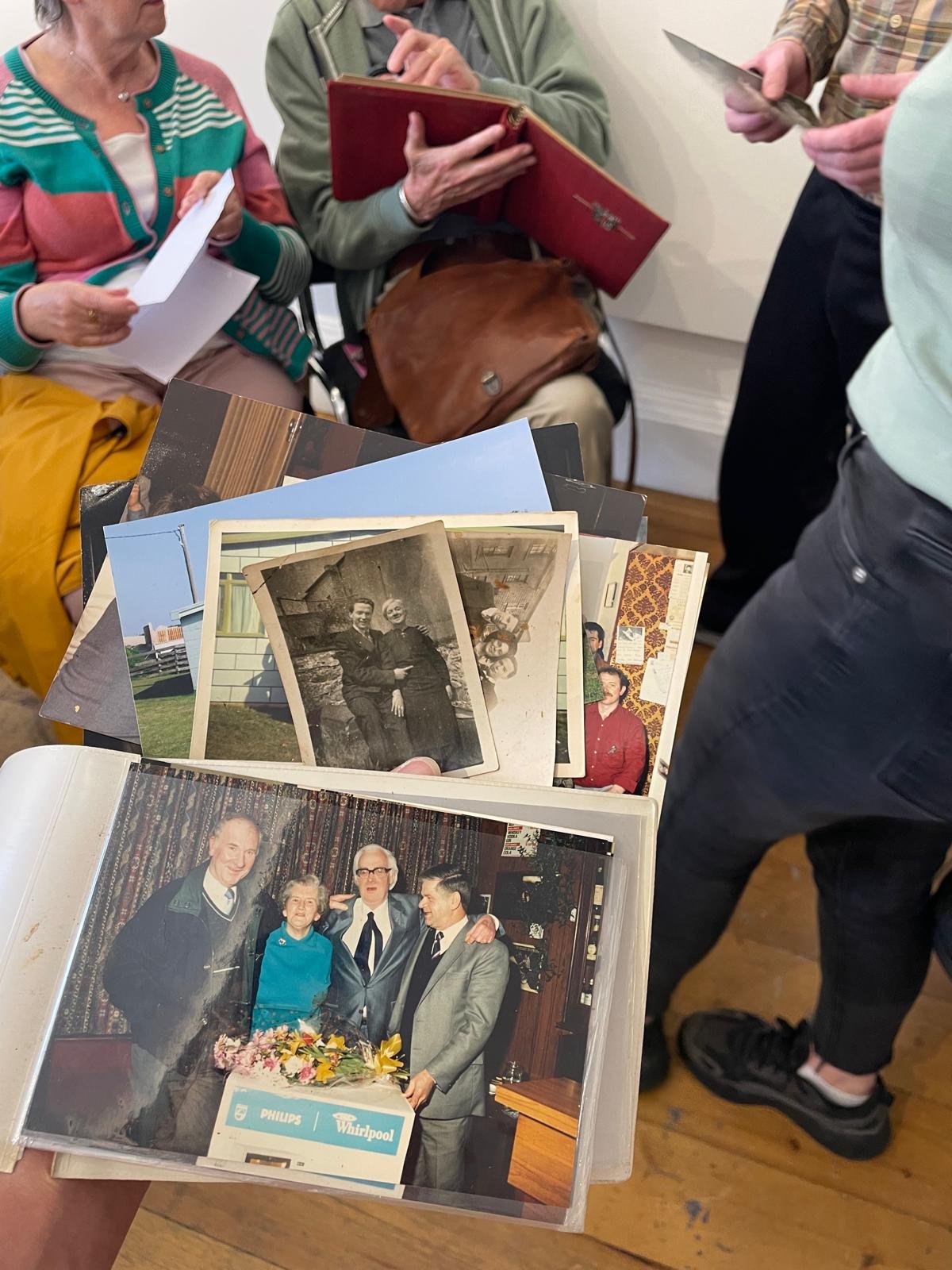
When we arrived at the Wexford Arts Centre, Anthony the gentleman we’d met the previous day, was at the entrance beaming at us. We drove the car onto the courtyard and pulled up in front of him, he walked around the car, peering in the windows, taking it in before putting the photo book on the bonnet. Well that certainly brings back a few memories, he said. We hopped out of the car, eager to have a look at the photo album. Then a momentary comical interlude occurred when a children’s entertainer in an inflatable dinosaur costume on lunch break, came over to the three of us and asked to look the 4L. The dinosaur quizzed us on the nuts and bolts of the tour, the whys and hows, until we had to excuse ourselves to go inside for the talk.
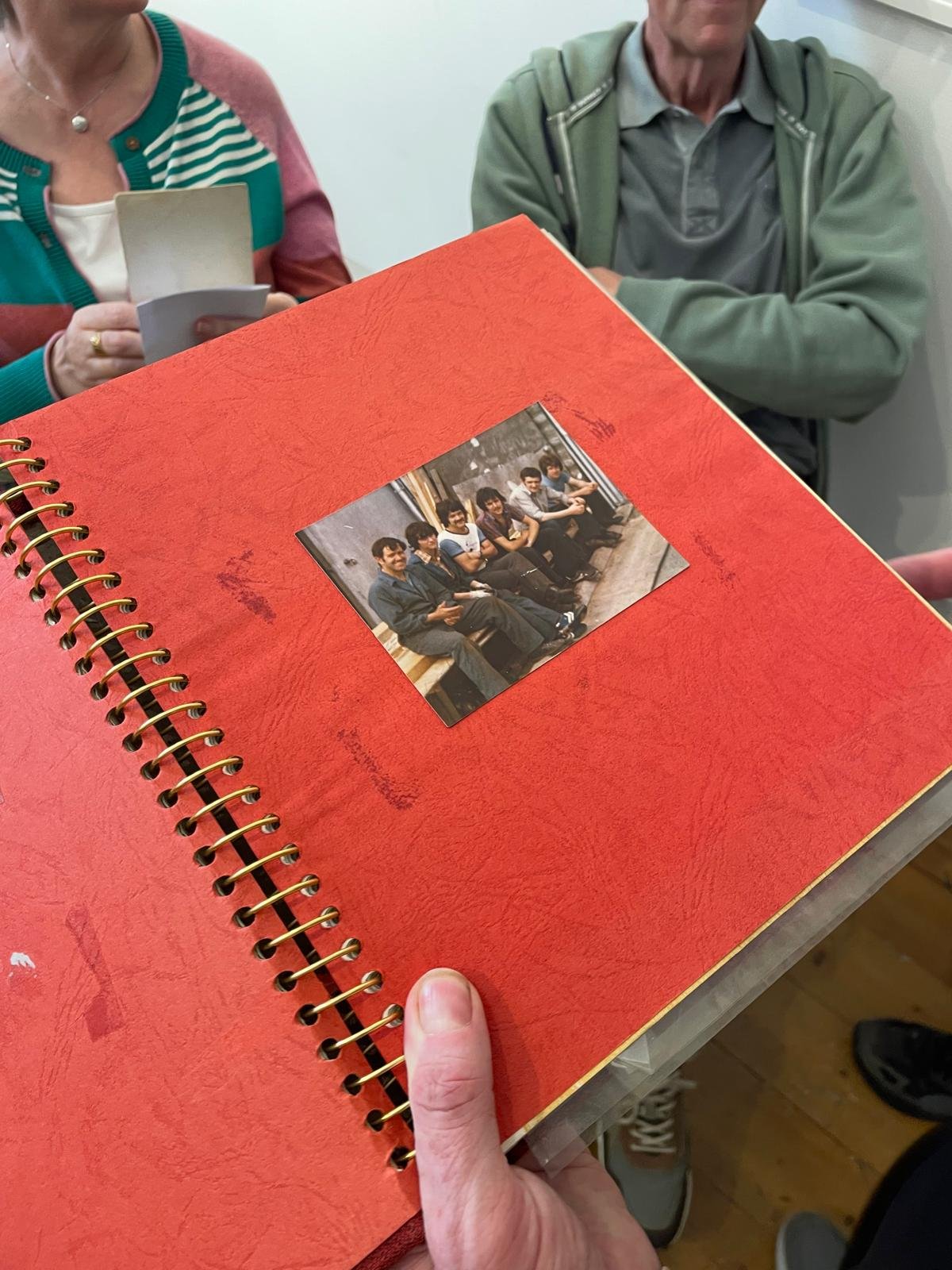
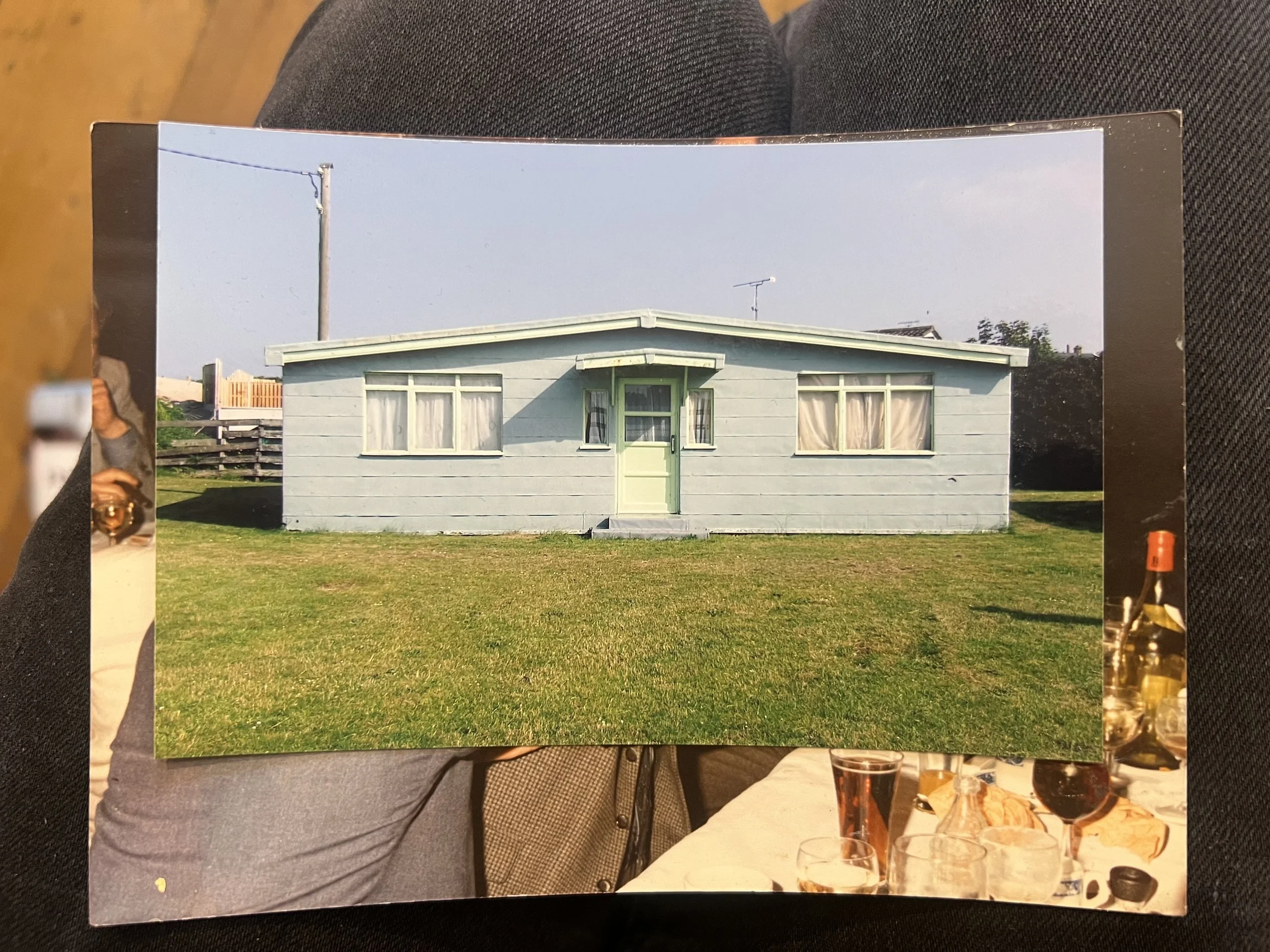
During the coffee morning event, Anthony presented the photo book to the other attendees. It transpired, by sheer co-incidence, that the photo album featured a photograph of another man who was there. The retired engineer recognised himself, his friends and colleagues as the book landed on his lap after circulating around the room. This was a wonderful coincidence and stories of the factory were connected with faces and places in the album. Another beautiful moment occurred when Anthony showed us a photo of his childhood holiday home, made from CKD* crates. Liliane had been aware of a phenomenon in the 1970s whereby it became popular to repurpose the crates used to transport CKD* Renault 4s into garden sheds and beach huts, so we were on a quest to find a photo of one of those, or to chat to someone who still had one.
It would be incredible to find one in existence. Imagine there’s one person out there who has been repainting the wood each year, repairing it, protecting it from sea weathering, from haloclasty, crystal wedging. That there is a well-preserved CKD* still used shed in Co. Wexford…