15.08.2025
Much of what we know about Anna Nic an Luain (1884-1954) comes from stories told about her from a collector who spent time with her in the late 1940s. She never put pen to paper, but knew hundreds of songs and stories. Some of these stories lasted a full day into the night. Though she never left the foot of the Blue Stack Mountains, she had a kind of worldliness that drew people to her.
We can only surmise that her wisdom was gleaned from a daily life of keen observation, levity, wit; awareness in her surroundings. How did she come to know so many stories, where did she get them. Her first person narratives of otherworldly encounters, with fairies for example; is she telling a story that she heard or is she relaying first-hand experiences. People gathered to listen to her, transfixed. She sang, danced, wove buicidín dolls from straw. She taught games and rhymes to children. On her wedding day, the tune that was lilted for her was a three part polka; Mac Eoghin Sheáin, iníon John Chait and we know this from the fiddle player Jimmy Campbell whose uncle was present and passed the tune on to him. When Seán Ó hEochaidh encountered Anna Nic an Luain in 1947, he had this to say about her,
She is as wonderful a woman as I ever met. I wrote down about two hundred songs from her, and as regards stories, traditional lore and other short items, there is no knowing how much I wrote down from her. Often while I was writing from her, I was reminded of a well of clear water in a great summer drought. The well would run dry today and tomorrow morning it would be full to the brim again. Thus it was with Anna. I would spend, perhaps, a whole day writing and taking down pieces of folklore of some kind from her, and I would be finished with her, it would appear, and if I went back the following day she would be ready again, and the well of knowledge would be brimming over…
Seán Ó hEochaidh recorded a cumulative tale from her called, Spág ar an Bhac during one of his visits in 1947. It’s what is often called a chain tale where actions are repeated and linked until a picture forms. These kind of narratives require great skill as their tongue tying and labyrinthine structures depend on rhythm, cadence, repetition and sometimes melody, for their effect.
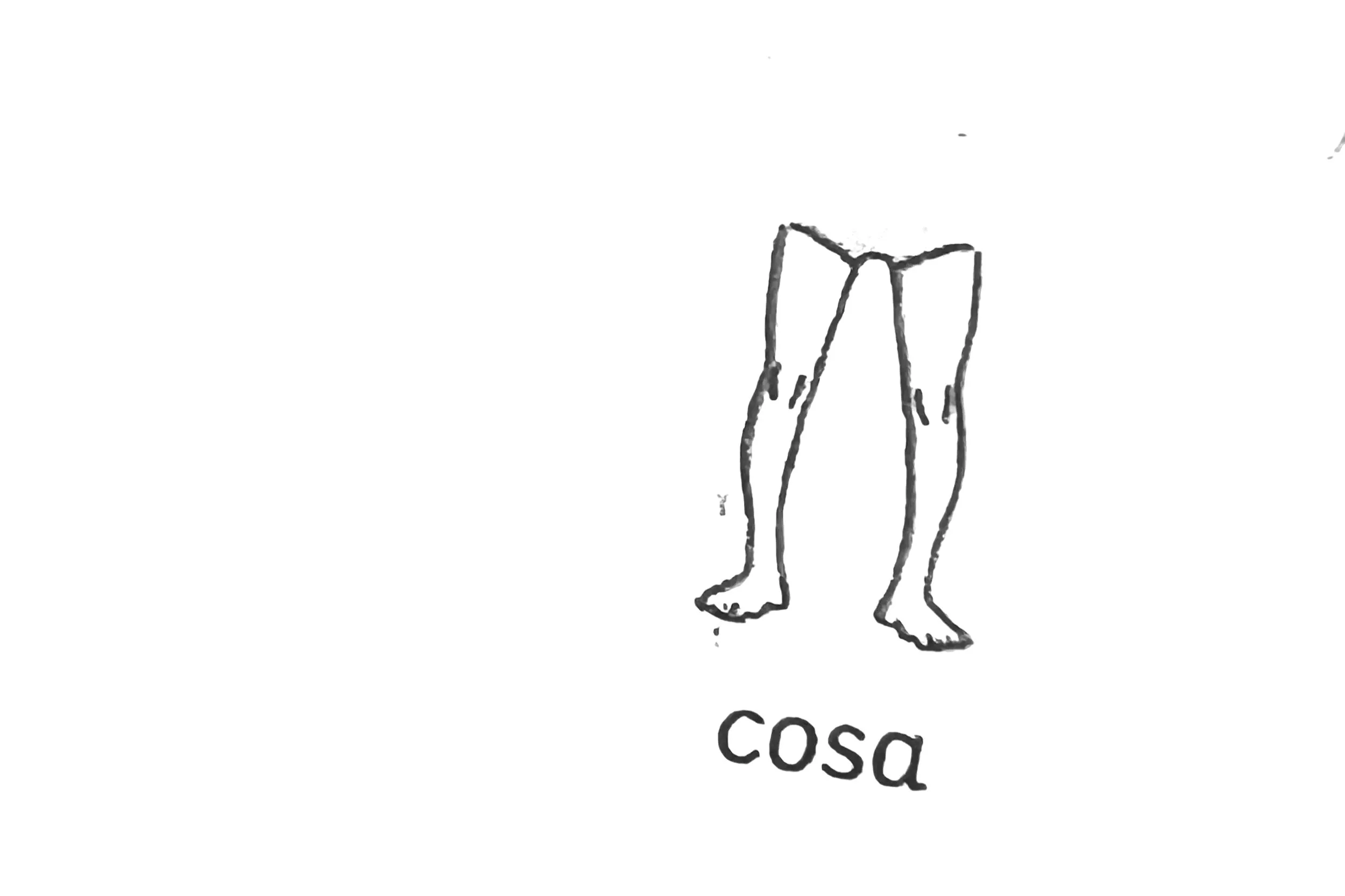
In the story of Spág ar an Bhac, a lonely woman is praying for company and gradually an apparition forms in front of her, beginning with the two feet; the two feet come and sit by the hearth. Then the two ankles come and sit on top of the two feet (the same two feet that are already on the hearth), then the two shins come in and sit on the two ankles…the two ankles that are sitting on the two feet on the hearth, and on it goes until finally; there is the full apparition.
In my mind, this poem could be considered alongside Samuel Beckett’s, Not I for its fragmented, disembodied stream of consciousness, dream logic. In Billie Whitelaw’s delivery of the monologue Not I, a single illuminated disembodied Mouth frantically whispers into the darkness. There a denial of self that is inherent in Beckett’s Not I and the Irish storytelling tradition as a whole. According to Anna Nic an Luain; songs, stories, riddles, games, dances, melodies that she shared came from other storytellers, her grandmother, the fire, fairies, animals…the otherworld.
RAINN
16.1. SPÁG AR AN BHAC
Tháinig an dá spág isteach agus shuigh siad ar an bhac. Tháinig an dá mhurnán isteach agus shuig siad ar an dá spág agus bhí an dá spág ar an bhac.
Tháinig an dá lorgán isteach agus
shuigh siad ar an dá mhurnán,
Shuigh an dá mhurnán ar an dá spág agus
shuigh an dá spág ar an bhac.
Tháinig an dá ghlúin isteach agus
shuigh siad ar an dá lorgán,
an dá lorgán ar an dá mhurnán,
an dá mhurnán ar an dá spág agus
shuigh an dá spág ar an bhac.
Tháinig an dá láirig isteach,
Shuigh an dá láirig ar an dá ghlúin,
an dá ghlúin ar an dá lorgán,
an dá lorgán ar an dá mhurnán,
an dá mhurnán ar an dá spág, agus
shuigh an dá spág ar an bhac.
Tháinig an dá leis isteach.
Shuigh an dá leis ar an dá láirig,
an dá láirig ar an dá ghlúin,
an dá ghlúin ar an dá lorgán,
an dá lorgán ar an dá mhurnán,
an dá mhurnán ar an dá spág agus
an dá spág ar an bhac.
Tháinig an tóin isteach.
Shuigh an tóin ar an dá leis,
an dá leis ar an dá láirig,
an dá láirig ar an dá ghlúin,
an dá ghlúin ar an dá lorgán,
an dá lorgán ar an dá mhurnán,
an dá mhurnán ar an dá spág agus
an dá spág ar an bhac.
Tháinig an droim isteach.
Shuigh an droim ar an tóin,
an tóin ar an dá leis,
an dá leis ar an dá láirig,
an dá láirig ar an dá ghlúin,
an dá ghlúin ar an dá lorgán
an dá lorgán ar an dá mhurnán,
an dá mhurnán ar an dá spág, agus
an dá spág ar an bhac.
Tháinig an dá shlinneán isteach.
Shuigh an dá shlinneán ar an droim,
an droim ar an tóin,
an tóin ar an dá leis,
an dá leis ar an dá láirig,
an dá láirig ar an dá ghlúin,
an dá ghlúin ar an dá lorgán,
an dá lorgán ar an dá mhurnán,
an dá mhurnán ar an dá spág, agus
an dá spág ar an bhac.
Tháinig an dá ghualainn isteach.
Shuigh an dá ghualainn ar an dá shlinneán
an dá shlinneán ar an droim
an droim ar an tóin,
an tóin ar an dá leis,
an dá leis ar an dá láirig,
an dá láirig ar an dá ghlúin,
an dá ghluin ar an dá lorgán,
an dá lorgán ar an dá mhurnán,
an dá mhurnán ar an dá spág, agus
an dá spág ar an bhac.
Tháinig an muineál isteach.
Shuigh an muineál ar an dá ghualainn
an dá ghualainn ar an dá shlinneán,
an dá shlinneán ar an droim
an droim ar an tóin,
an tóin ar an dá leis,
an dá leis ar an dá láirig,
an dá láirig ar an dá ghlúin,
An dá ghlúin ar an dá lorgán,
an dá lorgán ar an dá mhurnán,
an dá mhurnán ar an dá spág agus
an dá spág ar an bhac.