12.07.2025
When Fiction Lives in Fiction the 1939 essay by Argentine writer Jorge Luis Borges considers metanarrative in At Swim-Two-Birds, a 1939 novel by Irish writer Brian O'Nolan, writing under the pseudonym Flann O’Brien…
At Swim-Two-Birds is not only a labyrinth; it is a discussion of the many ways to conceive of the Irish novel and a repertory of exercises in prose and verse which illustrate or parody all the styles of Ireland. The magisterial influence of Joyce (also an architect of labyrinths, also a literary Proteus) is undeniable, but not disproportionate in this manifold book. Arthur Schopenhauer wrote that dreaming and wakefulness are the pages of a single book, and that to read them in order is to live, and to leaf through them at random, is to dream. Paintings within paintings and books that branch into other books help us sense this oneness.
The tour de force Co. Laois pit stop was curated in collaboration with visual artist Paddy Critchley, in partnership with Dunamaise Arts Centre. A day of mountain views, fresh air, Laois singer Kean Kavanagh; The County Star, national monuments and burritos, cowboys, storytelling, historically accurate Vikings and hermits. Amongst the ruins, painter, singer and Laois native Paddy Critchley unveiled a specially commissioned work, a hand painted decal for the bonnet of the Renault 4, with the word Capaill, the Irish word for horse, underneath. Site responsive performances from Acid Granny Hoors of Ireland ensued. A banquet artwork, picnic by Liliane Puthod, with paper party plates and handmade, glazed ceramic replicas threw the day into sensorial disorientation as objects seemed to melt off the ruins onto the grass beneath. A number of hand painted signs by Paddy guided people through the village and the ruins, between realms of reality and fiction, wakefulness and dream. In the hills of Co. Laois…..the Renault 4 drifted into another world of music, art, poetry, and song through satire, surrealism, and wit…presenting a melange of mingling and clashing narrative rotations.
Artworks within artworks, worlds within worlds, history, fiction, reality melting together, Meanwhile Back at the Ruins was a music, theatre, performance, fine art, dance picnic at what is widely believed to be Ireland’s most beautiful and well preserved round tower, in a townland with a dense and expansive history.
Timahoe is about 12 km south of Portlaoise on the R426 regional road, and the name comes from saint Mochua - Tigh Mochua: 'House of Mochua' an abbot who founded the original monastic settlement on the site in the 7th century. Prior to the introduction of the modern regional road numbering system, the part of the road linking Portlaoise and Castlecomer was also named after Mochua – the old name for the road being Timahaun Road. This stretch of road passes residential areas and auto centres, as well as a number of historic sites including the round tower.
According to a plaque at the heritage centre beside the tower, Mochua spent his time alone with only his three pets for company. The rooster, mouse and fly were said to accompany him everywhere and help him in his routine. Local folklore has it that the rooster woke Mochua early each morning, the mouse rested on his shoulder and nibbled his ear if he nodded off whilst reading, and the fly walked along each line so he would never lose his place in the text.
Norsemen attacked and burned the monastery in the early 10th century, an event that was officially recorded in the Annals of the Four Masters after which the round tower was built at some point in the 12th century. In the 17th century, British colonial figure Oliver Cromwell issued a declaration on the 27th April 1652, placing a bounty on the head of every wolf. And the last wolf in Ireland was hunted down and killed in the area during the 18th century. In 1786, on a mountain near the tower in Timahoe, the last Mac Tíre, son of the land was killed; the wolf systemically eradicated and the Irish wilderness decimated.
for every bitch wolfe, six pounds; for every dogg wolfe, five pounds; for every cubb which prayeth for himself, forty shillings; for every suckling cubb, ten shillings; and no woolfe after the last of September until the 10th of January be accounted a young woolfe, and the commissioners of the revenue shall cause the same equallie assessed within their precincts.
In the 20th century, in the wake of British colonial rule, County Laois reclaimed its ancient Gaelic name 400 years after the name of Queen’s County was established during the Tudor plantations of the 16th century.
We chose the 12th of July for Meanwhile Back at the Ruins because it seemed as good a day as any to host a carnivalesque romp celebrating the defiance of language and tradition in post-colonial Laois. The sun cast a long shadow across the green while people paraded and danced on the hottest day of the year and later a group of traditional musicians gathered for a session of Irish music and song.
In the evening the coaches returned to take people back to the train station.
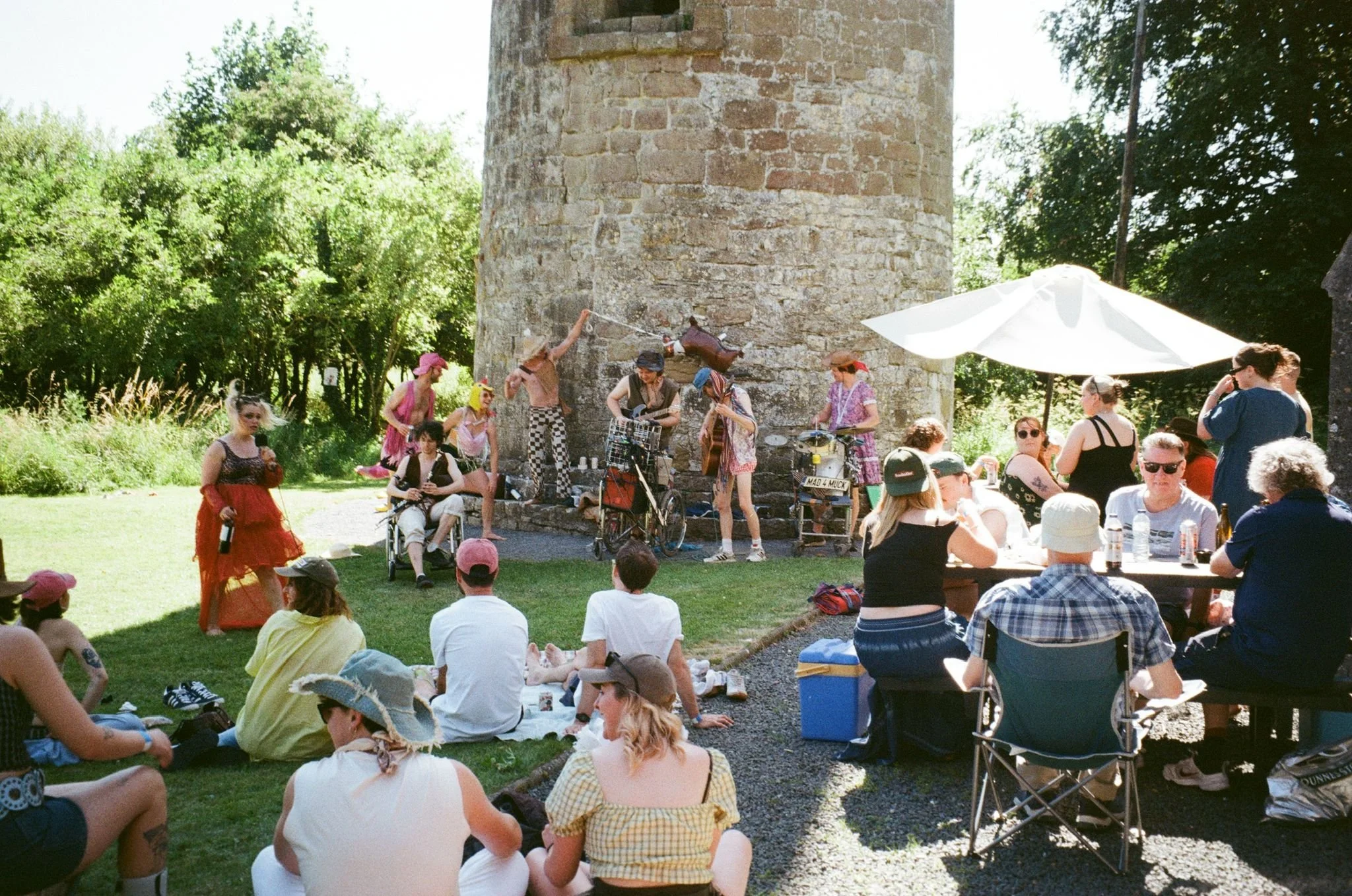
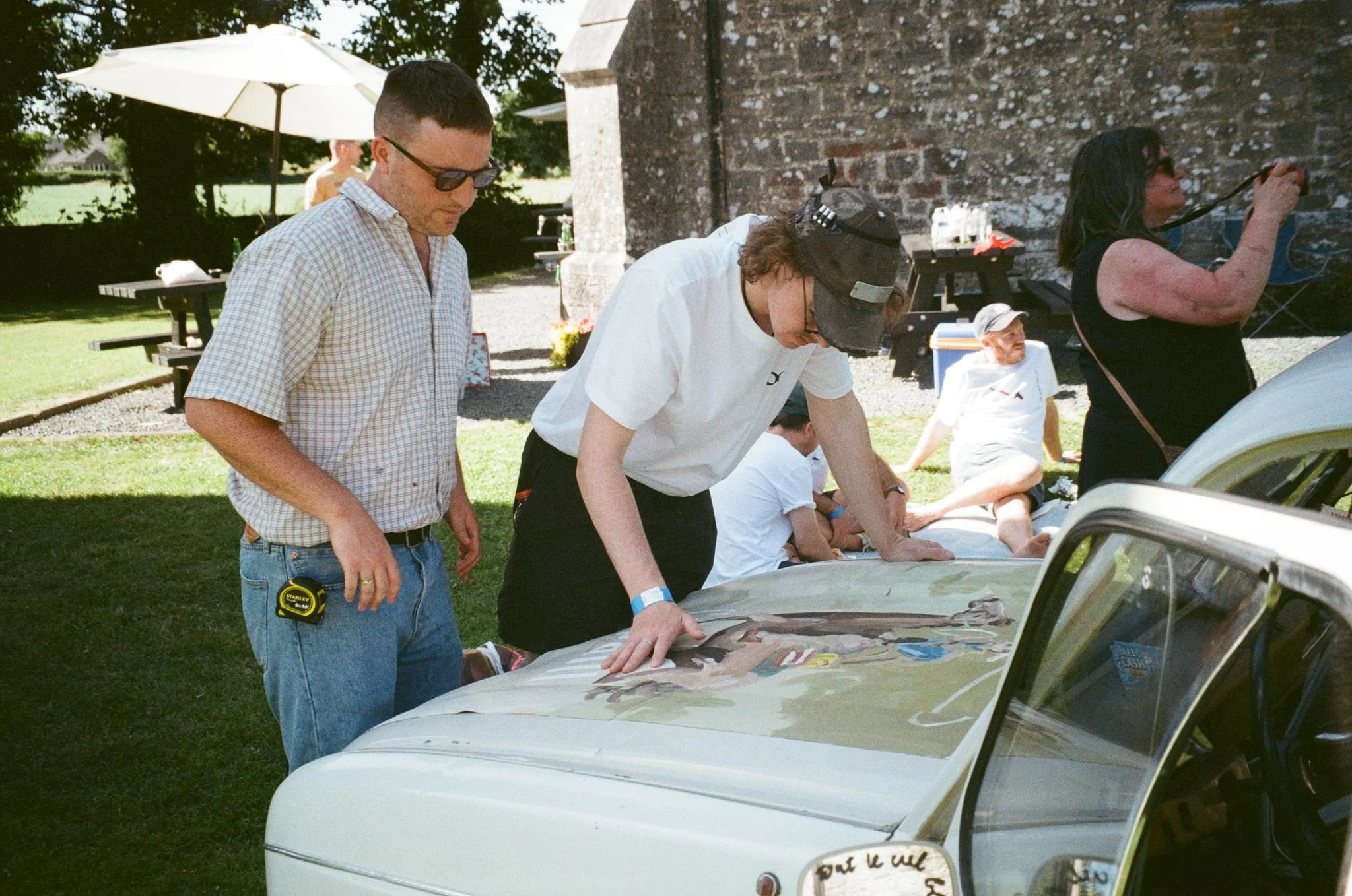
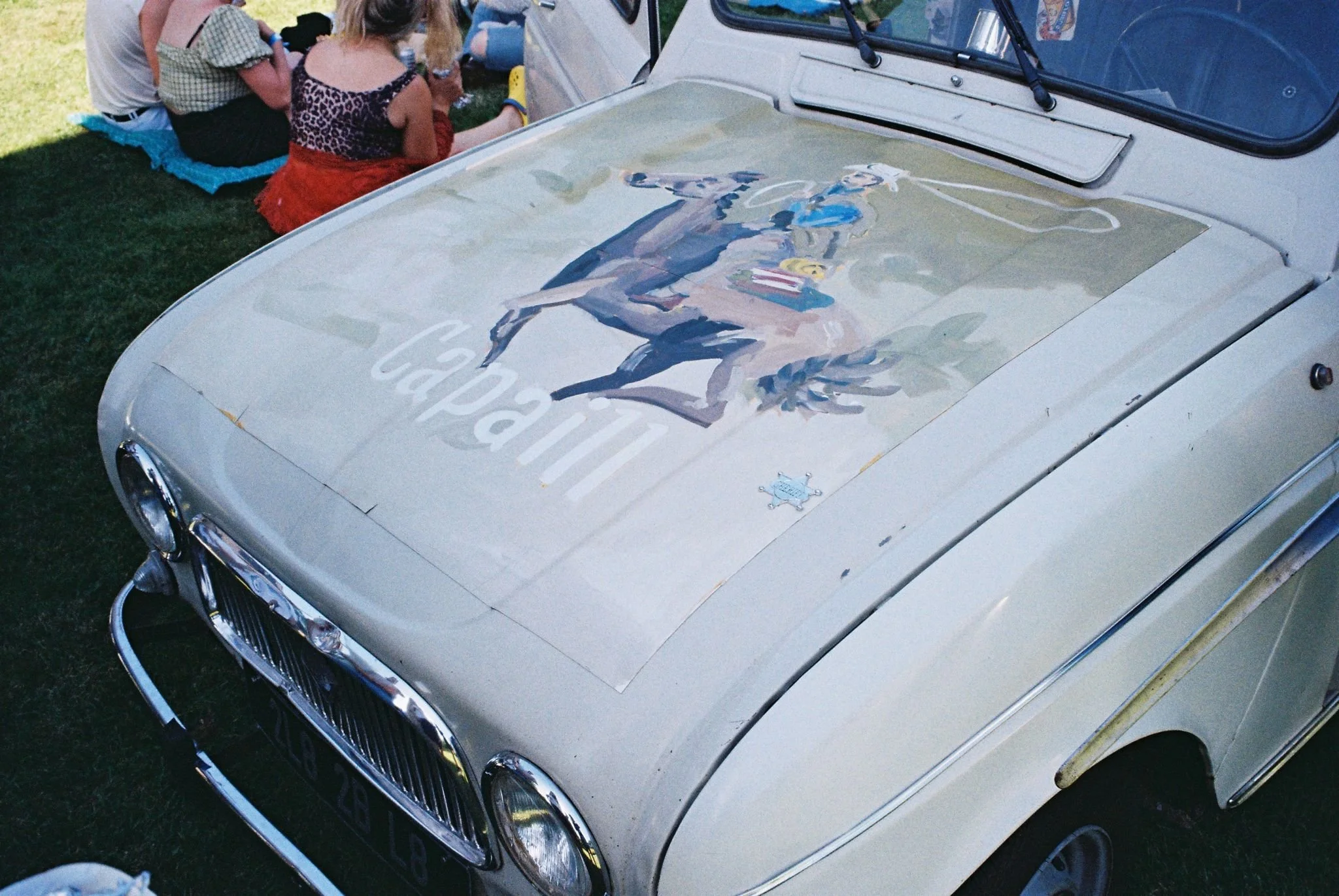
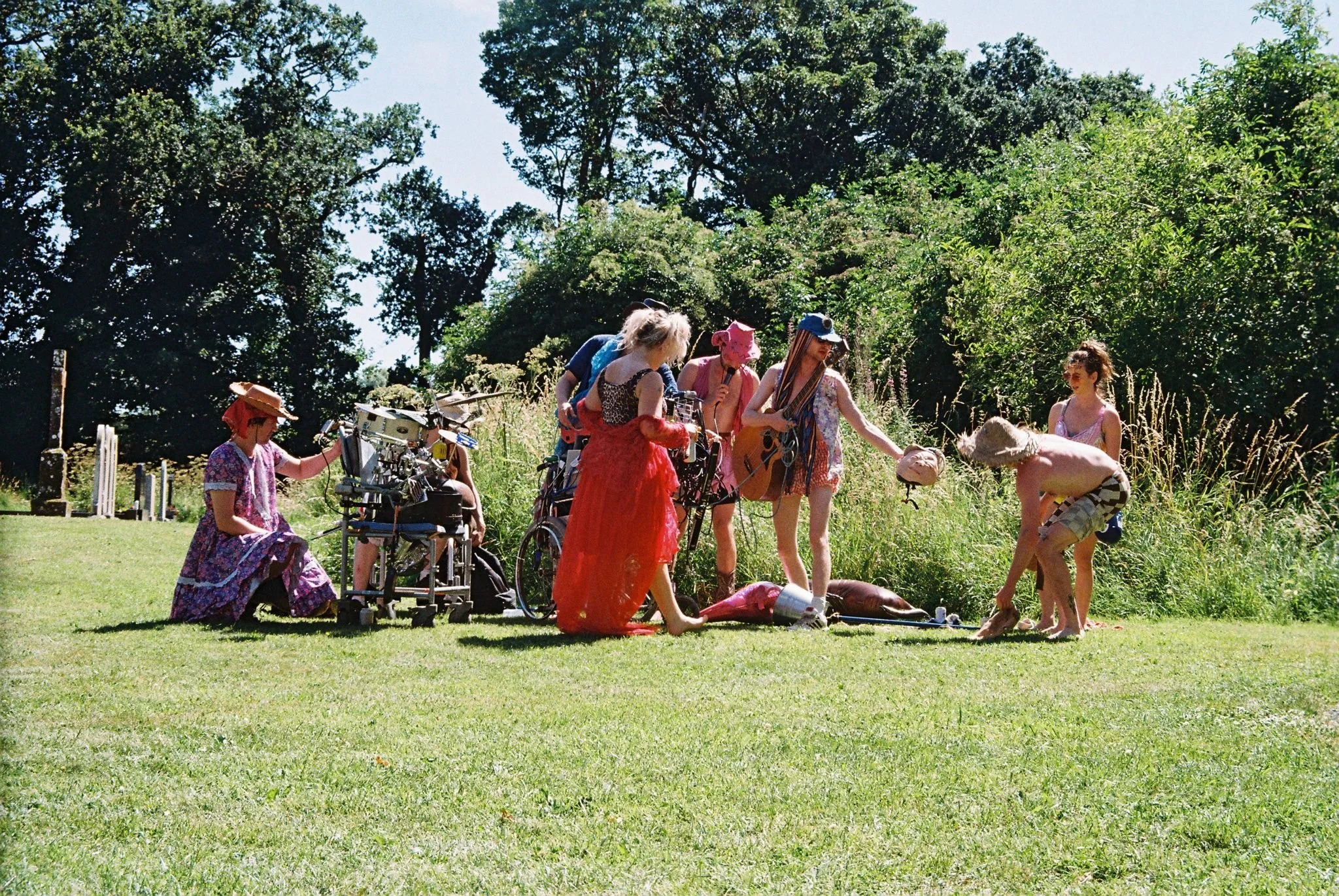
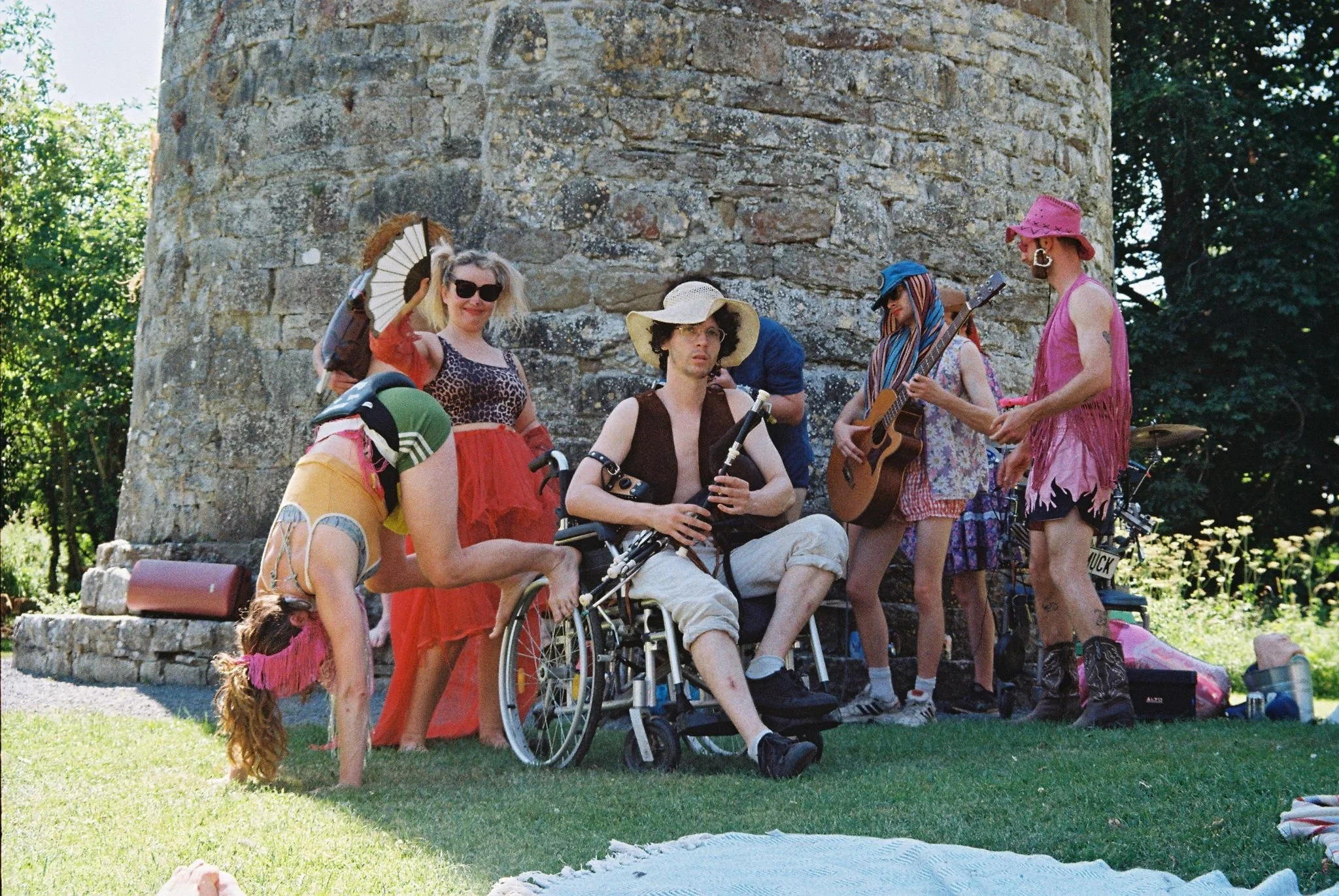
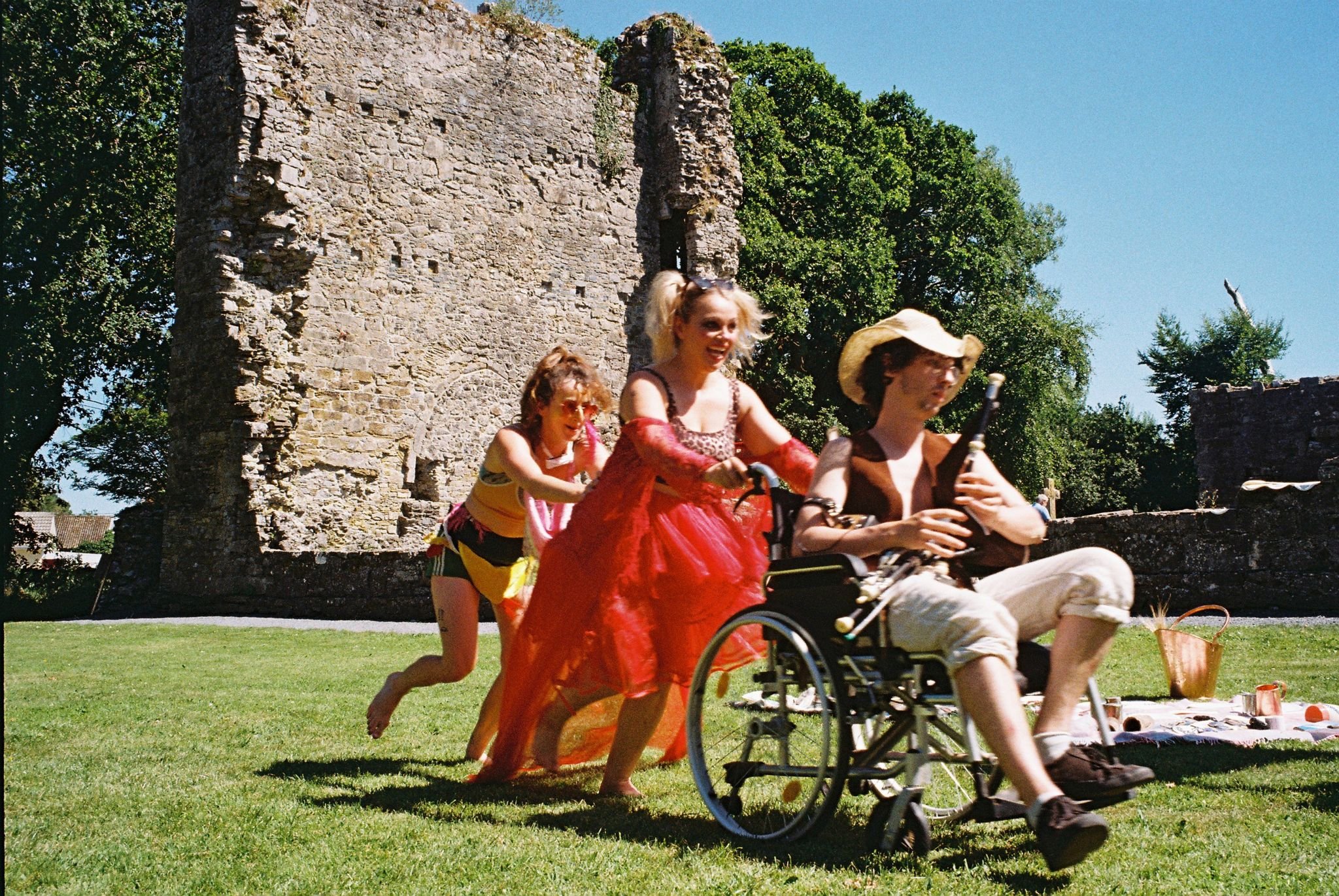
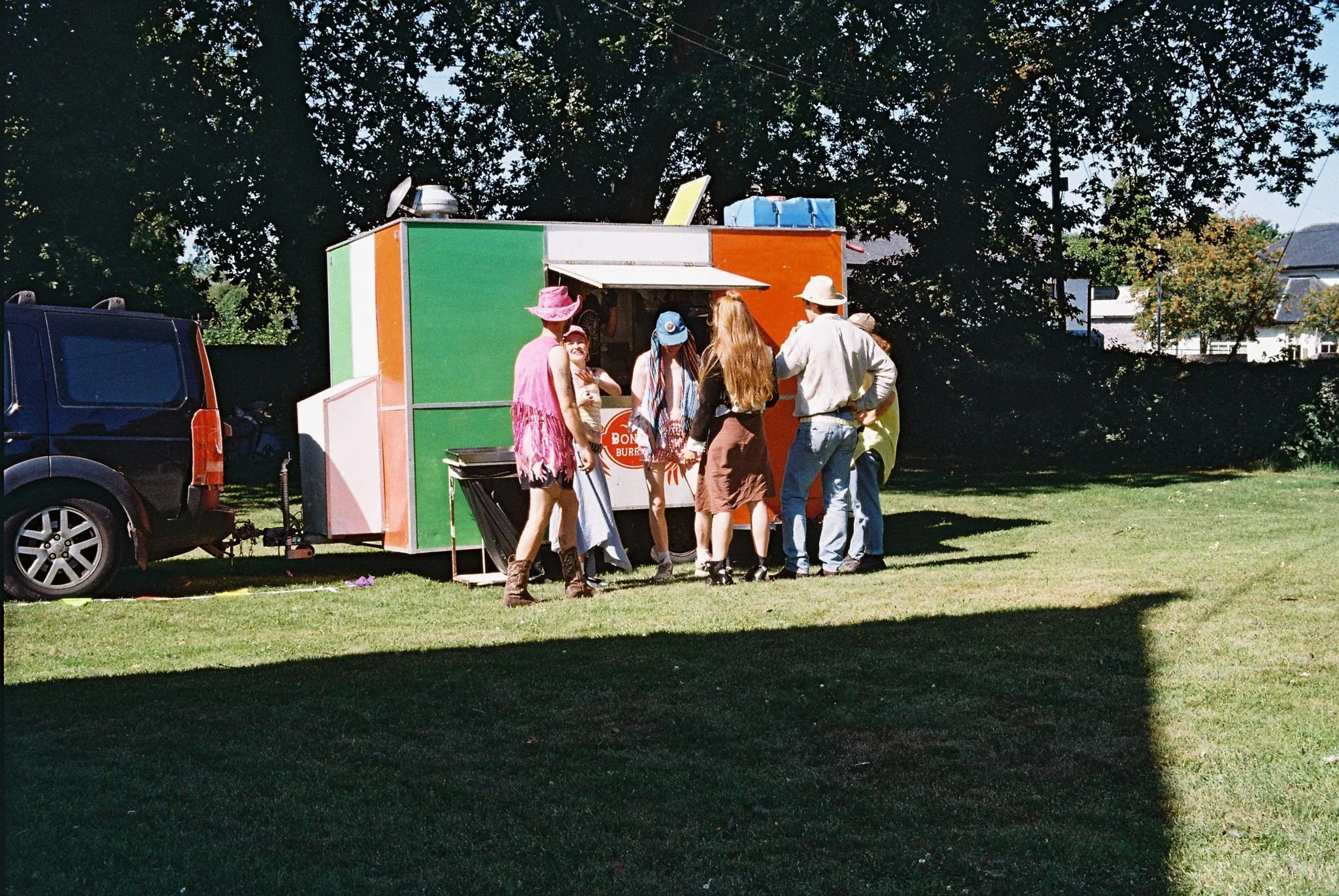
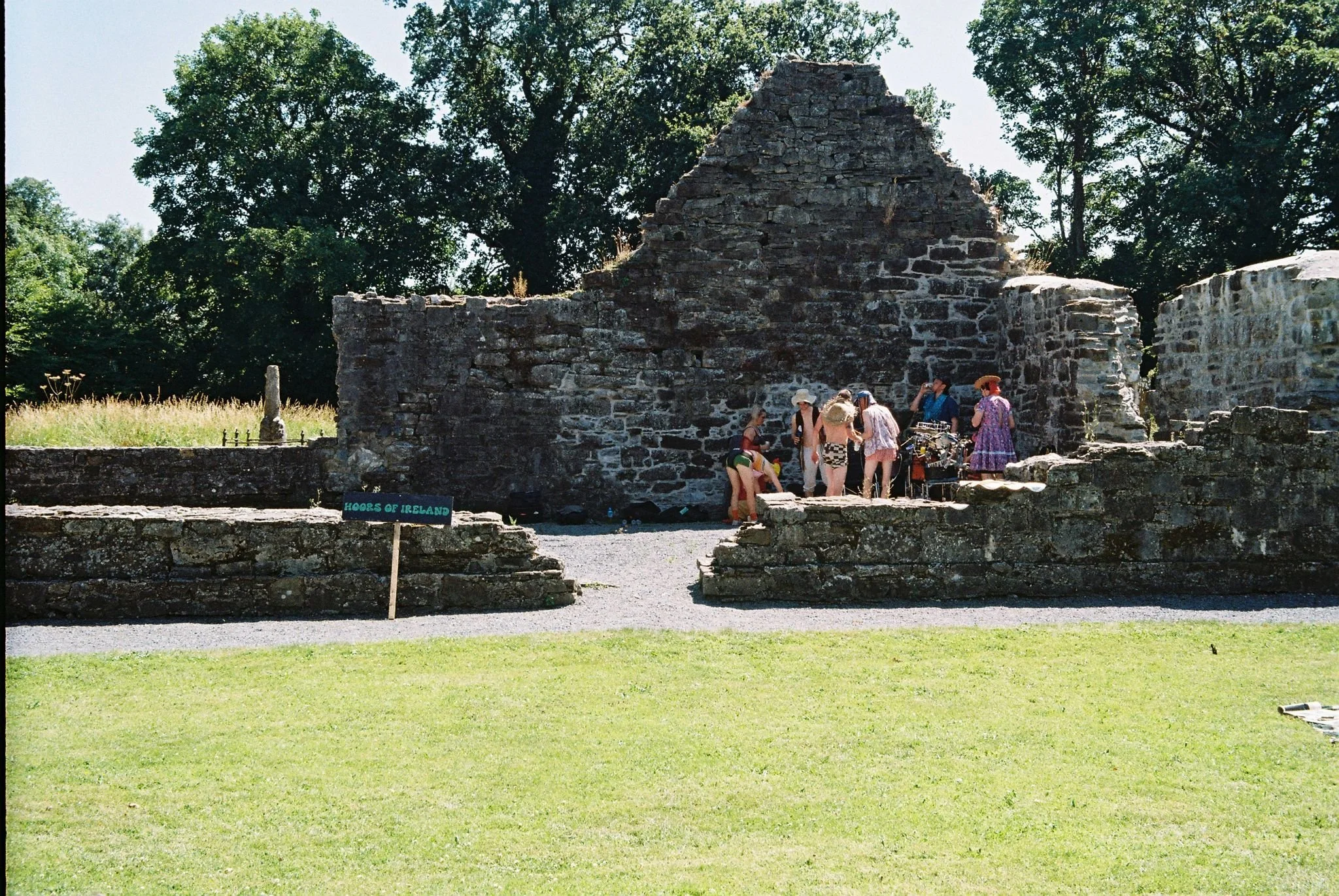
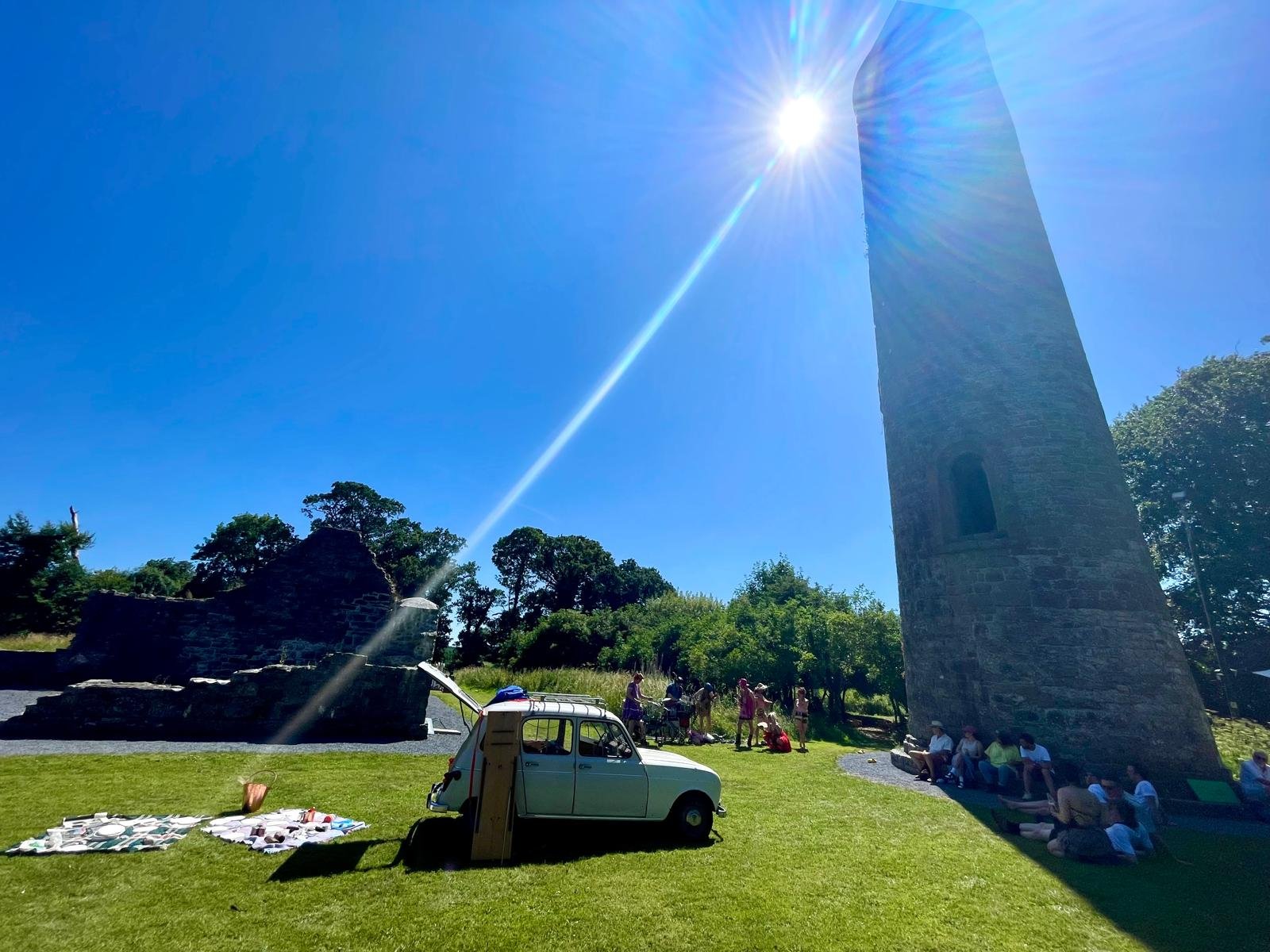
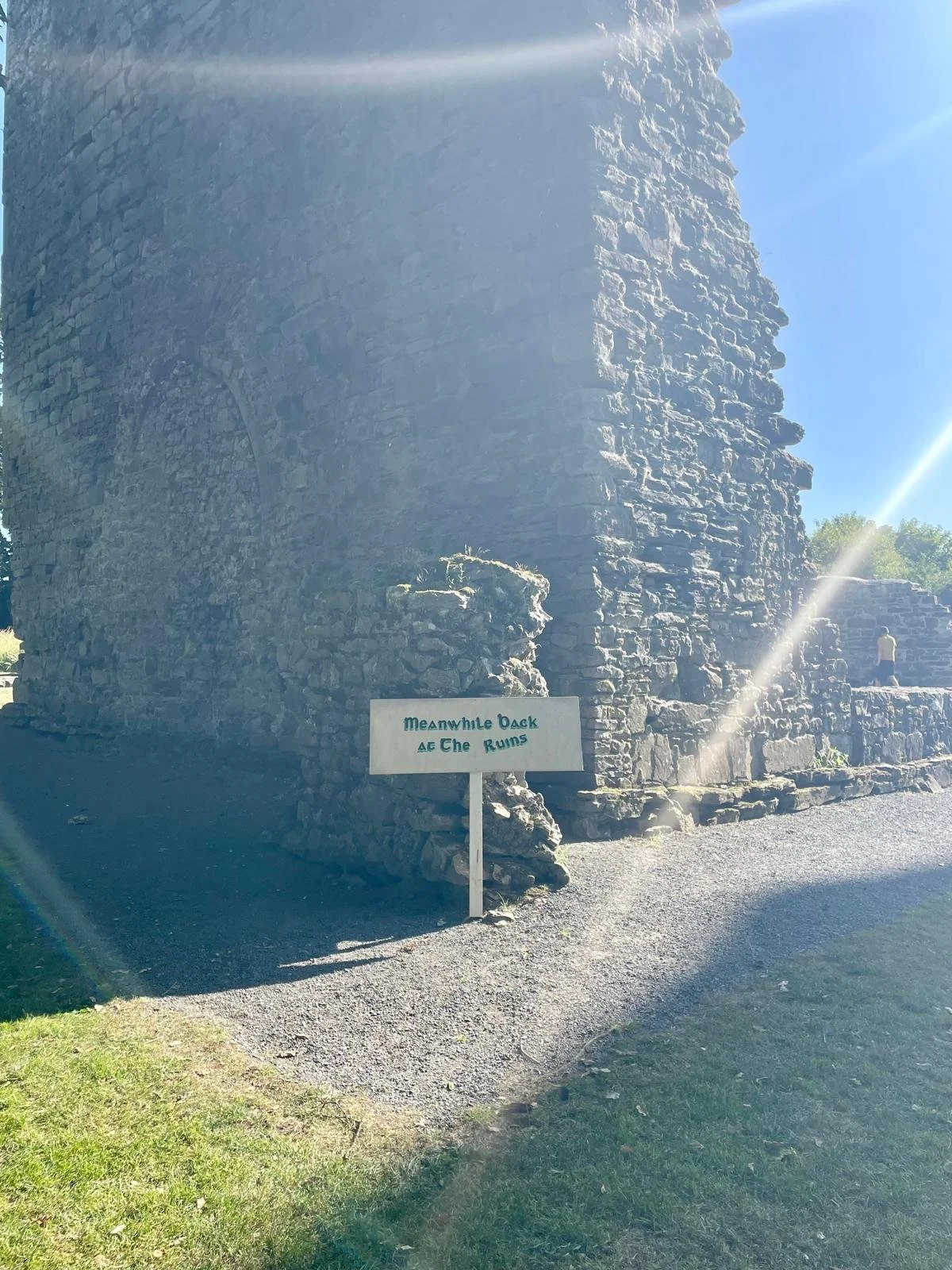
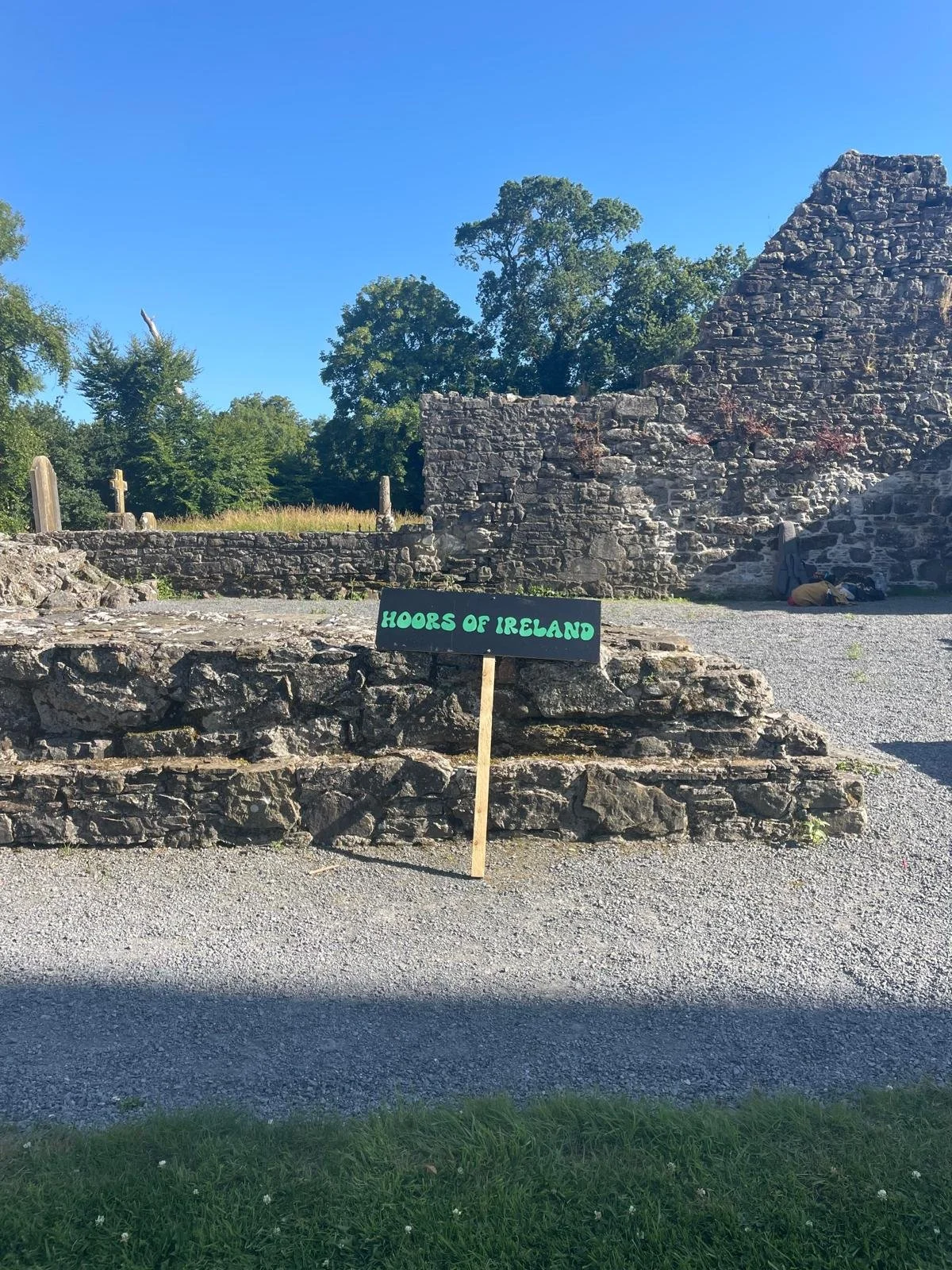
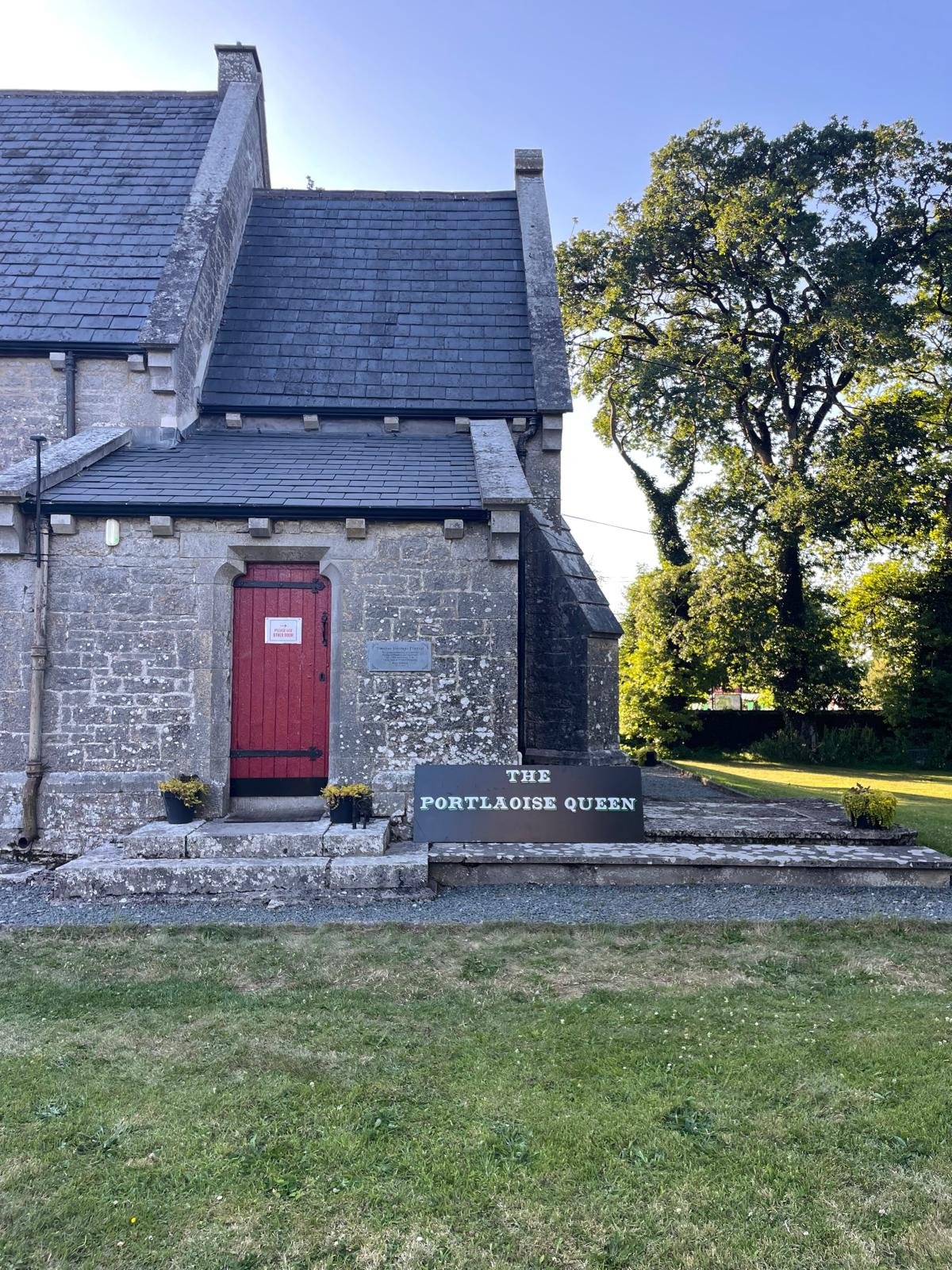
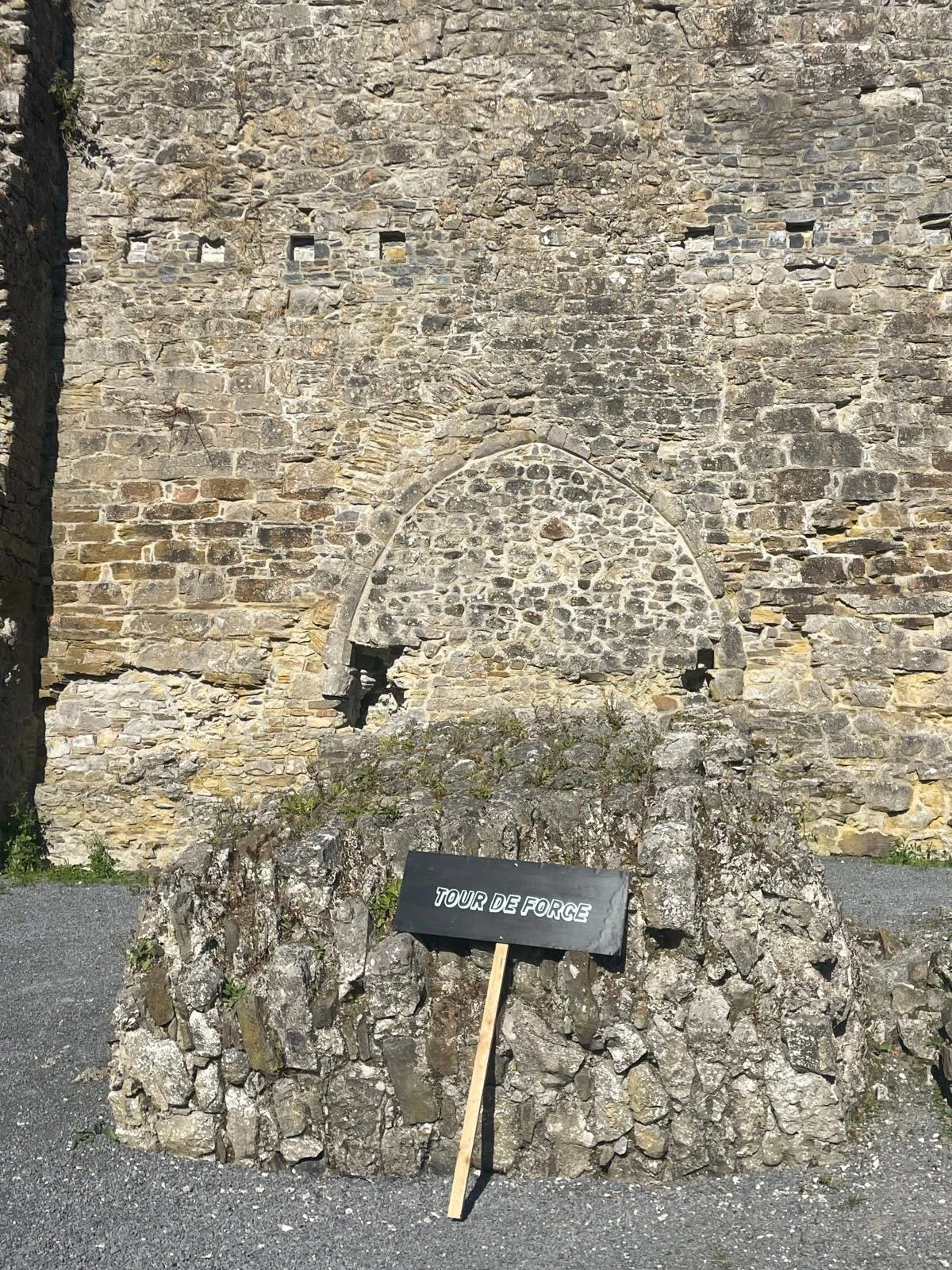
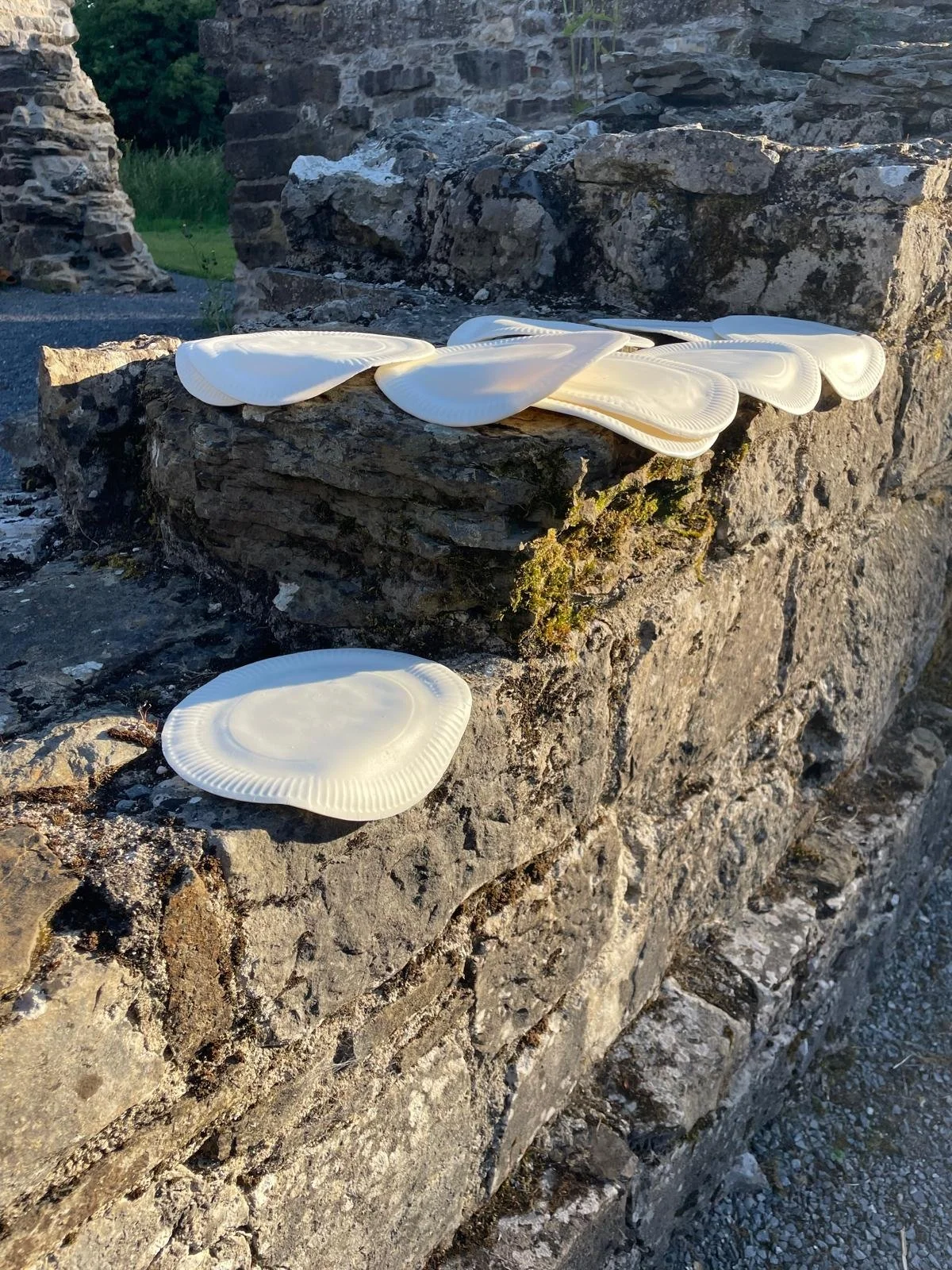
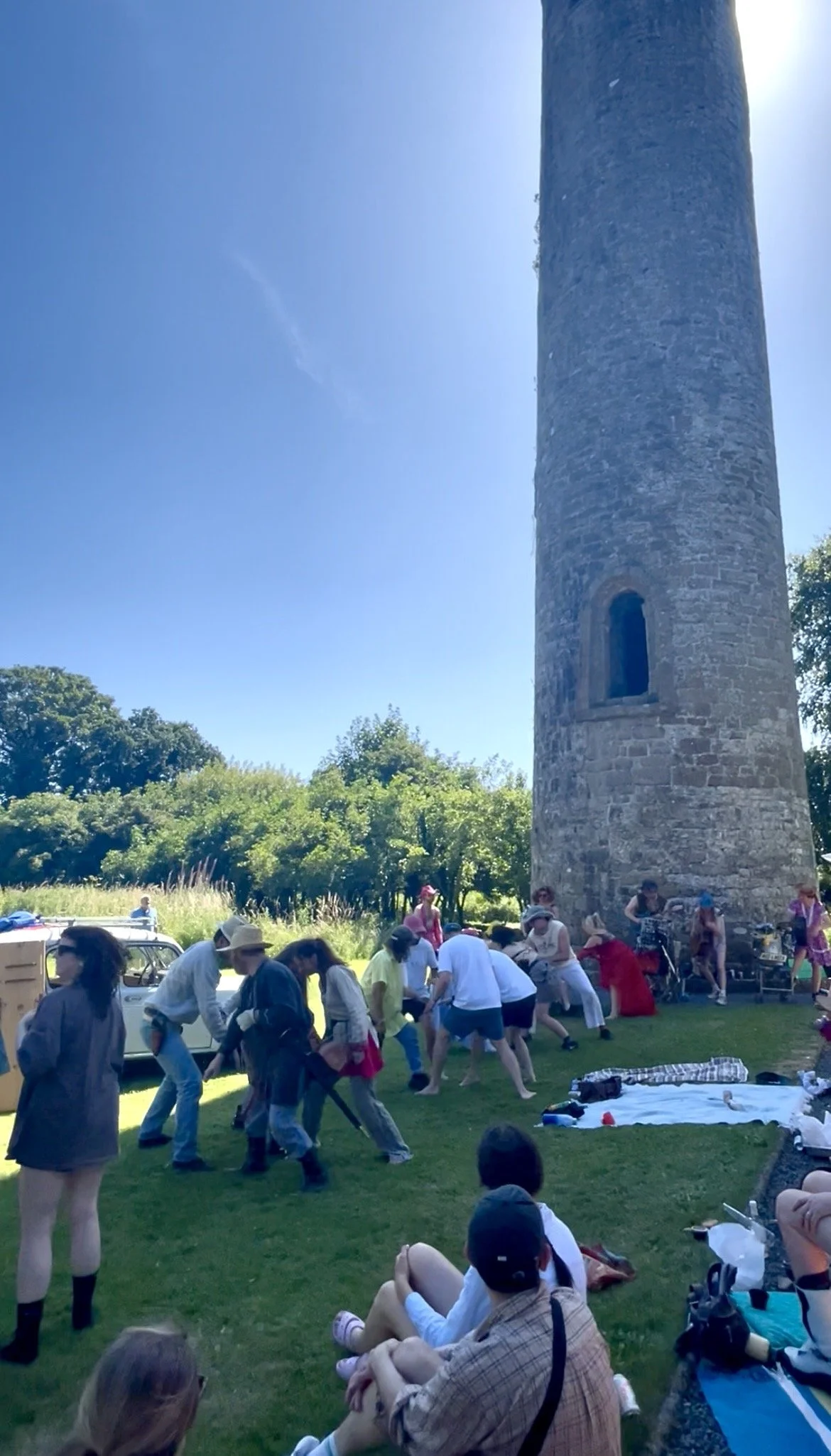
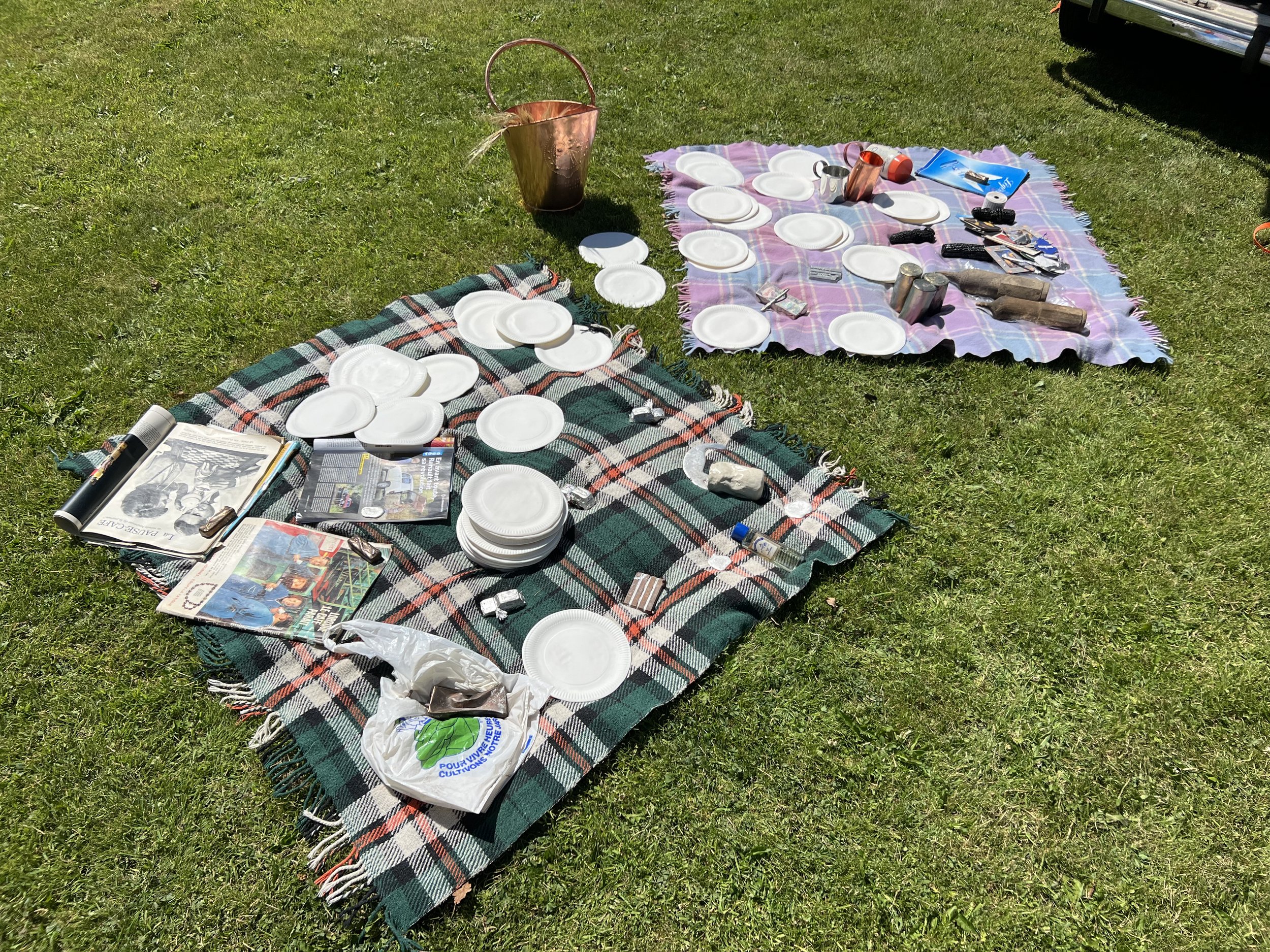
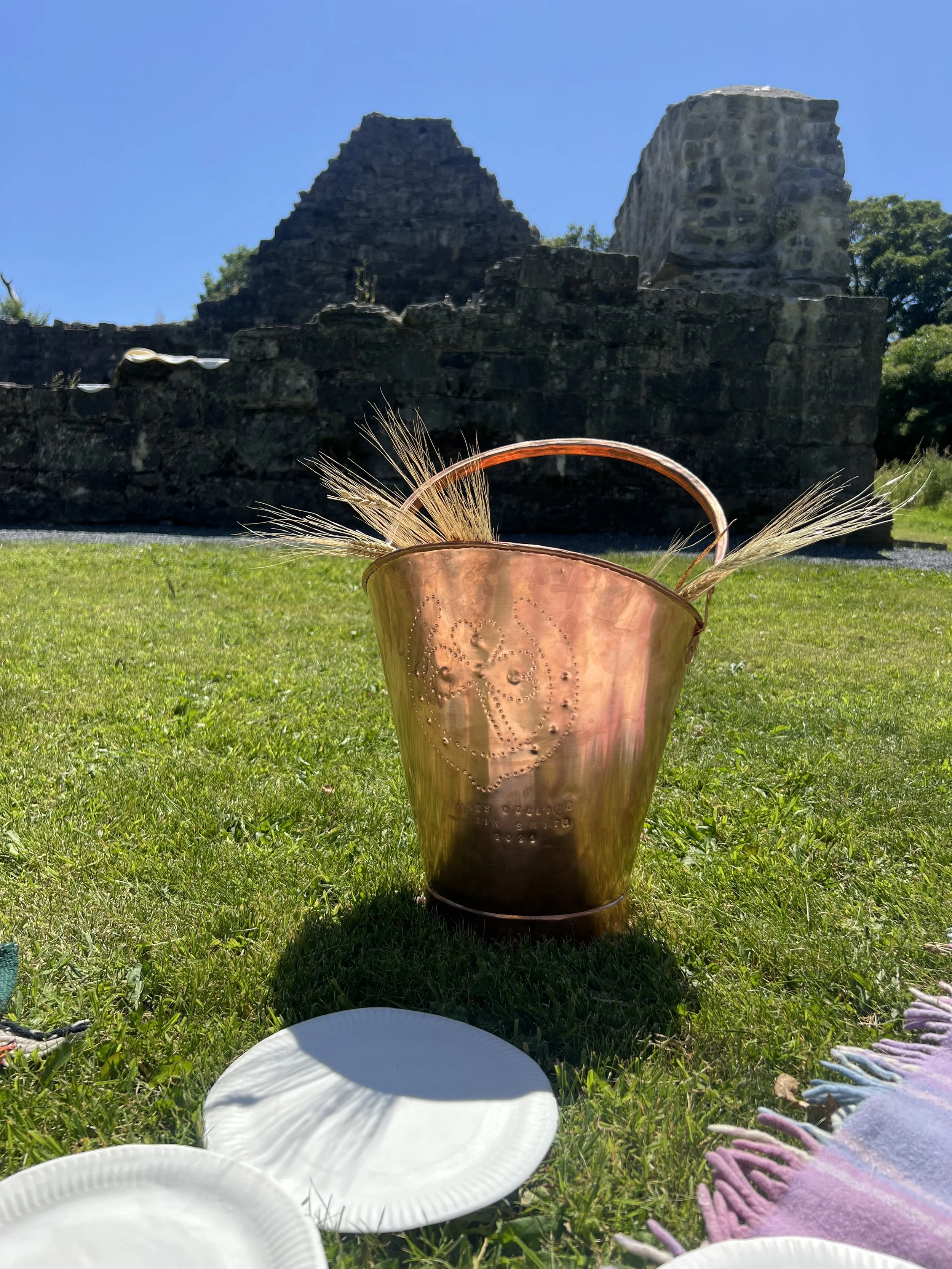
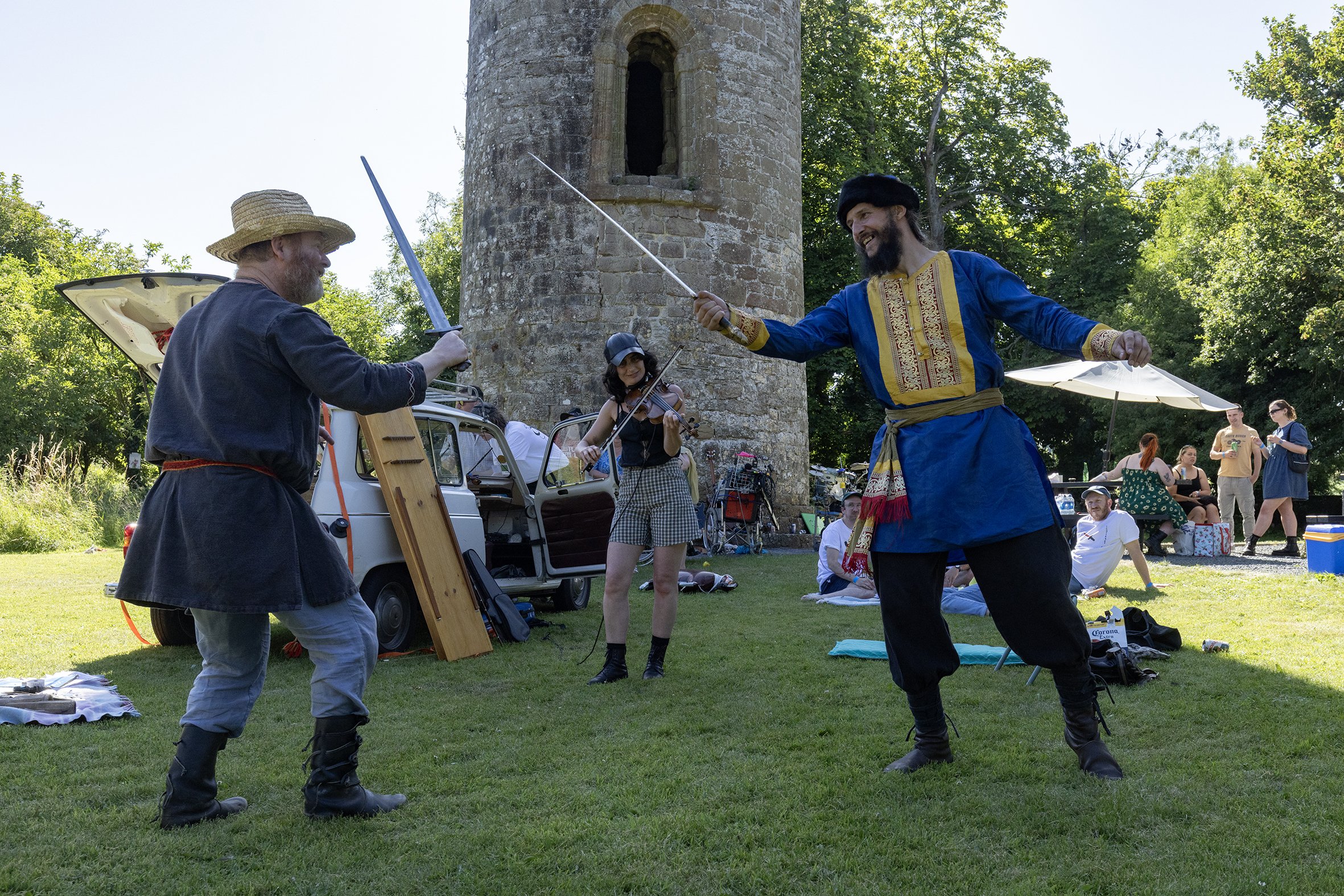
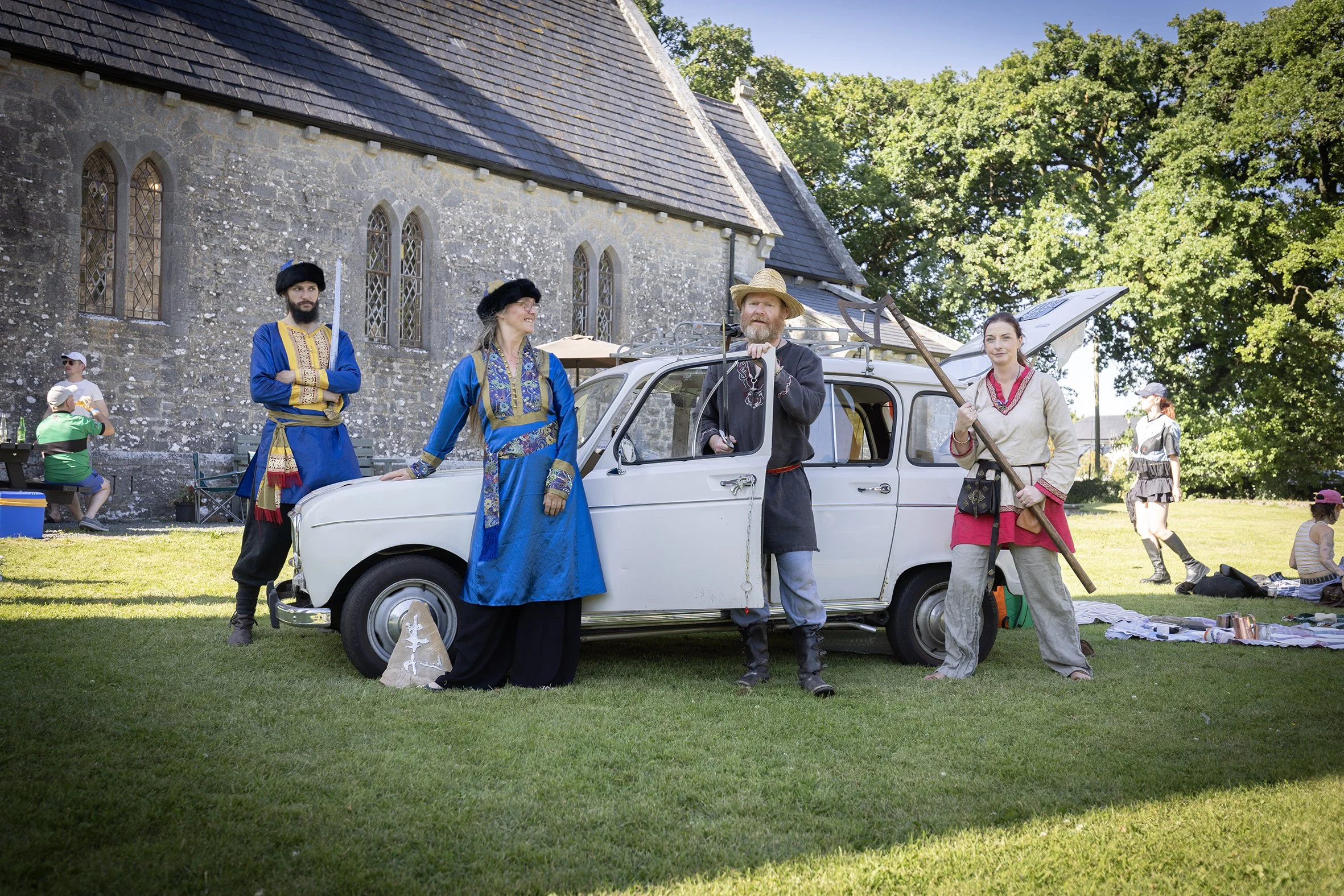
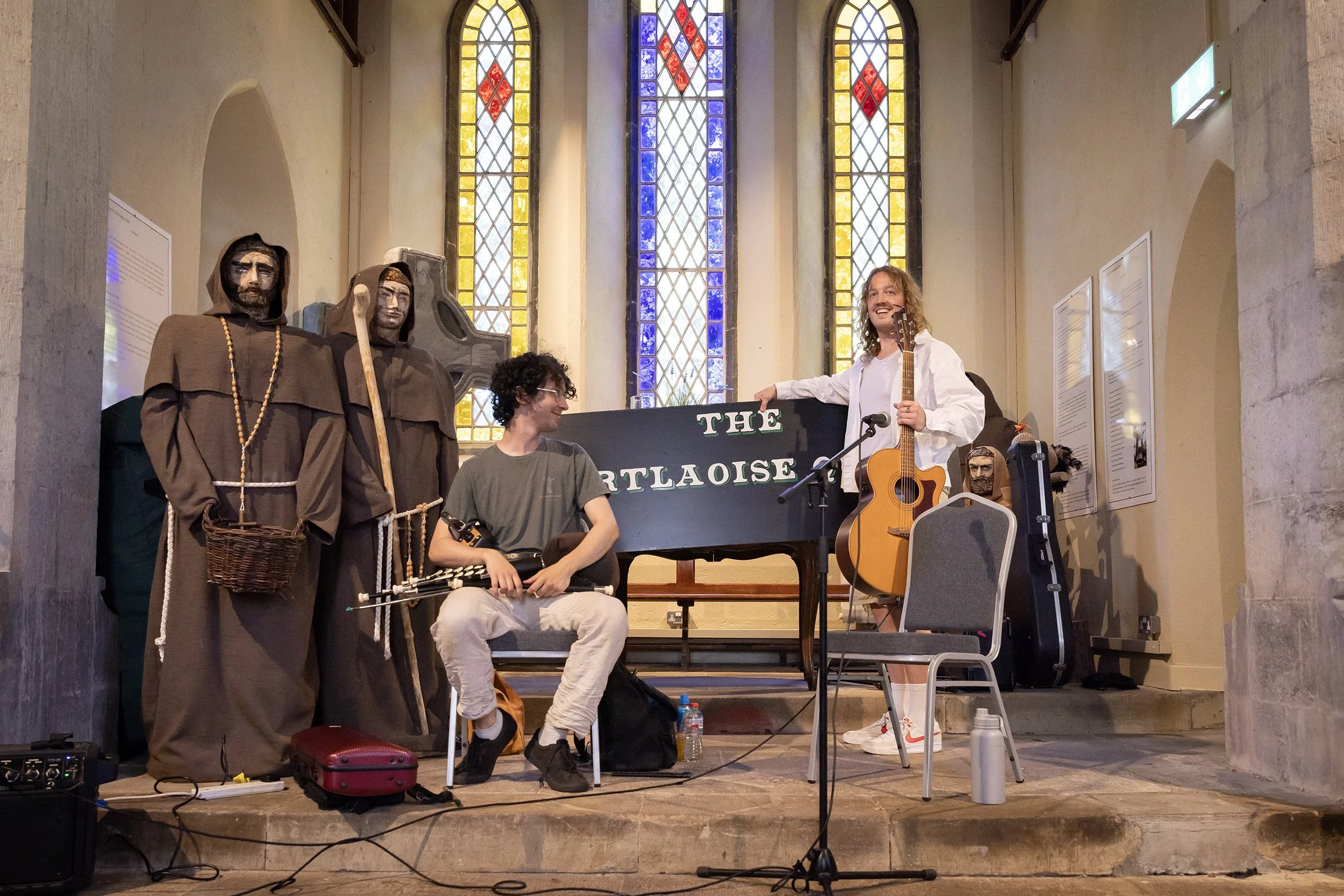
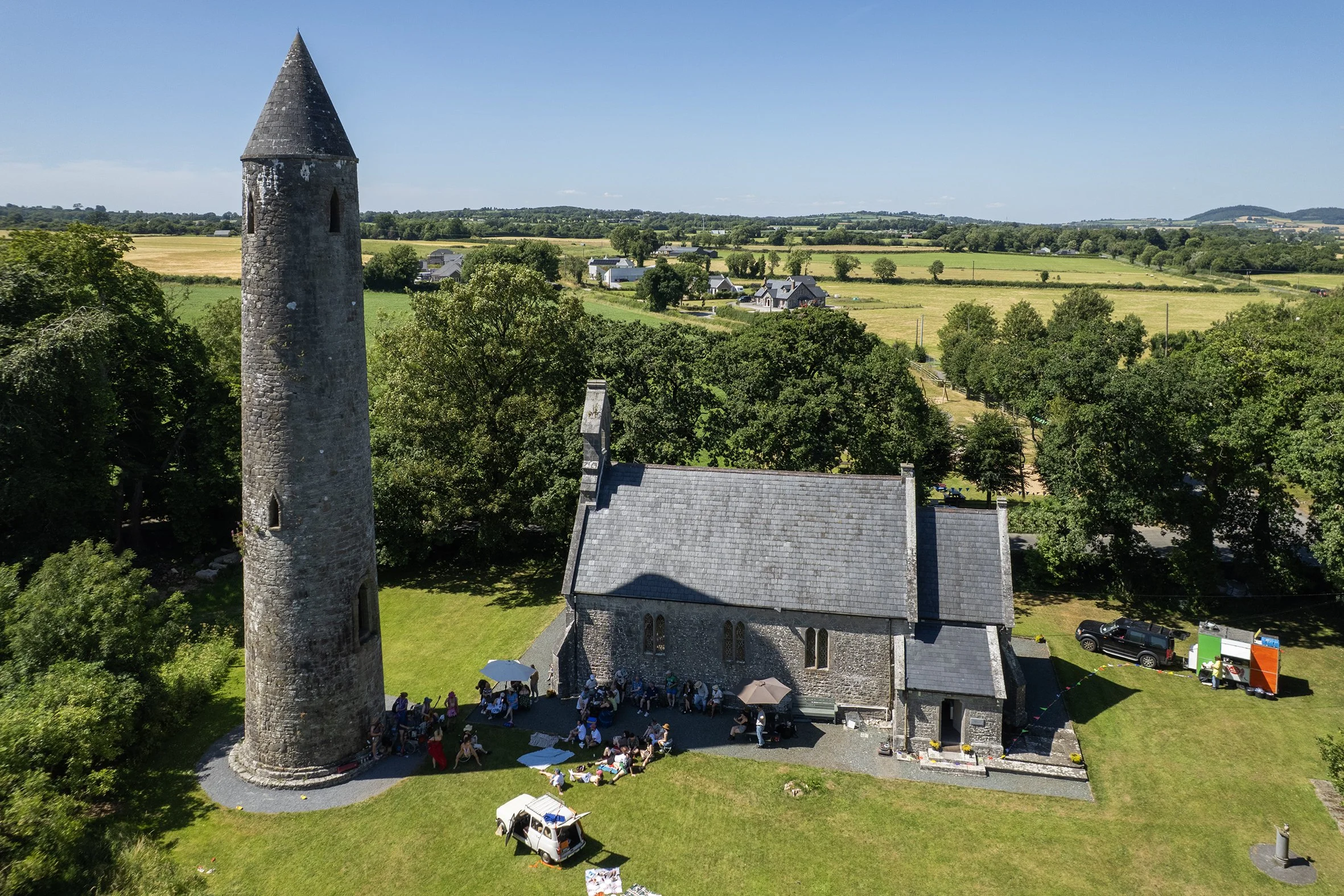
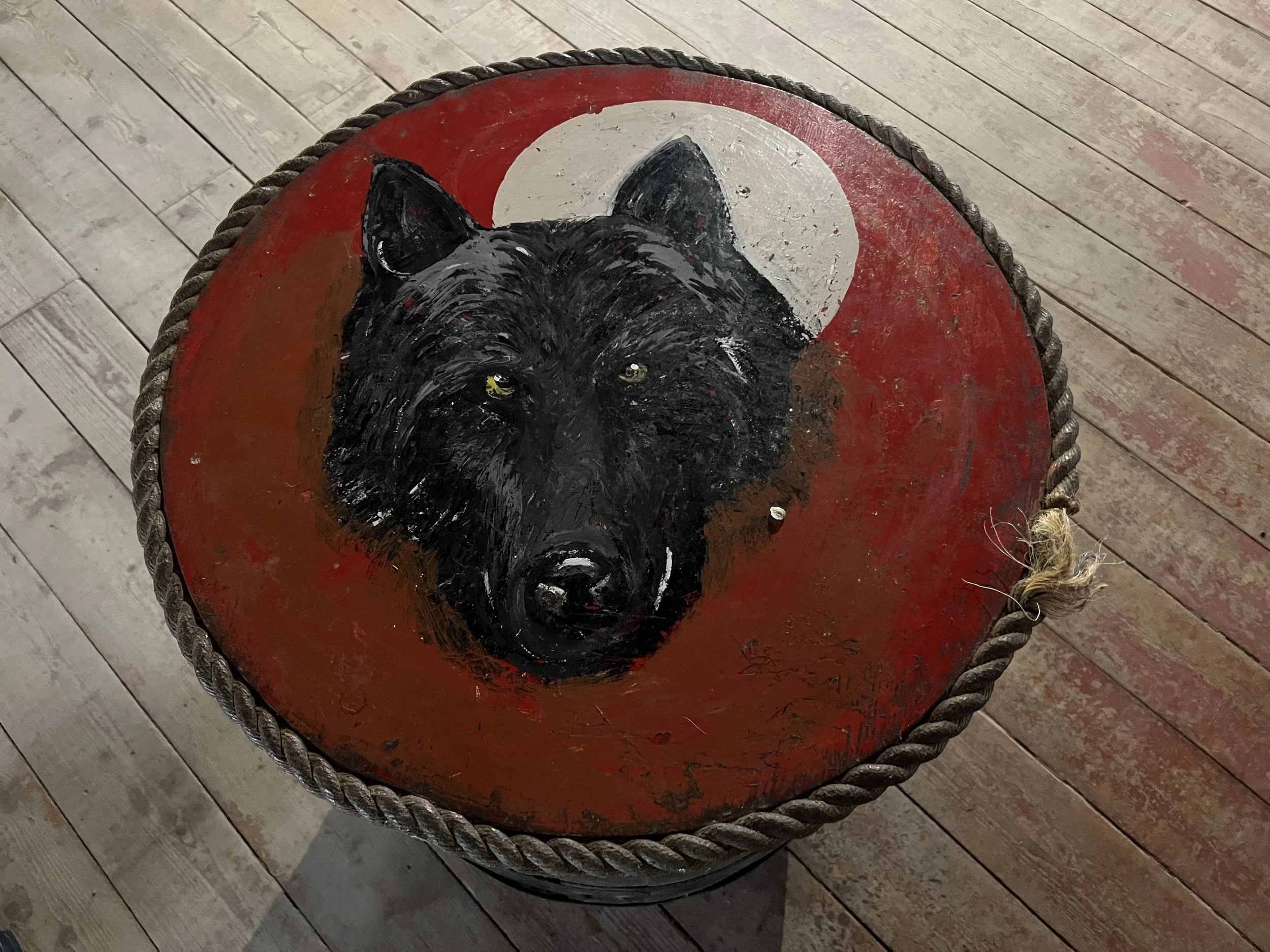
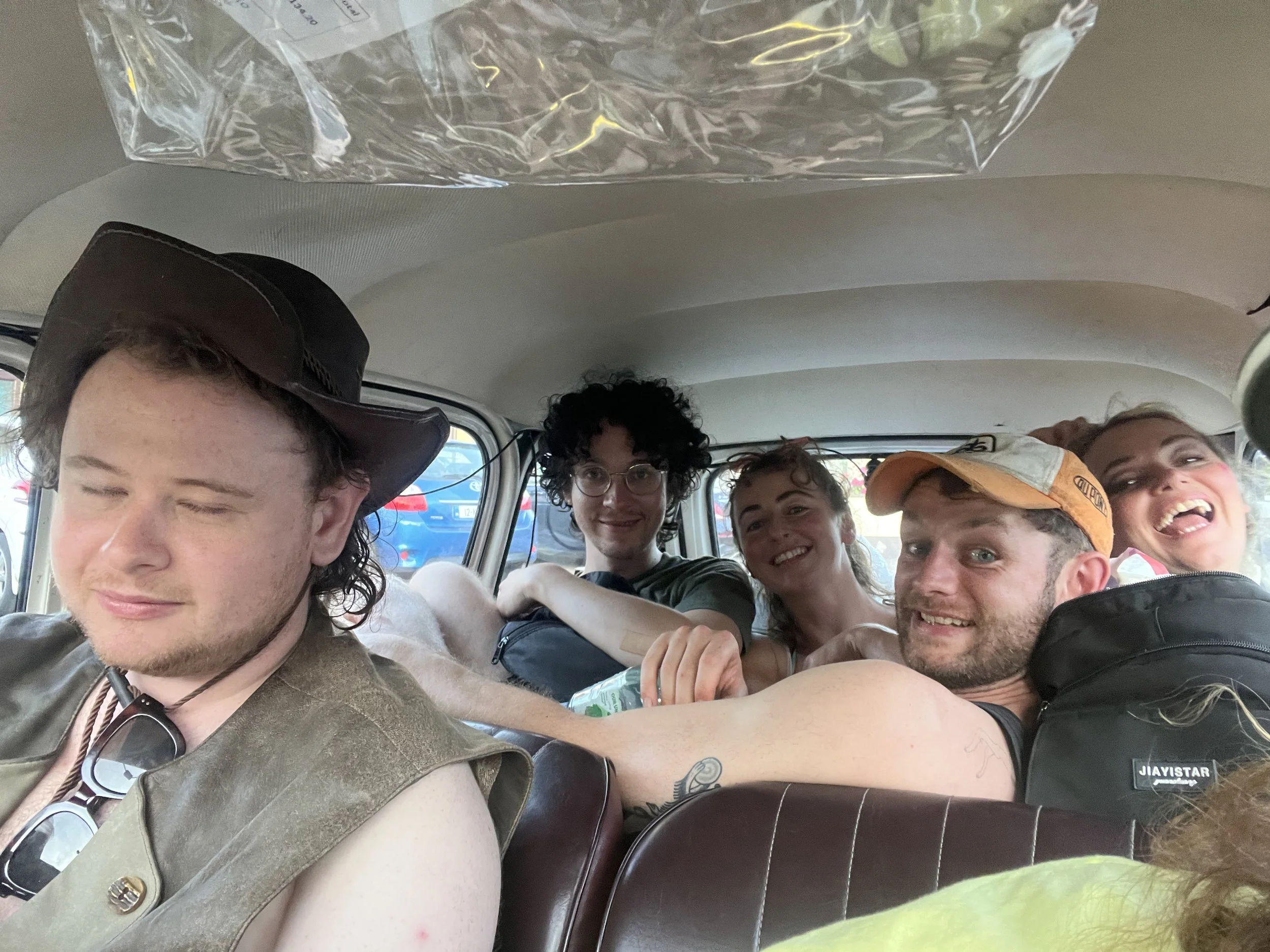
Photo credits: Film camera photos @ Feá McCoy. Others by Terry Conroy, and tour de force.