19.08.2025
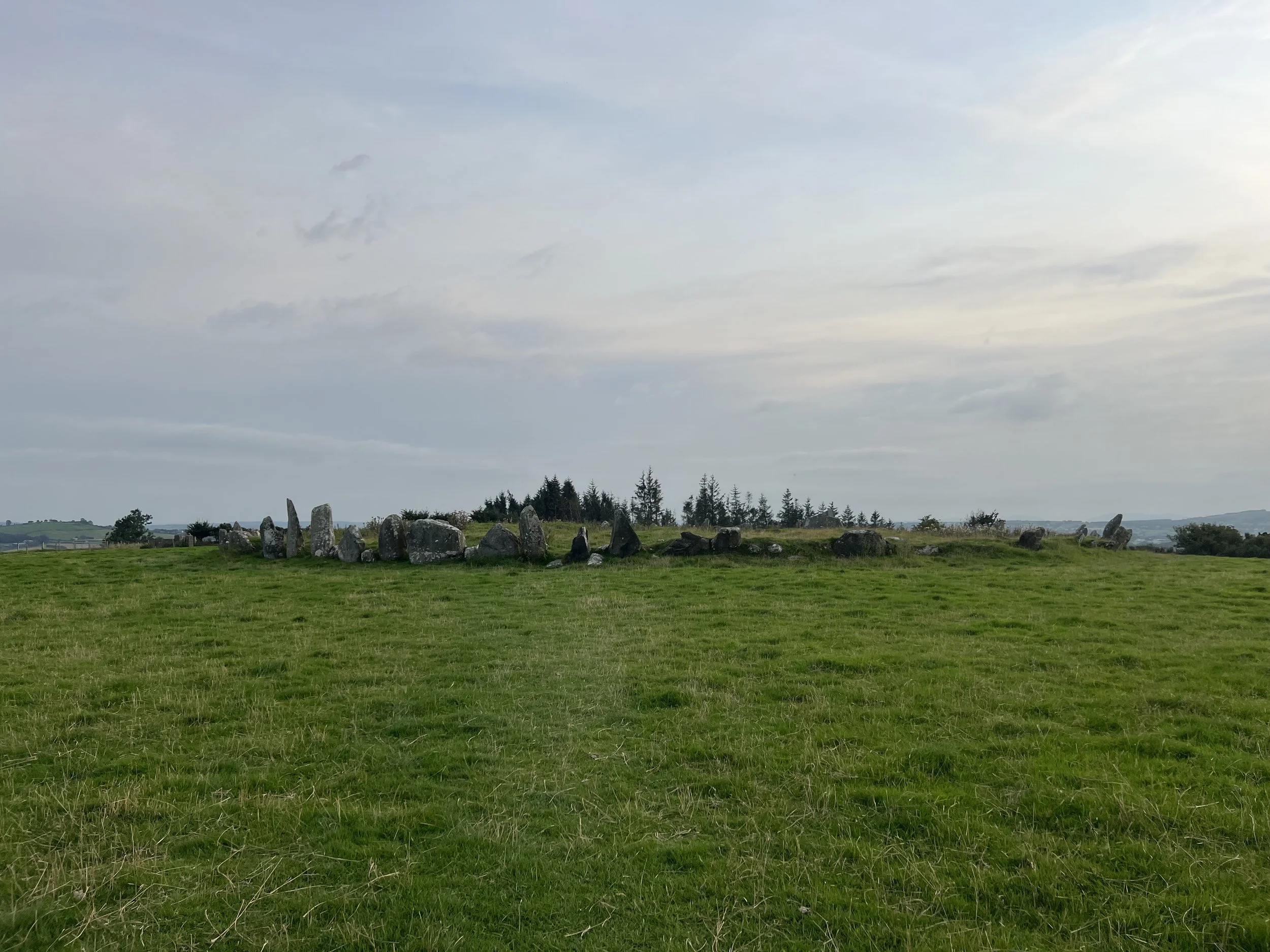
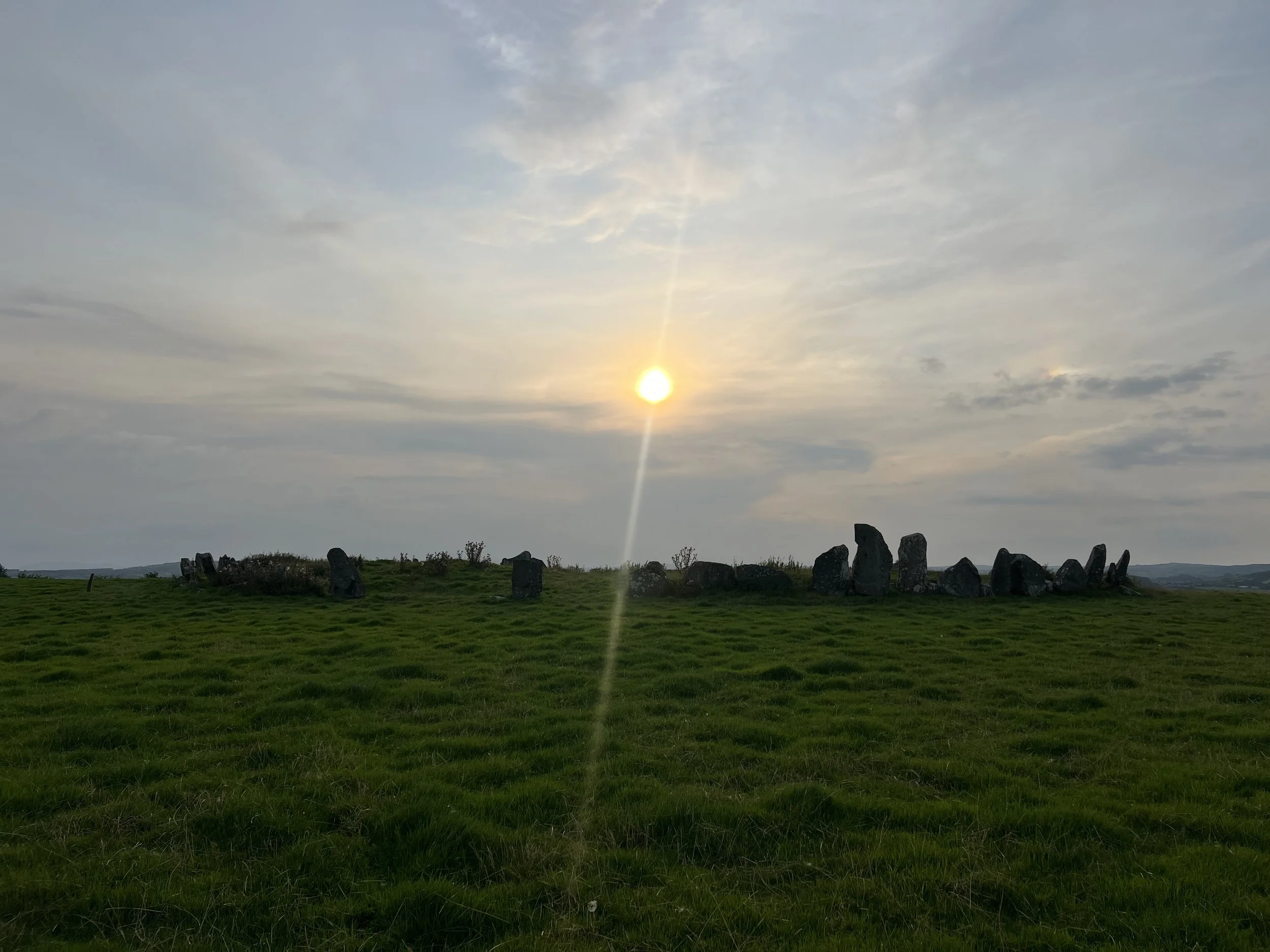
After ascending gradually we found ourselves looking out over Raphoe, Ráth Bhoth - ringfort of the huts and realised from small heritage markers on the roadside that we were very close to Beltany Stone Circle, from Bealtaine - one of the four main Gaelic seasonal festivals. Bealtaine a corruption of Baal tinné, the fire of Baal. We parked up at a small lay-by and walked a densely verdant trail uphill through an arch of hedgerow. Large fern fronds sprung from underneath loose stones laid for the path which was tangled with tree roots, stained with lichen and softened with moss. Puddles from a passing shower mirrored the sky behind a leafy canopy. At the summit we emerged from foliage onto a flat grass covered pasture with good views in all directions; right in front of us, with the sun directly above it, was an expansive megalith, a huge stone circle.
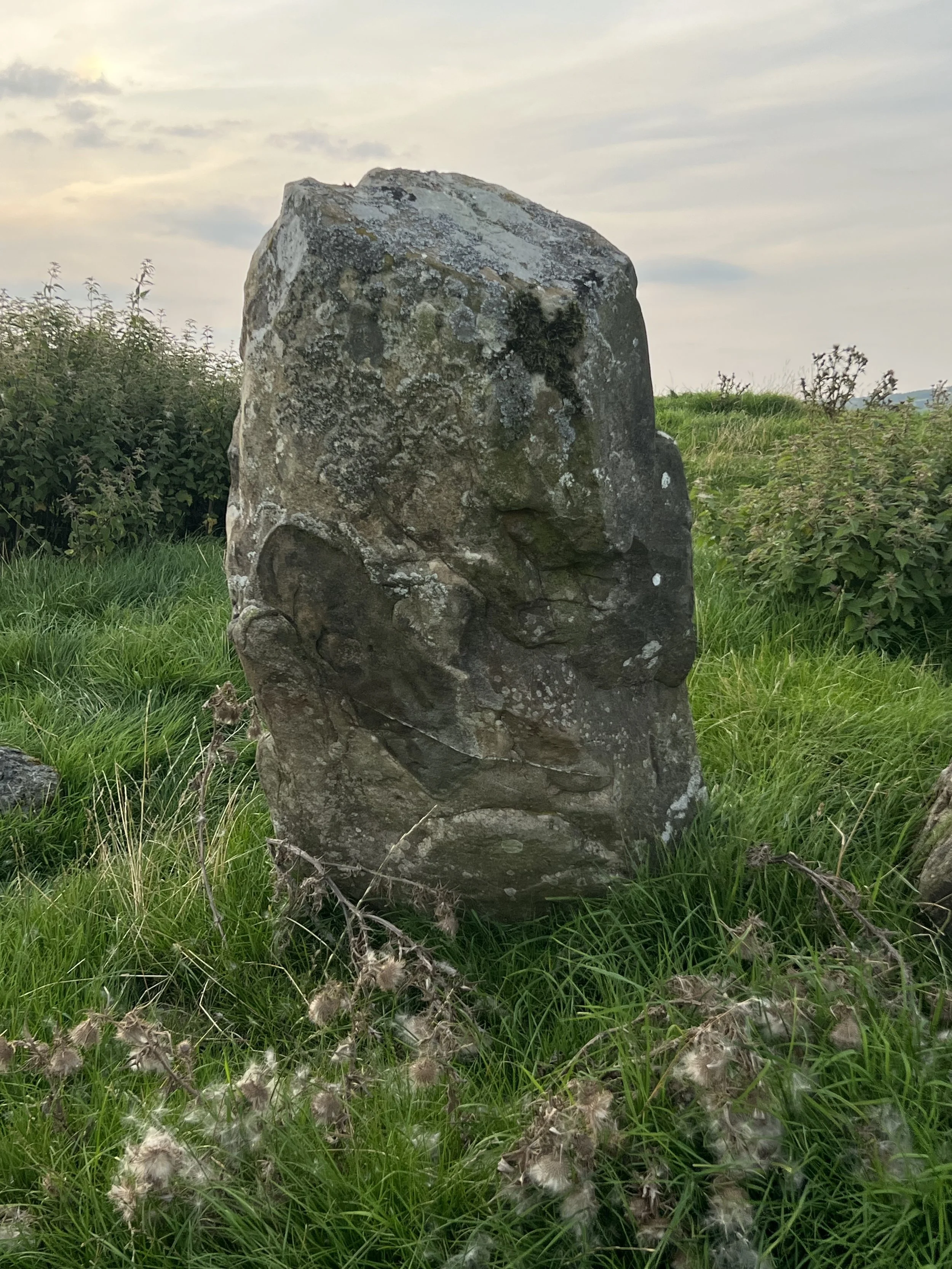
Apparently it’s one of the biggest stone circles in Ireland, composed of 64 stones, though it has diminished significantly over the centuries with large stones moved and a cairn; a mound of smaller stones in the middle; used to build walls or dwellings nearby. There is an alignment from the tallest stone at the south west of the circle to a triangular stone decorated with cup marks at east north east. The alignment points to another hill about 7km away known as Tullyrap, where the sun rises over its small summit on the first day of May.
A stone that was once in situ but is now in a storage vault at the National Museum, is the Beltony Stone Head. About the size of a football; a Janus-style stone with double-faced symbolic carvings to look back at the past and into the future at the same time. It may have been used as a mold for mask making during the Bronze Age. One side is flat so it could have been placed on the ground and molten copper straight out of the blast furnace poured. We know that bonfires are associated with Bealtaine. The double face, the Janus represents liminality, beginnings and transitions, it signifies gates, passages and endings. Latitude: 54° 51′ 1.50″ N Longitude: 7° 36′ 16.80″ W
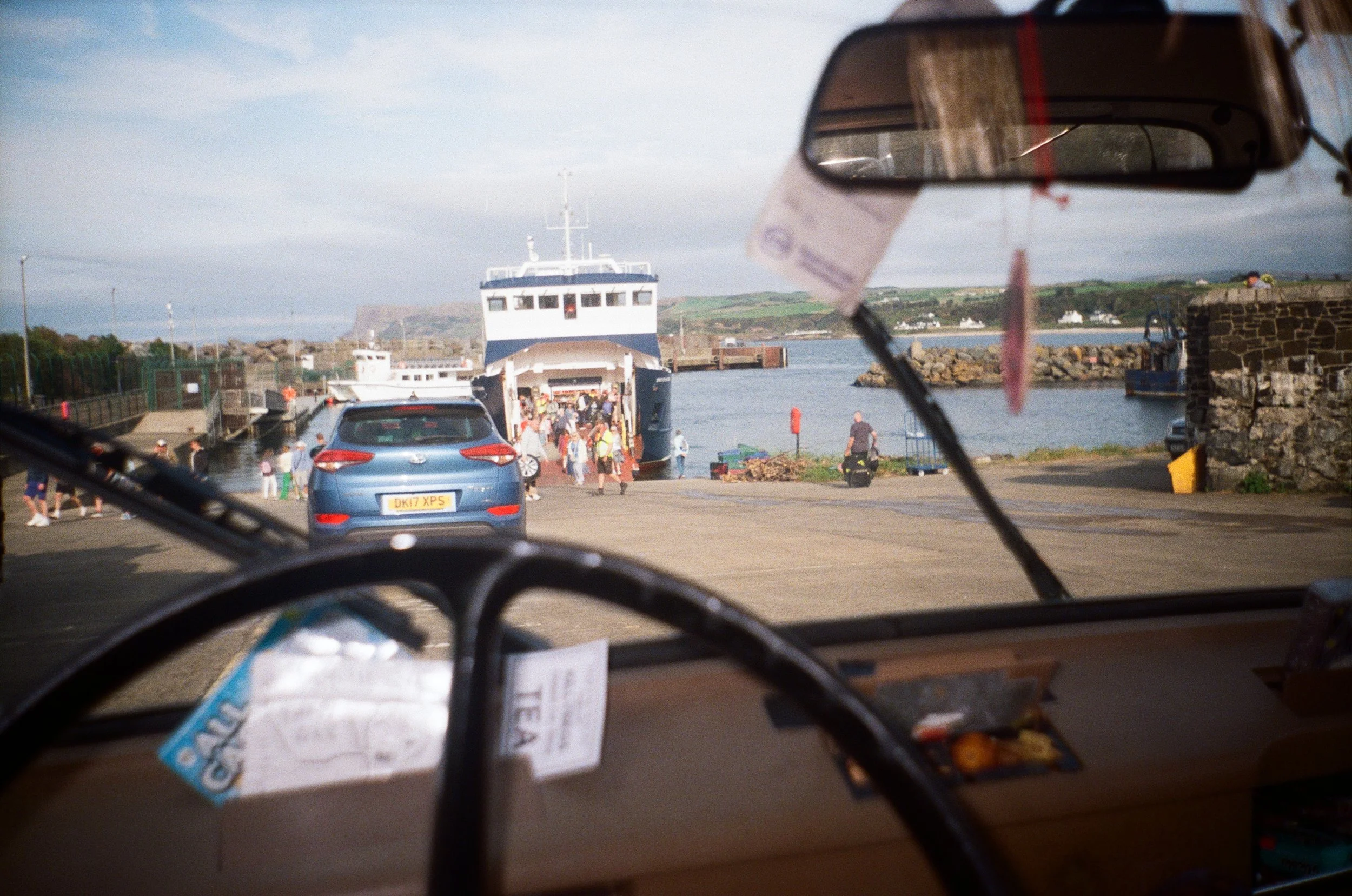
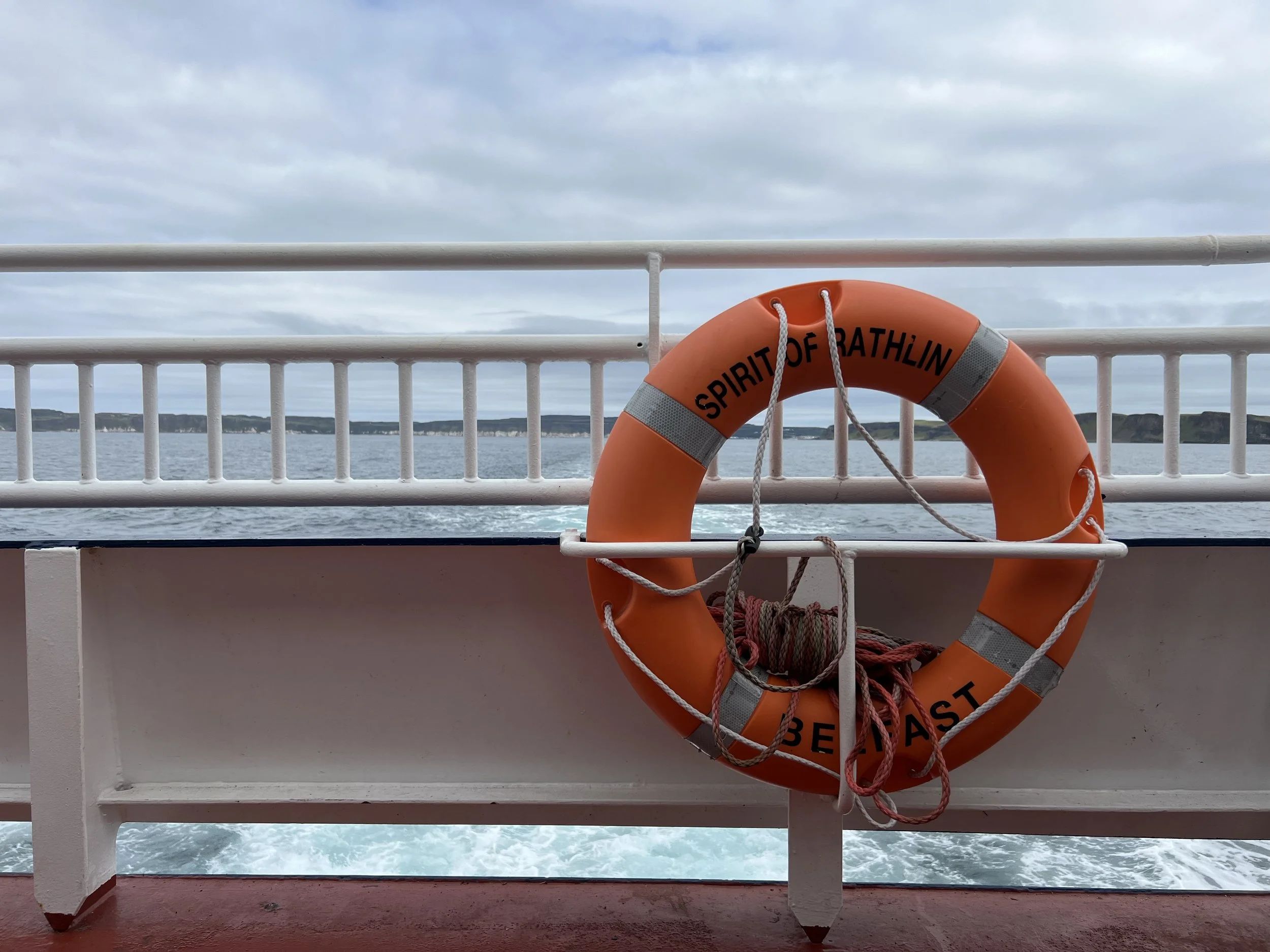
Time had simultaneously slowed down and sped up while we were at the stone circle so when we got back on the road we were running late to catch the ferry, the Spirit of Rathlin. This was the ferry that Renault 4 was prebooked on so we couldn’t miss it. Cars aren’t normally allowed on the island (we’ll come back to this in the coming days). Gaining some time in Coleraine, we headed north to take the Dunluce Road bordering the Antrim coast, past Causeway Head where we had no time to stop at the Giants Causeway and instead it was pedal to the metal all the way to Ballycastle. Arriving into the ferry car park with one minute until departure, we looked out to sea and saw the ferry docked further up by a different car park and by the time we drove out and back in, the Spirit of Rathlin had departed without us.
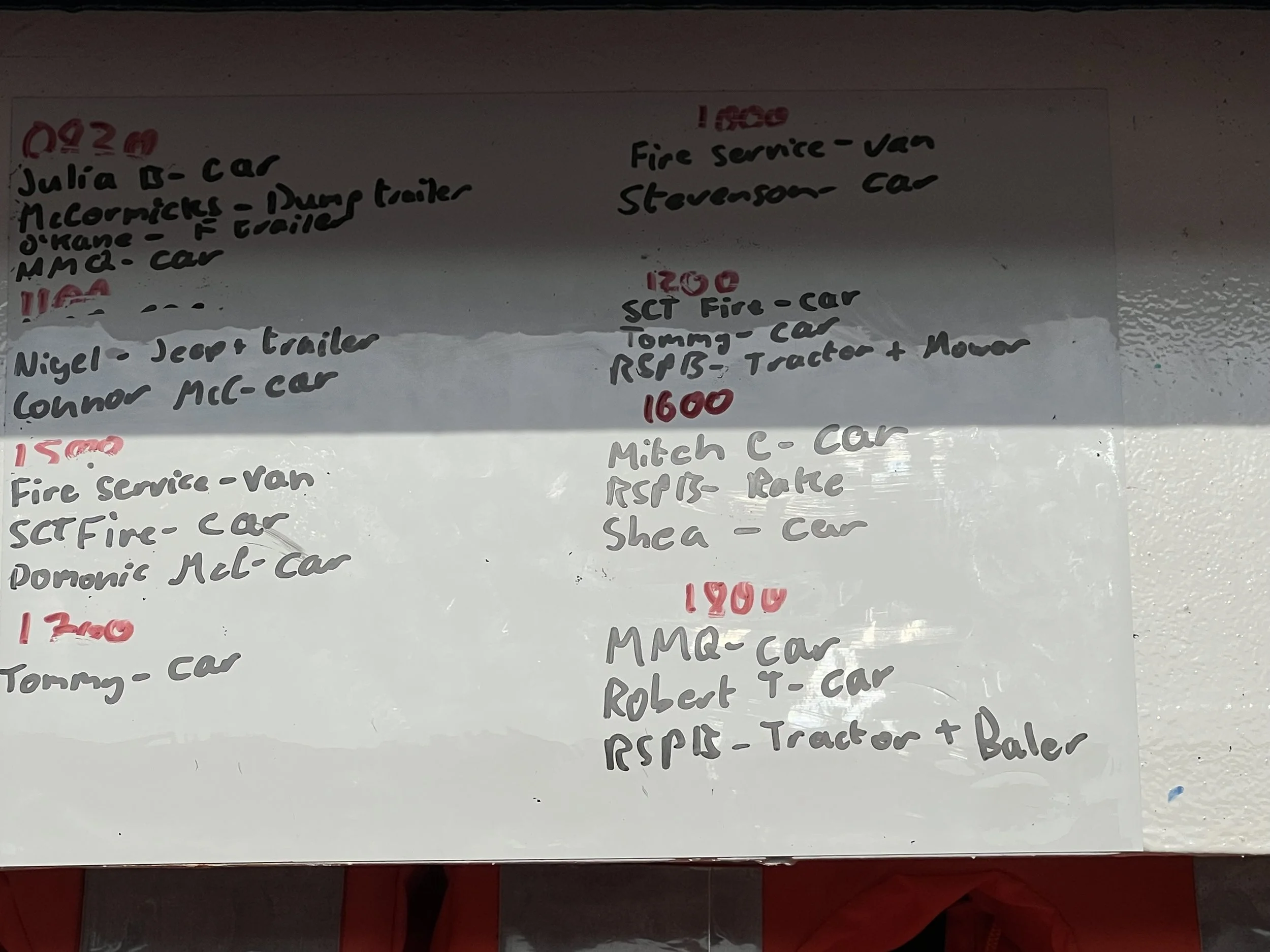
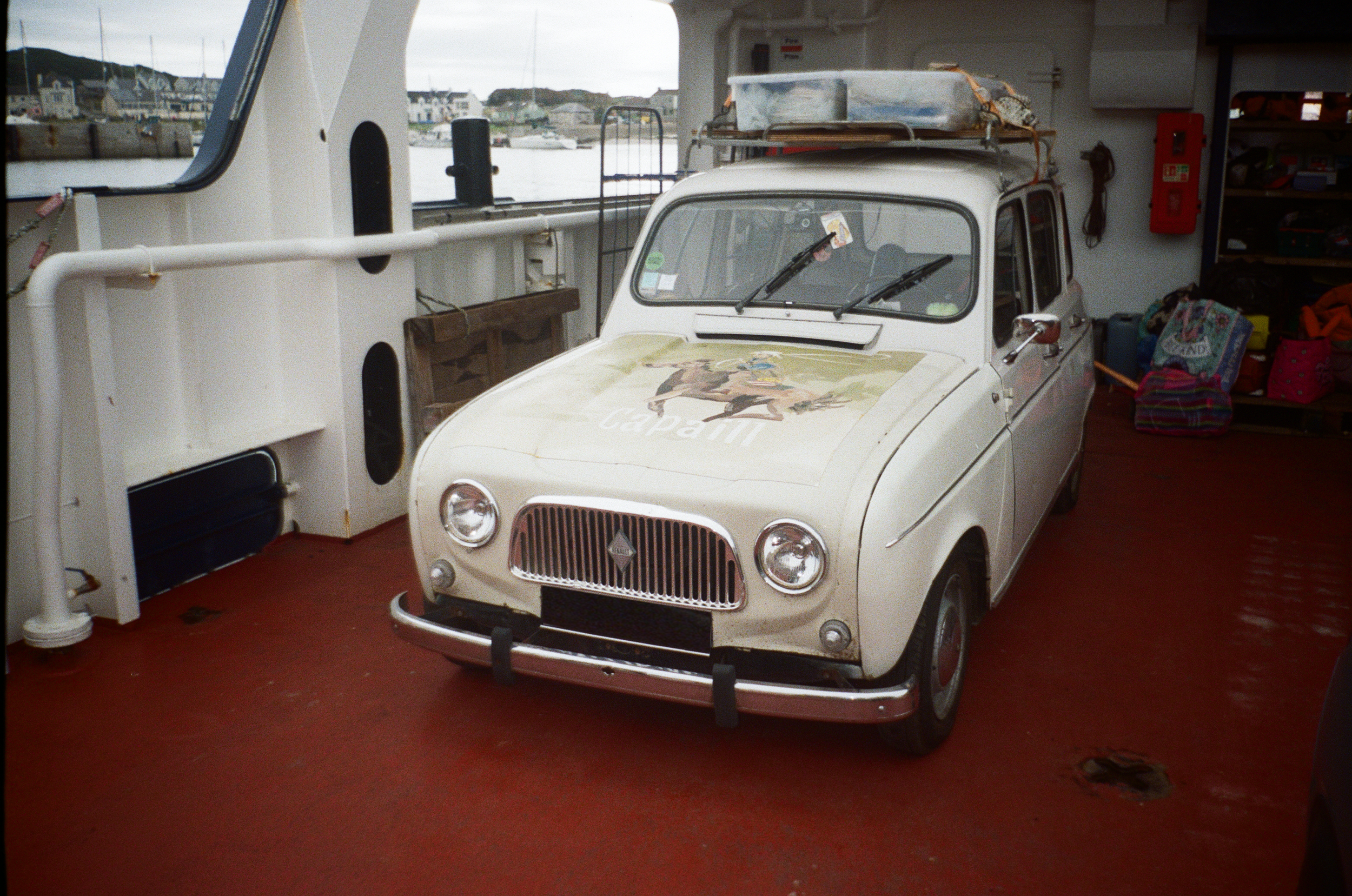
Perhaps we were finally learning a lesson about taking detours on time limits. The ferry can only take a few cars on each crossing and of course, is generally reserved for farm equipment and supplies for the island. We waited by the harbour, sitting in the Renault 4 while the next ferry arrived. It might be allowed on, they told us. We’d have to wait and see.
In the end we were allowed onboard with the car and managed to make the 10km crossing before nightfall.
Dreaming of Islands - whether with joy or in fear, it doesn't matter - is dreaming of pulling away, of being already separate, far from any continent, of being lost and alone-or it is dreaming of starting from scratch, recreating, beginning anew
-Giles Deleuze, Desert Islands.