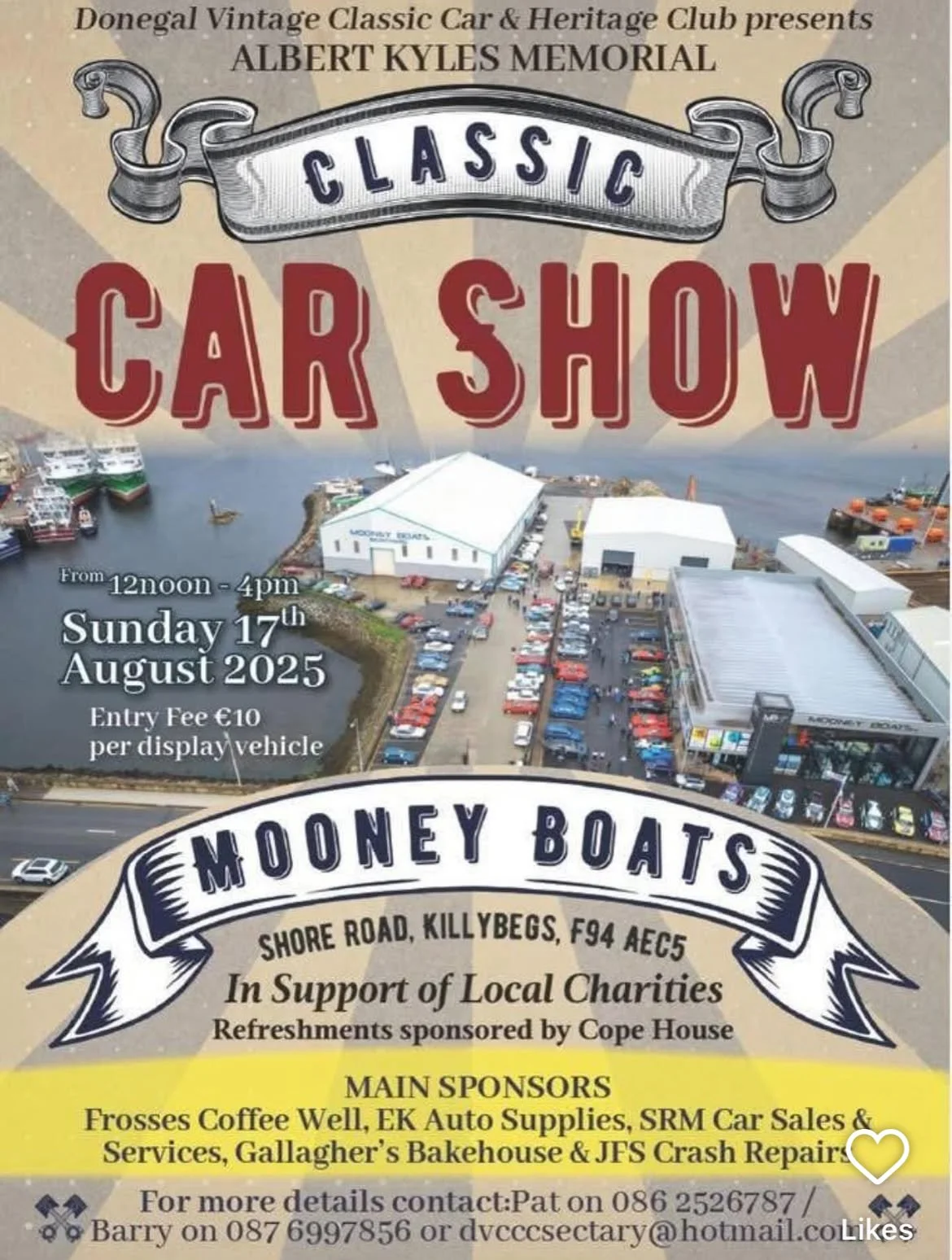
17.08.2025
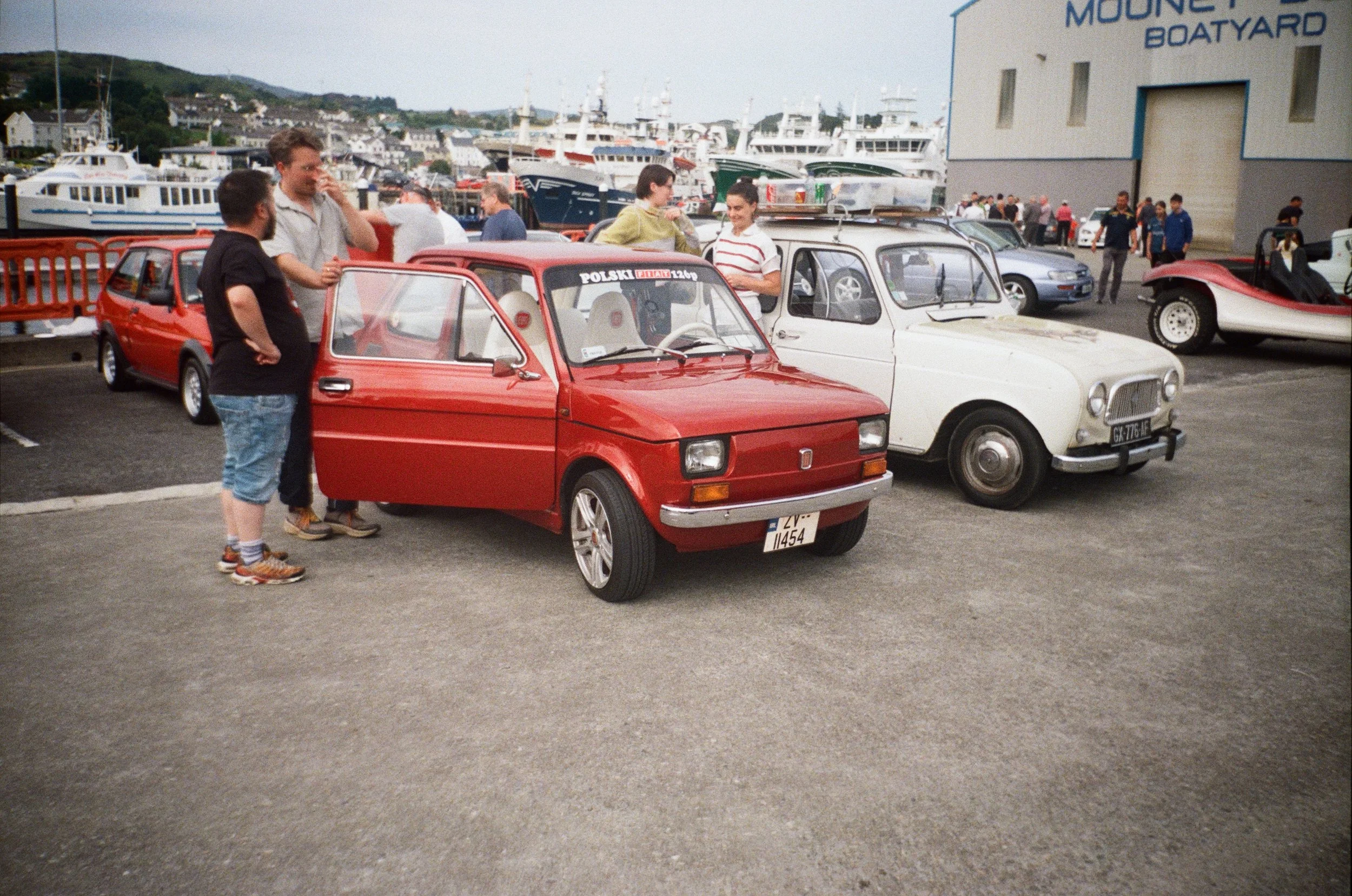
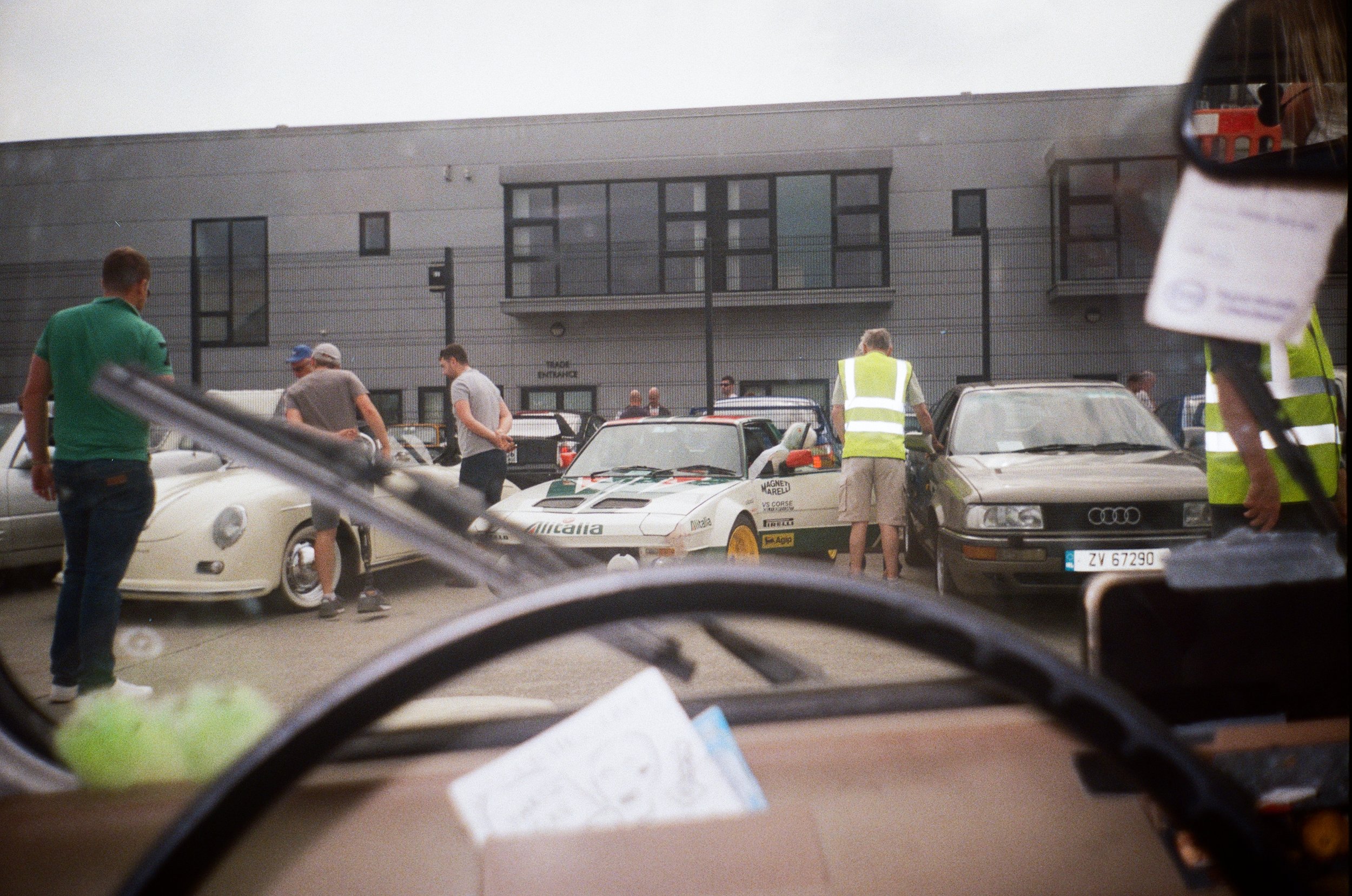
Along the promenade, there’s a slipway to your left as you leave the town heading west, past the marina towards the industrial area of the port where huge fishing trawlers are moored. At the end of the promenade; a large commercial vessel shipyard called Mooney’s Boat’s LTD, host the Killybegs Classic Car Show every year in mid August.
Killybegs is the largest fishing port in the country and on the island of Ireland. An unexpected industrial hub in rural Ireland where tradition and modernity overlap. Along the pier railings are coated with luminous orange paint and the colours of the boats from all over the world brighten the town - a place defined by cultural flow and circulation, as well as it’s history of storms and shipwrecks that have affected this fishing and sea faring community over hundreds of years. There’s an oak tree along the promenade that dates from the time of the Spanish Armada, a ship called La Girona anchored there 1588 with a damaged rudder. The crew were looked after and the ship repaired, with the help of the Irish chieftain MacSweeney Bannagh.
Each year a commemorative walking tour arrives into Killybegs after tracing the path of the survivors of La Duquesa Santa Ana who travelled on foot from Ardara to join the crew of La Girona. They assemble at an oak tree and wait for stragglers there, the guide begins a site-specific lecture, gesturing at a huge old oak tree that was a sapling during the Armada. The tour then makes its way along the promenade to the spot where the damaged rudder was taken out and repaired at what is now Mooney’s shipyard. The very spot where The Girona was taken apart and repaired in 1588, is the same spot designated for a faction of Subaru car owners to meet and hang out during the vintage car show. For a period of about 20 minutes each year, this corner of the shipyard becomes a shared space for Armada and Subaru aficionados alike.
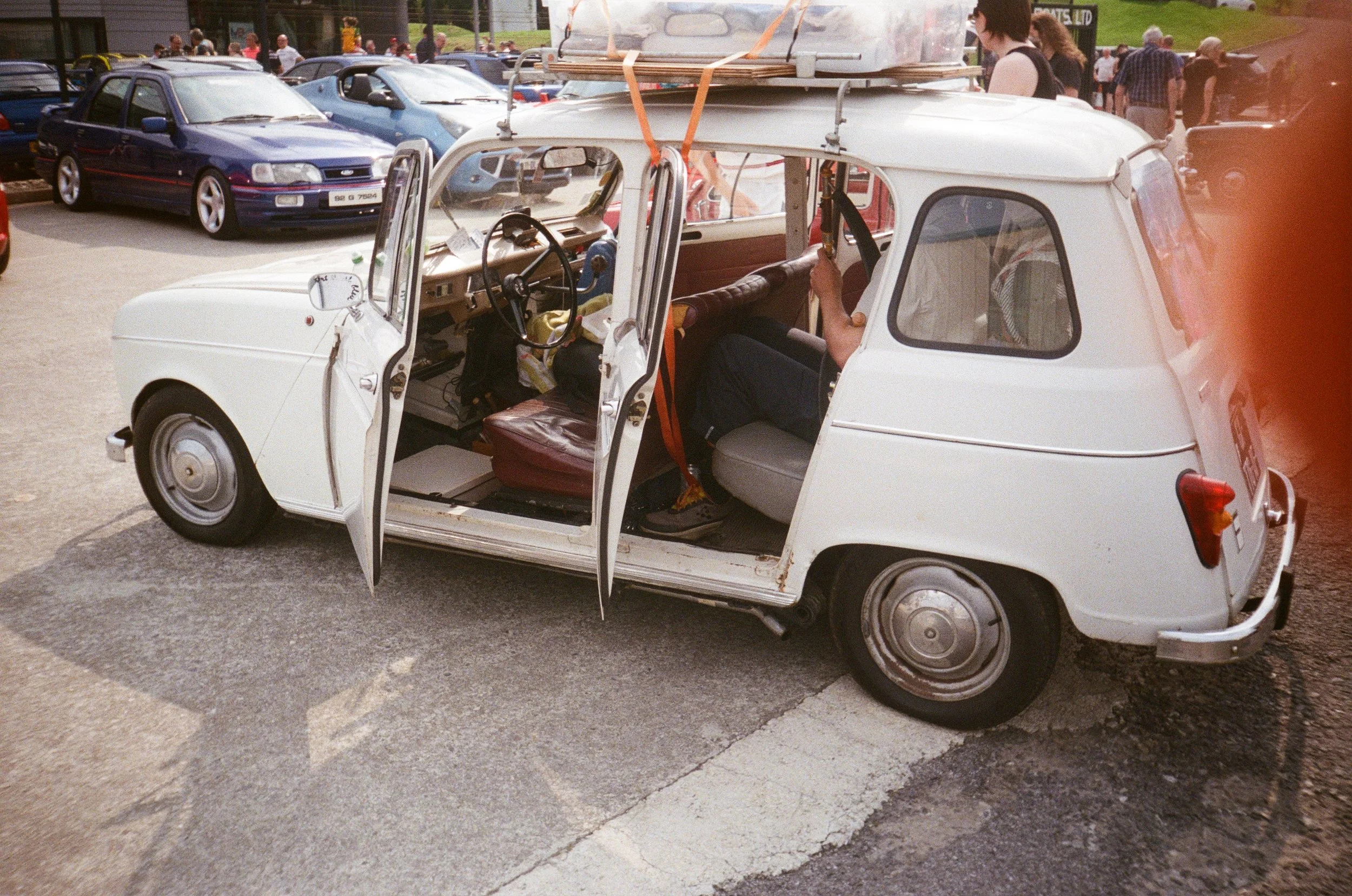
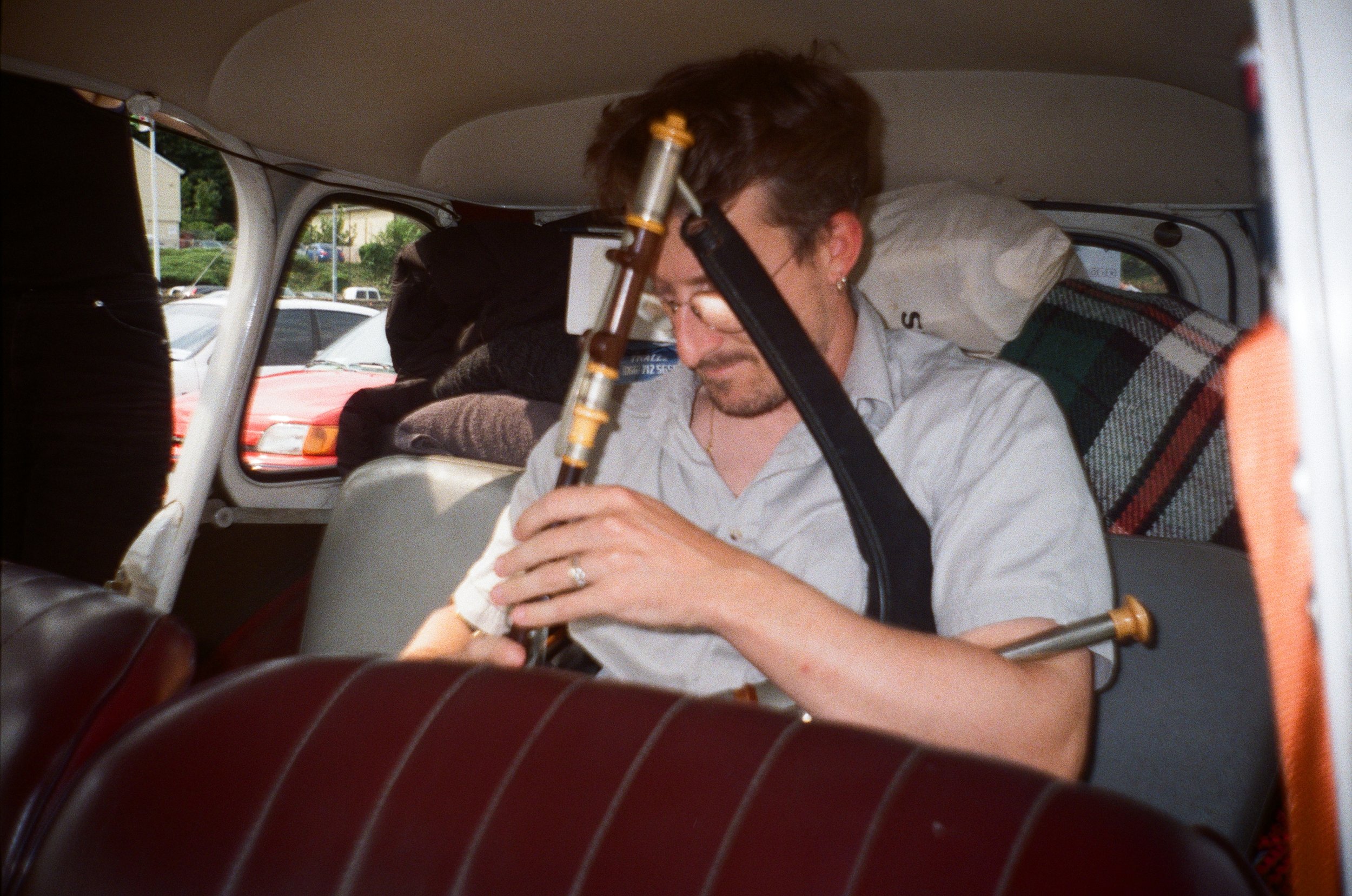
Parked at Killybegs Classic Car Show, this episode of K7 dans la 4L hosted visual artists Cliodhna Timoney and Paddy Joe Rickard to discuss their individual practices. The four of us sat in the stationary Renault 4 as vintage and classic cars passed by.
During the interview, Cliodhna Timoney reflects on the subculture surrounding the AE86, the Toyota Twincam in Donegal. Having grown up with close ties to an extended community of enthusiasts, drivers and mechanics she shares insights into her sculpture practice with a special focus on her recent installation Flashes of Light, a body of work reflecting on the zone of the farm, its edges and the interconnectedness of the structures, ecologies and beings found there.
Considering ideas of enclosure, access, dwellings, wildness and changing rhythms between rural and urban, Timoney uses archetypes, motifs and materials typical of the farm she grew up on, alongside references to nightlife and car culture, to subvert and challenge a permanent, unchanging idea of physical spaces.
Initially interested in trucker culture, truck modifications, Paddy Joe Rickard’s research began in 2019 where he started interviewing mechanics, part of clubs and groups who like to go banger racing on the weekends. Throughout this interview, Paddy gives insight into the particularities in trades, barters and codes in this hidden world. His research into material culture and folklore around broken, forgotten, rusted and reanimated cars has manifested in an essay about Irish bangers communities titled Wreckers and Crashers: the folklore of an Irish banger racing community, Folk Life: Journal of Ethnological Studies, Volume 60, 2022 - Issue 2.
Abstract: Banger racing is an extreme form of car racing, wherein manoeuvres akin to crashing, ramming and spinning are essential features of the races as well as the overall performances. This study is an ethnologic exploration of the emergent folk culture generated by a small banger racing community located in the Northside of Dublin, Ireland. The racing cars, or bangers, are individually constructed and customized for each race, using an array of car parts found and appropriated by both racers and mechanics. Such distinct social conditions and cultural practices, and the group’s position as a distinctive subgroup within the Irish car enthusiast community, facilitate the creation of its own culture and folklore. While this study outlines aspects of the group’s indigenous vernacular culture, it focuses especially on the ways in which folklore yields distinctive meanings as well as enhancing feelings of both collective and individual identity.
K7 dans la 4L is tour de force mobile broadcasting arts club, live streamed on Twitch with a curated series of artist’s talks, readings and interviews that were broadcast directly from the Renault 4. A forum for discourse and debate around contemporary culture, a chat room that was utilised to discuss art, landscape and tradition associatively and in a shared stream of consciousness.