23.07.2025
Bedtime story for Ballydehob at Levis Corner House….
293 Local Link
I
I read about a bard who once remarked that perhaps streams should have rights – that they should be allowed to travel wherever they please.
He said, and I might be getting this a little bit wrong, so don’t quote me because it was many years ago that I read it… but he said, we should acknowledge that when a stream flows from its source to the sea, it forms patterns in response to the terrain it traverses. And we are passing on our tunes and stories in a similar way. Before aural prompts could be shared electronically, they were passed on in person.
People were inspired by their surroundings and their experience of nature, more so than they are today. We’re so disconnected nowadays aren’t we? Have you heard the story of a tune from Donegal? Tuam na Farraige or the Atlantic Roar as it’s called in English. It’s a south-west Donegal tune that entered into the consciousness of a man as he slept by the sea. After he had spent the night playing music with friends and was on his way home, he grew too tired to walk any further and lay down on the crest of a hill by a beach in Glencolmcille. The tunes from the night mingled with the ebb and flow of the tide and he awoke with a fully-formed composition, which he then played on the fiddle. It has a great rush to it, the surging and swelling of the sea and then it pulls back and when it does so, smaller waves are still rushing forward. Do you know what I mean by this? Do you know the way that those smaller surface waves rush forth daintily when the hefty wave sucks back in to the Atlantic temporarily. Lilling some call it. The sound of this body of water rising and pushing against the land.
And some of the musicians from that time believed that yes; tunes and stories arrived through animal song and from the otherworld into the landscape around us. There is a detail that you will see coming up again and again, a motif that involves sudden disorientation – a disordering experience of the landscape often accompanied by the sight of mist or of a wisp rising. And the person is lost and they might wander for days or months or even years, and when they return home, they are mysteriously enriched.
Tree branches and streams can have the same pattern, reaching out for what they need and moving closer to where they are going, so wouldn’t it be like that for us too?
Another such tune, also by the great John Mhosaí McGinley who lived in Glencolmcille in the early to mid-19th century is this one that I will play for you now soon. It came to him at a waterfall as he made his way back from a big night in Mín bhFáchrán. Mín bhFáchrán - the mountain meadow of the bogbean, a place where people would gather, usually in March to boil and eat the bogbean as it was said to purify the blood. (An T-Eas Hornpipe, The Waterfall)
II
This happened in 2018 and though some aspects seem implausible now, I do remember that it was a bright day in early spring and I walked towards the Diamond through the car park where an encampment of vans bordered the Eske River. Outside the Abbey Hotel I leaned into the jamb of a doorway and perused a noticeboard with a few weather-beaten pamphlets. A boat cruise, a country and Irish band playing tonight, a new online exhibition about the Spanish Armada. The others along the footpath started to gather themselves for the bus and when I glanced over my shoulder, I saw it rounding the Diamond slowly to allow for a group of tourists to cross, holding their ice-creams and bags of tweed.
€4 to Glencolmcille from Donegal town. The price of the ticket is after going down when the price of everything else in the world is going up. I handed over a €20 note.
‘You don’t have the four do you?’ he asked, picking through the float.
‘I don’t,’ I said so he took a tenner from his own pocket to add to the change.
A string of wooden beads swayed from the rear-view mirror as the bus pulled out onto the road and turned the corner past the Blue Stacks Pub. Something occurred to me, very subtly. I wouldn't go looking for trouble, ever. I wouldn't entertain it, allow it to manifest, feed it or encourage it. That was a quiet epiphany and I watched a cormorant dive as the bus crossed the river.
III
We passed the grave stones plotting a path around the headland by the Old Abbey Graveyard where slabs of stone tell the stories of the people underneath. ‘In memory of his brother John Hughes who lost his life on the Island of Cape Briton on the 31st of August 1836 aged 25 years and six months then in command of the Brig Zephyr of Donegal.’ There’s typos on some of the stones. Briton or did you mean Breton.
That moment when life is committed to something permanent that'll be there for the future. I think of that so much in relation to this music and all the heritage of a place taken from the non-literate world with all its beauty and mystery it committed to paper or stone or recordings.
It's often overlooked nowadays but these fiddle tunes were not thought of as traditional Irish music. They were just the melodies that were available to people. Music that we liked and shared with one another. In the 1920s, other types of tunes started coming in on the radio. Melodies from America, jazz tunes for the quick step and the fox trot. (Jim Curran’s March)
IV
It had been a poor night’s sleep in that hostel on the hill with such a slant to it that if you took a marble and placed it on the table, it would roll off and continue rolling until it hit the skirting board. In the sloping rooms, laying down you would feel the blood flow from your head to your feet, you might switch and lay back down again in the opposite direction, seeking out a balance, waiting for the blood to flow back to the feet. I followed this pattern until finally I was tired enough to drift into a brittle, listless slumber. I saw the dancers and witnessed the most incredible co-ordination of movements, I watched them – the women, dancing quietly to each other. Do you ever have those days when you wake up and look outside and feel a hankering for a time before things were ruined with the noise of importance? When we could share music and stories, songs and dancing between ourselves, and just that – in itself – was good enough. The women were tapping their feet as they spoke. Some were lilting a highland, lilting in case you don’t know is to sing the tune, which women would often do. Some people believed a woman would be taken by the fairies if she played the fiddle. I’ll try to play it for you now as I’ve spent time with the fairies and was lucky enough to leave them too. A melody for dancing.
V
In the morning I had only a constellation of vague images and the doubt I slept at all. The bus had arrived at Frosses and stopped to let a sporty looking teenager on.
Frosses was once home to a particularly fearsome clan of fighters. These mercenaries, these particular Gallowglasses were the McSweeneys from Scotland. They were a clan in service to the O’ Donnells between the 13th century 16th Century. Serious mercenaries who helped the O’ Donnells make sure that this was the only part of Ireland, which was never entirely defeated by the British, by the English, I should say. (McSweeney’s Lament)
A woman at the front of the bus was chatting with the driver about the bog oak beads that were dangling from the rear-view mirror, Maple is used for the back plate of the fiddle, she said, as well as the rib, neck and scroll, while spruce is good wood for the front plate.
I have this dream regularly,’ she said, ‘and I know people hate hearing about dreams so I’ll make it quick, but I was given a fiddle and it was so heavy I could barely lift it. How can the sound resonate, I thought, how can it flow through such a heavy wood, it was that heavy, it could have been made of stone. The bus stopped and the sporty teenager got off. (Tommy Burke Hightland)
The woman with the stone fiddle who had done her shopping in Aldi was still there with her continued chatting to the bus driver. She divided the space in front of her with a gentle hand before allowing it to curl again and rest on her knee. Can you imagine the tunes that that girl had? But the girls in the house were not to court the devil with music. And anyone who listened to their music would be struck with the Mí Adh, a sort of hex.And so it was, that the music was taken away from them. The youngest daughter was tied to a tree after that. She was affected by the moon, they say and spent the rest of her days on Bruckless pier begging fisheads off fishermen. I’ll tell it to you the way I heard it. (Báitheadh Bhruclais, The Bruckless Drowning Jig)
She was out in the morning, warning the men that if they couldn’t spare some fish heads then they shouldn’t go to sea. I knew her well and I knew her to be industrious, resourceful and a good dancer. They mocked her and left her, throwing fish heads for the gulls instead. No one will know until they are out at sea, she said. And it’ll be too late then. She had asked me to bring her a cupán, a little wooden cup and I did that. She stood there knee-deep in swishing, icy cold water and she cursed them, with her arms stirring a maelstrom in the water. The cupán circled and sank. I looked out to sea, said the stone fiddle woman, and saw a great curling wave charging down on the hapless boat. I shouted hoarsely although there was no one to hear. I shouted again madly, frantically. The vessel was almost completely submerged. One last time, it jerked up, but the mast went by the board – snapping and creaking with loose ropes, slashing like whips. A flying block of wood came rushing through the air. As the debris went overboard, it struck one on the head and he collapsed.
The bus had stopped to let someone on and the story waited until he was seated.
VI
The tune remembers the day, on February the eighth in the year 1813. Between 300 and 500 fishermen were lost and that is a true story. And people still believe it was Biddy Deveney who cursed the fishermen for their refusal to give her a supply of fish. And I was the one who brought her the cupán, said the stone fiddle woman.
The stone fiddle woman turned to gaze out the window and the bus driver switched off the crackling radio. The road was newly tarmacked and smoothed out the sensation of the journey. A finger tapped my shoulder around the seat to point out a €20 note that had gone roving from my pocket. The twenty I had given the bus driver in Donegal town.
The back seat man shrugged his shoulders and gestured out the window. This is where Condy Billy Boyle and his wife, Bridget, lived, he said, pointing to the foot of Sliabh Liag. Long ago in a fine dwelling place with a good number of cattle and even with their young children to look after, Condy's wife would go up the hill every morning to check on the cattle.
I folded the €20 note into my wallet as this man from the back seat continued his story.
There came a misty morning, he said, when she was going out and she put on Condy's coat and fastened it about her with a spancel. She took her stick and went up the hill to count the cattle. The trudging of her feet through the bog to get there. No shoes on. Suddenly the earth opened and she fell in and the heather grew quickly over. (The Fairy Reel) It was dark and she clambered through the peat crawling until she arrived in a large chamber, a house underneath the mountain.
Inside the house there was a party in full swing with a crowd of people dancing and singing. Tapping and lilting. And plenty of Poitín being passed around. (The Poitín Highland). Drink it and badly you need it, said a women, who with a big welcoming smile and excitement in her eyes embraced Bridget before handing her a wooden cupán of the Poitín.
Bridget took it and was about to drink when a large brawny woman rushed in the door and knocked the cup with the back of her hand, splashing it across the room. She doubled over out of breath and gasped up at Bridget. Now, she said. It's a hard race you put on me today from the Cruachán of Connacht through the drowning waves to save you. The singing and dancing had come to an abrupt end and all were watching the three women who stood at the centre of the room as the Poitín trickled down into the corner and made a soft dropping sound on a peat step. If you drank that, you would never get away from here. Out with you now before me quickly. Don’t ever eat or drink anything given to you by na daoine mhaithe, the bus driver interjected. (The Fairy reel)
I'm not surprised poítin is mentioned in relation to fairies like this, continued the back seat man.
A lot of those stories, especially the ones that have dream-like sequences, I often think to myself, there was fair chance, poítin was involved. I haven't experimented with it myself mind you. But I might one of these days. I had the pleasure of meeting some of those who had been, in their younger days, the great poítin makers of this area. Incredible to meet these people who had lived so much of their lives outside the law.
He stood for a moment with outstretched arms to emphasise a chasm. The bus jolted and he steadied himself and sat back down. It has to be said, it was a perfectly bona fide economic activity here at one time, you know. With trading across the bay to Sligo. Next thing it was illegal. From the colonial times, as soon as the influence of the O'Donnell's receded from this area, every way that the people had to make a living in a place like this - fishing, home crafts, poítin - was taken away from them, plank by plank.
Never eat or drink anything the fairies give you, the bus driver repeated.
And never drink the water from the Cill Fhanaid well if the fish is there. The stone fiddle woman glanced up at the rear-view mirror and announced proudly that she had seen the fish with her own eyes. Yes, I saw it as a child when I went to the well to get the water,’ said the stone fiddle woman. (The Cill Fhanaid waltz)
The bus driver nodded. He had seen it too. I still visit the well before travelling to take a drop with me for good luck. For my brother and sister too,’ he added. ‘I collect water in jars, with their names and the name of the destination on a curl of masking tape. And they have them there in the glove compartment with chewing gum pellets, old maps and CDs. I have one here myself, he said and he pointed to a little glass bottle that hung on a bit of twine near the bog oak beads.
Out the back and encircled by a loosened drystone wall, through the briars, quietly and moving very slowly to lift the cover, gradually, imperceptibly as if it was only the rising sun meeting the water’s surface, and in so doing, you might catch sight of the fish, said the bus driver. A surprised and timid eye, a glossy, curved lip agape then gently mouthing. Orange, and speckled turquoise, dark green and silvery. Rich crimson on its belly and a stroke of white above its lip and on each fin. To see it you would be elated, but sorry as well to disturb it, knowing that you’ve frightened it. Moving towards the surface to bask in the warmer water, it would freeze in shock to see you there. Or it might dart under the overhanging stone but you’d still see its shadow swaying with the bending light. It would be at your mercy with nowhere to go in the well. And yet it was very rare that people would see the fish, because it usually wasn’t there and no one knew where it went for the rest of the time or how it got in and out. You can look through the well on bright days and see parts of the mountain. A holy well from before holiness, as we understand it, existed.
In the distance, cliffs drop into rough seas that gouge more away each year and even in five years you can see how much the shape of the beach has shifted. If you look at it from the hills, you can see the headland and every few months a change in the layout of sand.
That night I swam at Dooey, an Dumhaigh Uachtarach, near the raised sand bank.
Bioluminescent plankton on the beach do you dream the same dreams as us. Do we sing the same songs. Can I play your melodies to see if they are similar? I waded through the sloppy sand, dragging my feet to watch the sparkles. I went onto the sand where the estuary is and crawled for a minute and there was light all around, and on my hands. I slapped the water and I tell you that lit up too. Everything that was touched was glowing. I made a starshaped bellyflop, the plankton flashed and glared about me. I dove deeper and turned to look up, a layer of luminescence before and another layer of stars above, the salt was stinging my eyes but I couldn’t bear to close them on the light. When I surfaced, I heard music from somewhere in the Glen.

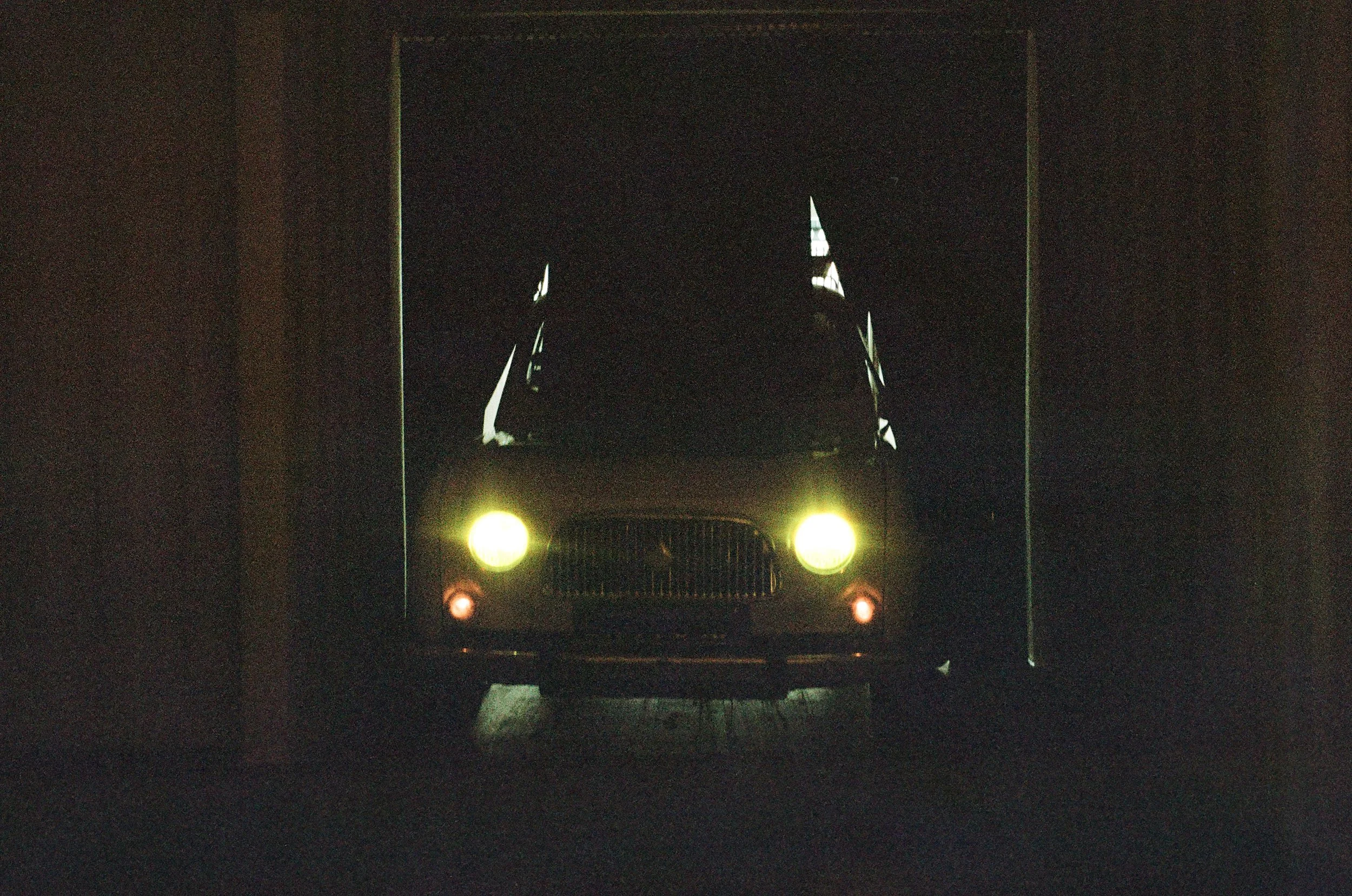
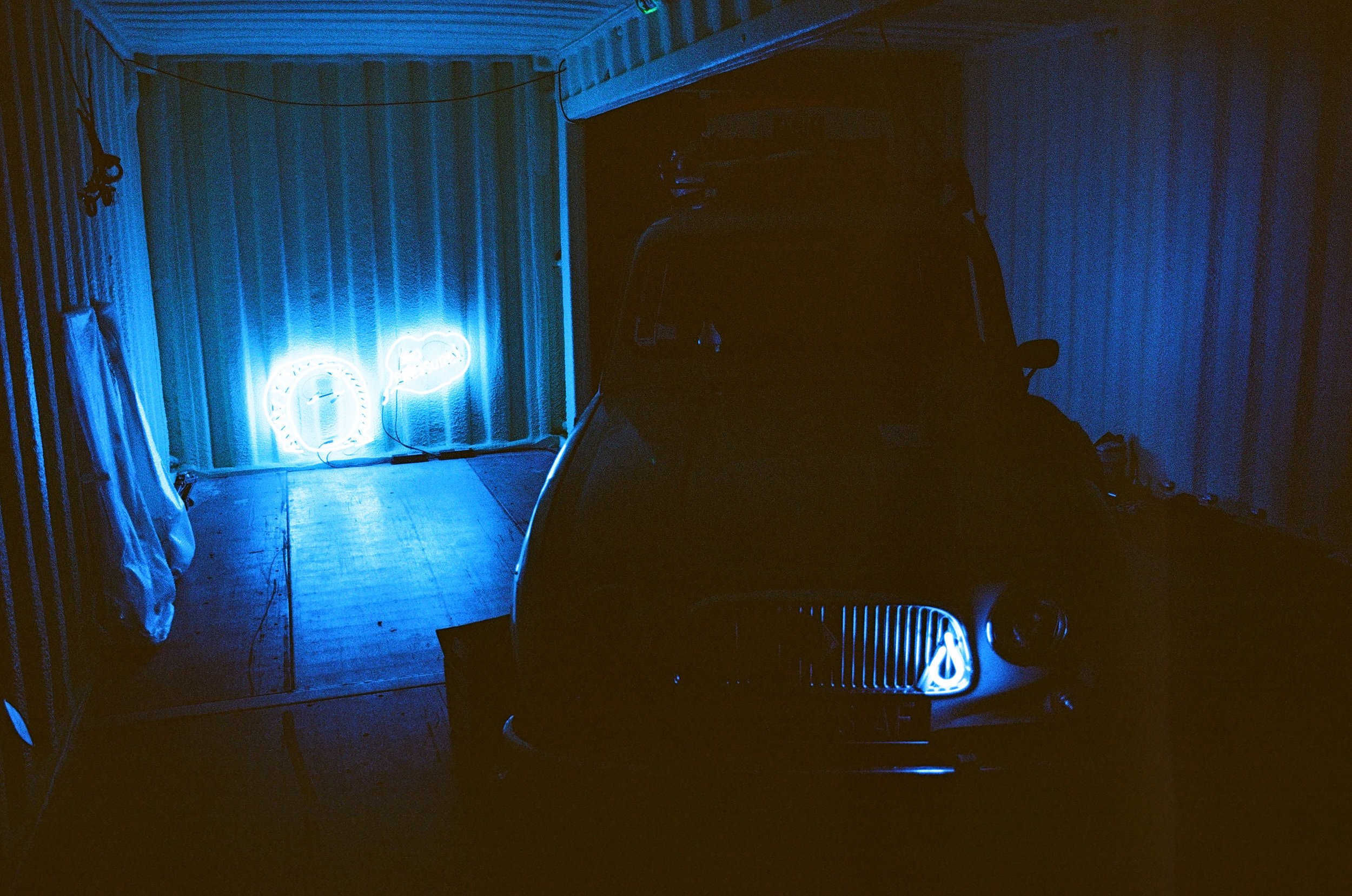
Photo credits: Michael Hill and tour de force